The White House UFC Plot Turned a Spectacle Into a Security Stress Test
Court papers turned the White House UFC show from a strange one-night spectacle into a harder question about how close politics, entertainment and public-event security now sit together.
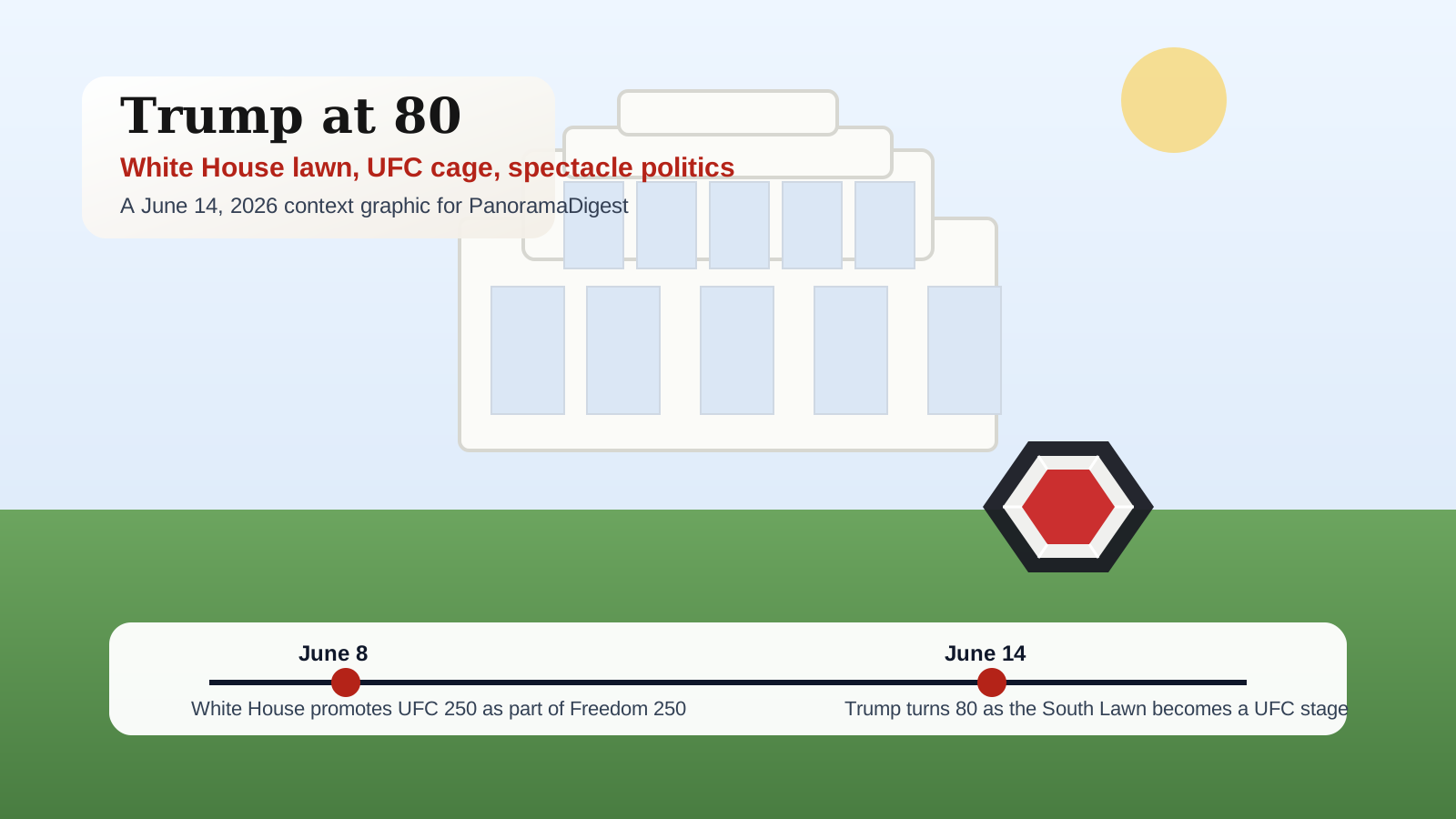
The White House lawn looked like a finished piece of political theater on Sunday night: a UFC octagon, a birthday backdrop for President Donald Trump, and a crowd large enough to make the whole event feel like a dare made real. By Tuesday, the story had changed. What had been sold as an attention-commanding spectacle became, in court papers and law-enforcement statements, a reminder that mass events built around power and celebrity are also security systems under stress.
YouTube / CBS News — FBI says it stopped plot to attack UFC event at White House
This current video report summarizes the court-paper allegations and arrests tied to the White House UFC event. If the player does not render, use the direct YouTube link in the article body.
According to federal complaints unsealed in Ohio and California, investigators say members of an anti-government group discussed using drones, sniper positions and escape routes to attack the June 14 White House UFC event. One complaint says the plan was designed to jumpstart
a revolution. That language matters less as lurid rhetoric than as evidence of how seriously authorities say they took the threat once they saw the operational detail behind it.
Readers who saw PanoramaDigest's earlier analysis of the June 14 spectacle itself already know the event worked as image design. This follow-up is about what came after the cameras. The larger story is not merely that the FBI says it disrupted an alleged plot. It is that a made-for-television presidency keeps choosing stages that compress politics, crowd control, and symbolic targeting into the same frame.
| Date | Verified development | Why it changed the story |
|---|---|---|
| June 10, 2026 | Authorities say they learned of a potential threat tied to the White House UFC event. | The event stopped being only a culture spectacle and became a live security concern behind the scenes. |
| June 11, 2026 | One suspect was interviewed by investigators and, according to the complaint, described a plan involving drones and shooters. | The allegation moved from online grievance into an operational conspiracy theory with logistics. |
| June 14, 2026 | UFC Freedom 250 proceeded on the South Lawn with Trump and other high-profile attendees present. | The public saw a successful show, not the threat picture authorities say they were working. |
| June 16, 2026 | Court papers were unsealed and the alleged plot entered the public record. | The event's meaning changed from mere spectacle to a case study in high-visibility vulnerability. |
What the court papers actually add
The safest way to read this story is through the record first and the outrage second. The most important primary documents are the federal complaint against Abraham Alvarez in Ohio and the California complaint involving additional alleged co-conspirators, both published by the Department of Justice. They describe investigators finding chats, maps, route planning and discussions of drone launch points around Washington. They also describe one alleged participant telling investigators that the attack concept relied on panic: create chaos over the north side of the White House, then exploit the southern evacuation flow.
That does not prove every allegation beyond dispute, and it should not be written as if it does. Complaints establish probable cause, not guilt. But they do show why officials treated the matter as more than online fantasy. Specific places, timing windows, equipment needs and exfiltration routes are the kinds of details that make federal agencies move fast even before a case reaches trial.
The complaints describe a plot built around drones, crowd panic and rifle positions near the evacuation path.
Federal complaints unsealed June 16, 2026
Associated Press added two important pieces of public reporting on top of the complaints: first, that at least five people were in custody, according to a law-enforcement official familiar with the matter; and second, that the event had already happened by the time the public learned how close the alleged conspiracy came to it. That timing is not a footnote. It is the story's pressure point.
Why this became a security story before it became a culture-war story
It is tempting to absorb the entire episode into familiar ideological buckets: Trump spectacle, extremist violence, social-media radicalization, and a White House that increasingly treats symbolism as a governing instrument. All of that is present. But the most useful read here stays practical. The first hard question is procedural: what does it mean for a presidential residence to host a mass entertainment event with a security footprint larger and stranger than a standard rally, dinner or ceremony?
A UFC card on the South Lawn does not just draw fans. It draws celebrities, lawmakers, protest interest, curiosity crowds, and adversaries who understand the value of one image traveling everywhere at once. The complaints suggest investigators believed the alleged plotters understood that dynamic. The event was attractive not only because Trump was there, but because the setting promised confusion, status targets and instant symbolic payoff.
That is why the alleged plan matters beyond the names of the defendants. Even if the case ultimately narrows in court, the logic behind it is already legible. Modern political events are no longer just places where power is displayed. They are places where spectacle itself can become the attack surface.
The harder read for the White House
The administration can fairly argue that the system worked. Authorities say they got the tip on June 10, conducted interviews, served warrants, and prevented violence before Sunday's event began. That is real. But there is another reading that deserves equal attention: if politics keeps borrowing the grammar of pay-per-view entertainment, security planners inherit the risks that come with that choice.
The White House is not merely a venue. It is a national symbol, a federal workplace, and an irresistible target for people who want their grievance to become history in one brutal flash. Turning that ground into a sporting set may be legal, logistically achievable and politically useful. It also widens the burden on the institutions expected to keep symbolism from collapsing into catastrophe.
This is where the follow-up becomes more revealing than the original event. Sunday's show asked whether Trump could turn a presidency into a cultural stage that felt bigger than normal politics. Tuesday's court record asked the inverse question: whether the stage itself now creates exposures that cannot be shrugged off as part of the show.
Watch a current video report on the alleged White House UFC plot on YouTube if you want a quick visual summary alongside the court-paper timeline.
What readers should watch next
Three things matter from here. First, watch whether prosecutors keep broad conspiracy allegations intact or narrow them as the cases move forward. Second, watch whether federal officials disclose more about how event security changed between June 10 and June 14. Third, watch whether the White House treats this as an argument for caution or as proof it can keep escalating the spectacle model without paying a political price.
The June 14 UFC show already told us something true about Trump's governing instincts: he prefers politics that can dominate a screen. The June 16 complaints added a harder truth. Once a government builds events around attention density, it also builds incentives for anyone who wants to hijack that attention through fear.
That is why this is not just another post-event scandal beat. It is a sober follow-up about security, state symbolism and the cost of staging power in ways that reward maximum visibility.
Primary sources: Department of Justice complaint in the Alvarez case; Department of Justice complaint involving additional California defendants; Associated Press reporting on the unsealed court papers and arrests.
Read Next
Related Stories
Old Trails Fire Damage Estimate Reaches 640 Structures in Spokane
Spokane County's preliminary estimate says the Old Trails fire destroyed 640 structures, while evacuation zones remain active across northwest Spokane.

USCIS Can Now Refer Asylum Cases to Immigration Court Without an Interview
A DHS rule effective July 28 lets USCIS send some affirmative asylum applications directly to immigration court. Referral is not a denial, but the interview is no longer guaranteed.

Seattle Center Shooting Kills Three and Injures Four at Bite of Seattle Festival
Seattle police say a shooting at the Bite of Seattle festival killed three people and injured four others, including a 2-year-old boy. One suspect was arrested and police continued searching for another.