FIFA Forward Enterprise: The $20 Billion Proposal Withdrawn on July 31
FIFA said its Forward Enterprise proposal would not proceed on July 31. The proposed valuation and member-funding figures belong to a withdrawn plan.

FIFA's Forward Enterprise proposal did not proceed. In a statement dated July 31, 2026 (UTC), FIFA President Gianni Infantino said divisions created by the project meant the proposal would be dropped. The $20 billion valuation discussed beforehand was part of a proposed structure, not evidence of a completed sale.
Update and correction, October 15, 2026: This article previously presented the plan as awaiting approval without including FIFA's later withdrawal. Its title, summary and analysis now reflect that decision. The original publication date is preserved.
Further correction and update, October 21, 2026: The valuation below is now attributed to Reuters' July 29 report, rather than FIFA's July 30 explanation, which does not state that figure. FIFA's October 15 confirmation of permanent withdrawal has also been added.
The proposal and its endpoint
| Date | Official record | Status it supports |
|---|---|---|
| July 30, 2026 | FIFA explanation of the proposed subsidiary | A consultation-stage subsidiary proposal, presented as a route to increased development funding. |
| July 31, 2026 | FIFA President's withdrawal statement | The proposal would not proceed after divisions emerged. |
Reuters' July 29 explainer reported a proposed valuation of around $20 billion and minority investment while FIFA retained majority control. FIFA's July 30 explanation separately described the subsidiary as FIFA-owned and controlled, with approval still required. These were proposed arrangements, not completed transactions, and must be read alongside the subsequent withdrawal.
Why proposed funding was never a guaranteed payment
A valuation describes a stated value for a business or transaction. A fundraising target describes capital sought. A development allocation describes potential spending. They are separate quantities, and none proves that money has been received by a football association.
The withdrawal makes that distinction decisive here. A calculation based on the abandoned plan can explain its scale, but it cannot tell a member association what it will receive. Any future funding decision needs its own dated authority, programme rules and eligibility conditions.
The same caution applies to control. A proposed minority shareholding does not, by itself, reveal all negotiated investor rights. Without executed transaction documents, conclusions about board powers, vetoes or future distributions would exceed the evidence. The withdrawal statement does not provide those documents or establish a replacement transaction.
What FIFA actually said about the reversal
Infantino's statement said the project had been intended to strengthen member associations, especially where support was most needed, and had been conditional on consultation and support. It attributed the decision to divisions that no longer served that objective. The statement established the project's withdrawal; it did not announce a replacement investment vehicle.
October confirmation: withdrawn, not revived
FIFA's October 15 Council release reaffirmed that Forward Enterprise had been permanently withdrawn and would not return in another form. It also described a separate proposed development-funding programme using reserves. That funding plan still required final rules and further approvals; it was not a revived equity sale or evidence that the abandoned subsidiary had distributed money.
The release placed finalisation of the new programme's rules before committees and the December 2026 Council meeting, followed by Congress approval in March 2027. Member associations therefore need the eventual programme documents, not the superseded investment proposal, to establish eligibility and disbursement conditions.
For the immediate reaction and broader governance context, read our follow-up on FIFA's equity-plan withdrawal. Our 2026 World Cup coverage supplies the tournament context surrounding the commercial proposal.
When revisiting a commercial announcement, check the latest status before calculating its consequences. Here, the July 31 withdrawal and October 15 confirmation establish the status of Forward Enterprise. A proposed valuation can remain part of the historical record without being presented as a live financing plan.
Cover: contextual stadium photograph by George Zografidis, Pexels photo 30651230, used under the Pexels licence. This is not a photograph of a FIFA financing announcement or Council meeting. FIFA's October 15 release also links its own Council video.
Read Next
Related Stories
FIFA Drops $20 Billion World Cup Equity Plan as UEFA Withdraws Confidence in Infantino
FIFA withdrew its $20 billion World Cup equity plan after opposition across three confederations. UEFA's no-confidence statement now shifts the dispute to Infantino's 2027 election.

2026 World Cup Fan Festivals Drew 9.017 Million Visits Across 13 Cities
FIFA recorded 9.017 million visits to 13 World Cup fan festivals in 2026. PanoramaDigest calculates how Mexico City, the busiest day and stadium attendance compare.
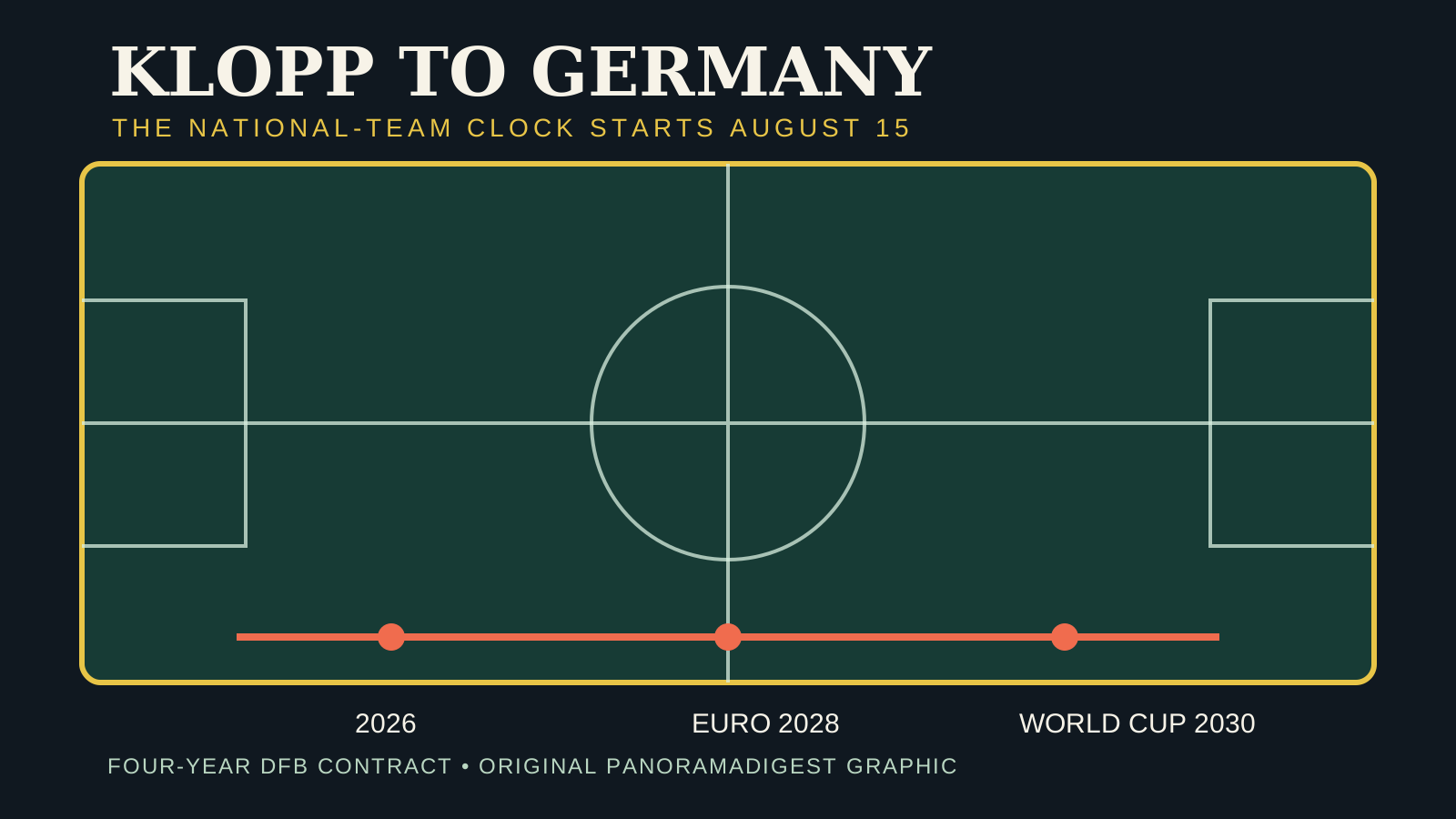
Jürgen Klopp Takes Germany Job With Four-Year Plan Through 2030
The DFB has signed Jürgen Klopp to lead Germany through UEFA EURO 2028 and the 2030 World Cup, with his tenure beginning on August 15, 2026.