Uganda Declares Itself Ebola-Free Before WHO's 42-Day Countdown Ends
Uganda says its 2026 Ebola outbreak is over, but WHO's public timeline starts the formal 42-day countdown later and runs into late August.

Uganda's government declared the country Ebola-free on July 28, 2026, after an outbreak that produced 20 confirmed cases and two deaths. The declaration is an important national milestone, but it does not match the World Health Organization's public timetable: WHO said on July 16 that Uganda had only then entered the formal 42-day countdown required before the outbreak could be declared over.
That difference is not about whether transmission has slowed. Uganda has reported no new confirmed case since June 21, all 18 surviving patients were discharged, and both deaths were among people whose infections were imported from the Democratic Republic of the Congo. It is about which patient starts the clock.
Health Minister Chris Baryomunsi said Uganda counted 42 days from the June 16 discharge of the last Ugandan national with locally acquired infection. WHO instead said the countdown began on July 16, when the last confirmed patient tested negative twice and was discharged. Under WHO's published method, two complete 21-day incubation periods would run into late August, provided no new confirmed case is detected.
Why Uganda and WHO are using different starting points
Uganda's calculation separates locally acquired infections from imported cases. Of the 20 confirmed infections, WHO says 15 were imported from Congo and five were secondary cases among contacts and health workers. Baryomunsi's announcement treats the end of the local chain as the decisive event.
WHO's method follows the last confirmed case in the country, regardless of where that infection originated. Its July 16 release says the countdown began only after the final confirmed patient cleared the virus and left care. The 42 days represent two maximum incubation periods for Bundibugyo virus disease, allowing time for an undetected transmission chain to become visible.
The distinction matters because the outbreak remains active across the border. WHO describes the event in Congo and Uganda as one complex, cross-border outbreak. An imported case during the countdown would reset the clock to zero, even if Uganda continued to find no locally generated chain.
“While this is an encouraging moment, it is not the end of the response.”
Dr Kasonde Mwinga, WHO representative in Uganda, July 16, 2026
What the declaration changes, and what it does not
Uganda's announcement records a real containment achievement. By July 16, authorities had completed follow-up for all 836 listed contacts, strengthened surveillance in 36 high-risk districts and maintained screening at 38 points of entry, according to WHO. No community transmission was documented; the five secondary cases were linked to imported infections.
It does not mean Ebola transmission has ended in the region, and it does not remove the need for border surveillance, rapid testing or protected treatment capacity. Uganda has launched a six-month plan to maintain those systems while transmission continues in Congo. WHO also continues to advise against travel or trade restrictions based solely on the outbreak.
The declaration should therefore be read narrowly: Uganda says the domestic transmission chain has been interrupted and is asking other countries to lift negative advisories. WHO's stricter outbreak-closure clock remains the safer reference for whether the country has completed two full incubation periods without another confirmed case. Uganda's own parliamentary record from July 16 also states that the country must wait 42 days without a new case before WHO can declare it Ebola-free.
For the regional context, PanoramaDigest's analysis of WHO's revised Congo Ebola estimate explains why surveillance gaps remain central to the wider emergency. Our earlier response-clock analysis tracks how case growth has challenged containment capacity, while the Ebola topic hub collects the outbreak's major policy and epidemiological developments.
Unless WHO revises its July 16 timetable, the next decisive marker is not another declaration but the completion of the remaining monitoring period without a confirmed case. Until then, “Ebola-free” describes Uganda's national assessment, not a fully aligned international closure of the cross-border outbreak.
Read Next
Related Stories
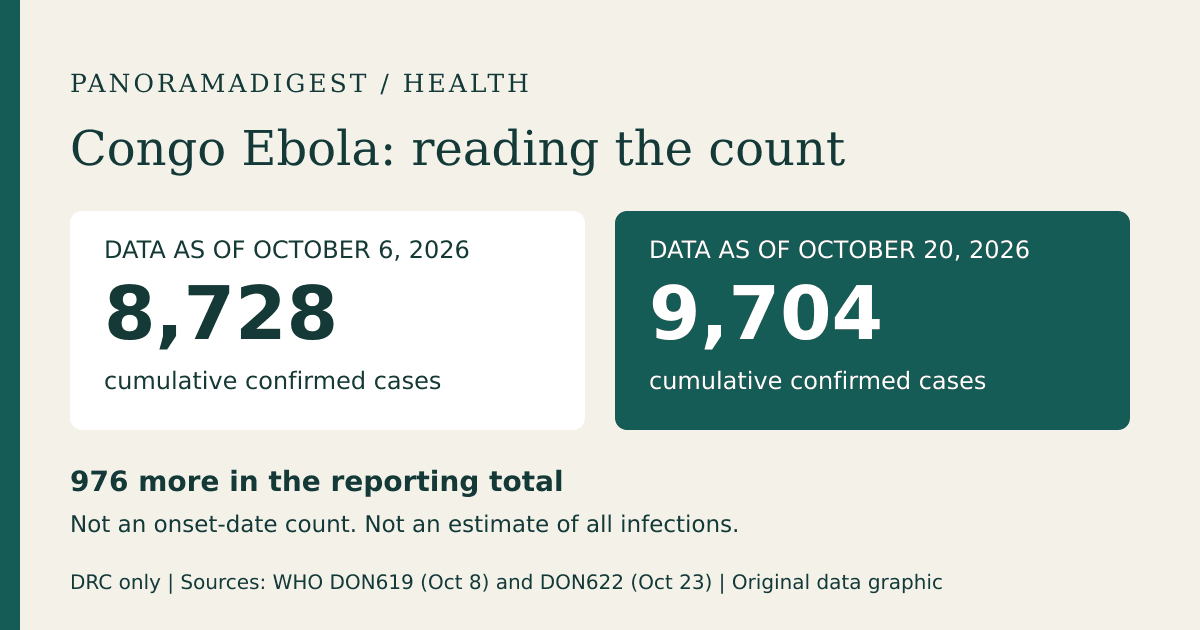
Congo Ebola Case Counts: Confirmed Totals and Hidden Infections
Compare WHO's dated Congo Ebola totals, understand reporting delays and see why July's two-to-four-times estimate cannot be applied to October counts.
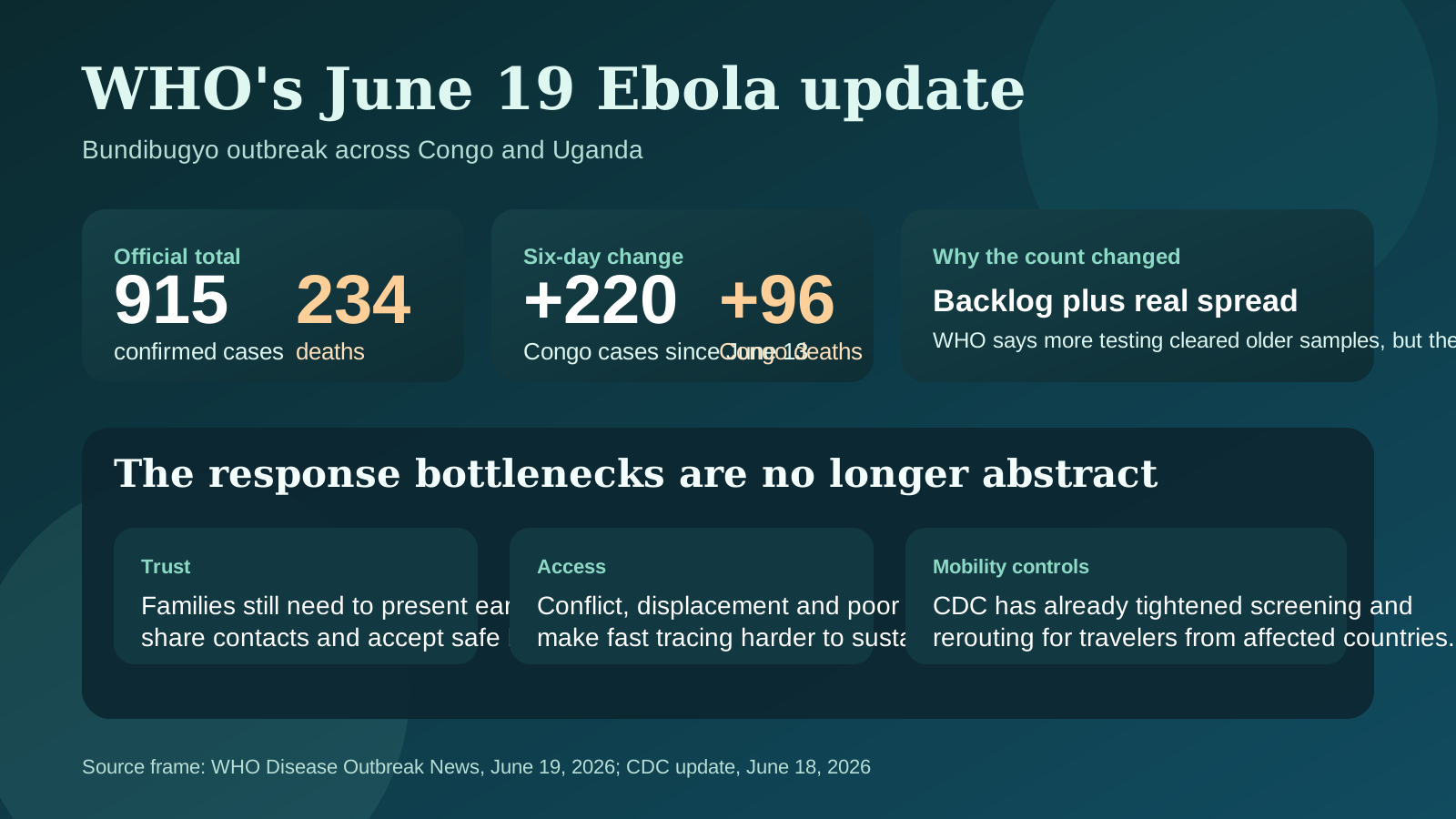
WHO's New Ebola Count Shows Why This Outbreak Is Starting to Beat the Response Clock
WHO's June 19, 2026 update pushed the Bundibugyo Ebola outbreak to 915 confirmed cases across Congo and Uganda. The harder story is that tracing, trust and travel controls are now doing the work a vaccine still cannot.
Africa CDC-WHO Ebola Response Plan: Funding and Delivery Priorities
The new Africa CDC-WHO response plan matters not because it makes the outbreak sound bigger, but because it admits the fight has become a race over staffing, trust, border controls and clinical capacity.