This Gulf Disturbance Does Not Need a Name to Put the Texas-Louisiana Coast on Flood Alert
The June 16, 2026 Gulf disturbance may or may not become a short-lived tropical storm. Official forecasts say the more urgent story is the flood corridor already lining up from southeast Texas into Louisiana and possibly western Mississippi.
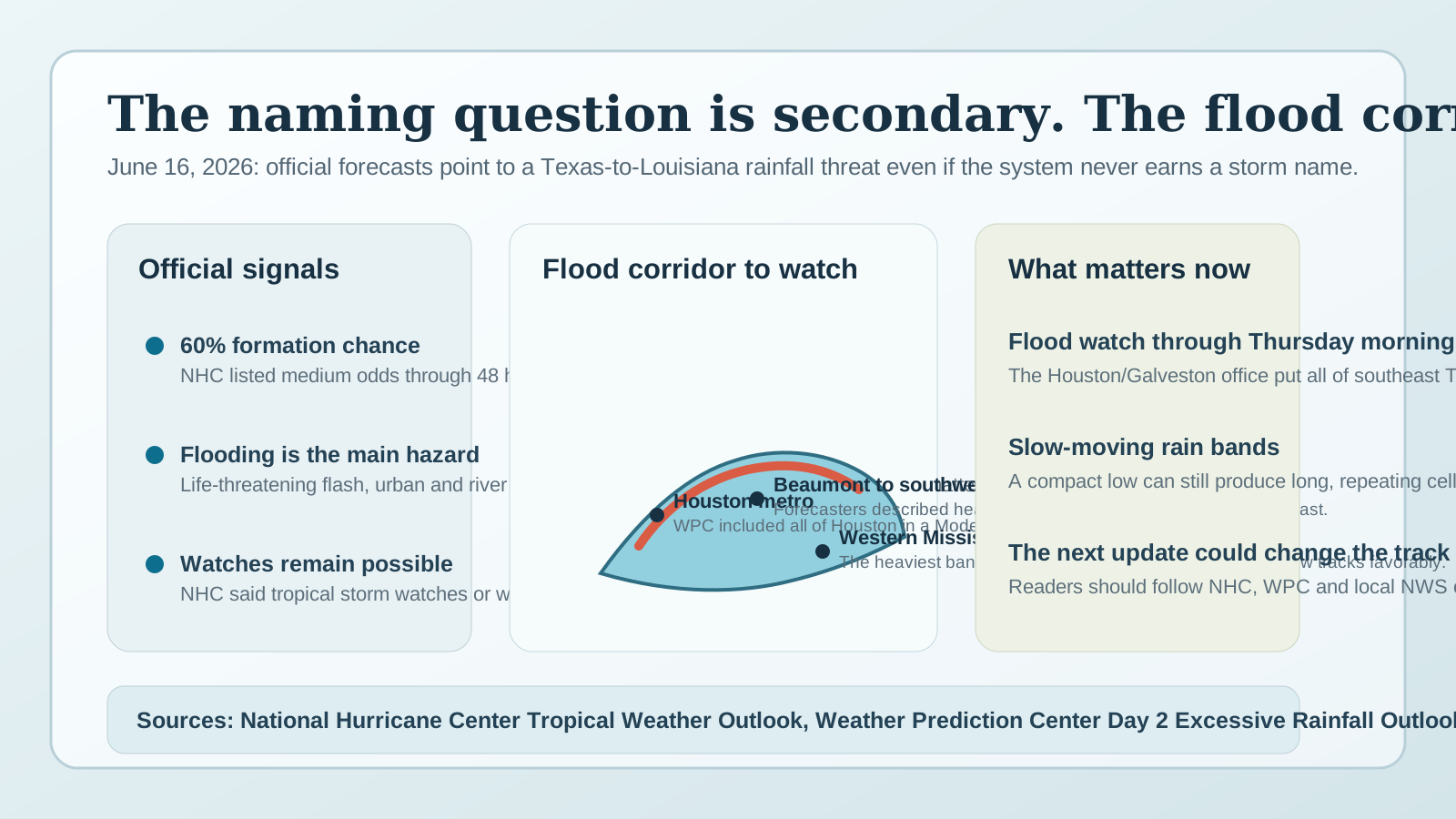
The easiest version of this story is the least useful one. A broad low over south Texas might drift offshore, tighten just enough to earn a tropical-storm name, and give forecasters the kind of headline television likes. But the official warnings published on Tuesday, June 16, point readers somewhere else. The real public-interest question is not whether the system gets christened. It is whether families across southeast Texas and western Louisiana treat a flood setup like a flood setup before the naming debate swallows the message.
At 8 a.m. EDT, the National Hurricane Center said a broad area of low pressure inland over south Texas was already producing a large area of disorganized showers and thunderstorms. The center said the system could re-emerge over the northwestern Gulf later on June 16 or overnight, with a 60 percent chance of tropical-cyclone formation in both the next 48 hours and the next seven days. That is the part likely to draw the casual reader. The more consequential line came immediately after it: regardless of whether a tropical cyclone forms, southern and eastern Texas and parts of Louisiana and Mississippi should prepare for periods of intense rainfall that could produce widespread, life-threatening flash, urban and river flooding.
Why the naming question is the least useful one
Storm labels matter for watches, warnings and public attention, but they can also flatten risk. A short-lived tropical storm sounds smaller than a multiday flood threat, even though the second hazard often does more immediate damage in places with saturated ground, vulnerable roads and dense urban drainage systems. That is why the National Hurricane Center's wording matters. It said gusty winds and coastal flooding are possible and that tropical storm watches or warnings could still be required later on June 16. Yet it kept returning to rainfall as the defining danger, not as a side effect.
The Weather Prediction Center reinforced that judgment with a Day 2 outlook carrying a Moderate Risk of excessive rainfall for the upper Texas Gulf Coast through southwestern Louisiana. Its discussion described a small surface low or trough developing along the Texas coast on Wednesday, then moving northeast. That track question is not abstract forecasting jargon. It determines how far inland the worst rain pushes, how long Houston stays under repeating cells, and how much of Louisiana sees the event shift from nuisance weather into a real flash-flood problem.
The Weather Prediction Center also made one point readers in large metro areas should hear clearly: it nudged the Moderate Risk area west to include all of the Houston metro. The agency's concern was that a narrow but potent band of northwestward-moving cells could sit over the area long enough to create flooding problems even if the rain rates are not the most extreme case on paper. That is a technical way of saying a messy-looking system can still do very organized damage.
| Confirmed on June 16 | Still uncertain | Why it matters |
|---|---|---|
| NHC put formation odds at 60 percent through 48 hours and seven days. | Whether the low spends enough time offshore to become a named tropical storm. | Naming will affect watches and headlines, but not whether heavy rain is already expected. |
| WPC issued a Moderate Risk for the upper Texas Gulf Coast into southwestern Louisiana. | Exactly where the heaviest rain axis settles from Houston eastward. | A small shift in track can change which communities see repeated flood bands. |
| NWS Houston/Galveston issued a Flood Watch for all of southeast Texas through Thursday morning. | How far the heaviest overnight rain reaches into Louisiana and western Mississippi. | The flood corridor is regional, not just a Houston problem. |
Houston is inside a broader corridor, not a lone target
The local forecast offices sharpen the picture. On its front page Tuesday morning, the National Weather Service office in Houston/Galveston said a Flood Watch had been issued for all of southeast Texas through Thursday morning. It also said the entire region faced a heavy-rain and flooding risk, with the highest concern in southern and coastal counties where there was a Level 3 of 4 excessive-rainfall threat capable of flash flooding. The office added that it was closely monitoring the disturbance over northern Mexico and south Texas and that conditions were somewhat favorable for a brief tropical depression or tropical storm on Wednesday and Thursday.
That local framing matters because it keeps the story from collapsing into a single-city panic item. Houston is important not only because it is large, but because it is a test case in how fast a familiar flood vocabulary can become normalized. Readers have heard versions of this warning before. The danger is treating familiarity as reassurance. A watch covering all of southeast Texas is not background noise, and the Weather Prediction Center's corridor from Beaumont into southwestern Louisiana shows why this is a coast-and-inland problem at the same time.
The broader coverage has begun to reflect that. The Washington Post's weather desk highlighted the same 60 percent development odds and framed the setup as a South-wide flood threat rather than a simple tropical-season curiosity. Axios Houston reported that local officials were already acting on the flood side of the forecast, including preparations around Lake Houston and utility staffing. That is usually the giveaway in these stories: professionals on the ground start behaving as though the rain is the story well before the public stops asking what the storm will be called.
What officials are signaling before any tropical watch
Readers should notice the sequencing. The National Hurricane Center is leaving open the possibility of tropical storm watches or warnings later on June 16. The Weather Prediction Center is already telling people where the heaviest rain bands could settle. Local forecast offices are already using flood-watch language. Those steps are not contradictory. They are the normal way forecasters communicate that a system can stay structurally messy and still produce a clean emergency-management problem.
That sequencing also explains why this story belongs in a practical news frame rather than a hype cycle. Tropical systems often become public dramas because categories and names are easy to remember. Repeating rain bands over urban corridors are harder to package, even though they can close roads, trap commuters and turn routine drives into rescue calls much faster than a loosely organized storm image suggests. PanoramaDigest has already seen a smaller version of that operational strain in Houston's recent World Cup weather disruptions. This week is a broader and more consequential version of the same lesson.
What to watch next
The next meaningful updates are not subtle. Readers should watch for whether the low slips offshore long enough to trigger tropical storm watches or warnings; whether the Weather Prediction Center keeps Houston inside the core Moderate Risk area or shifts the axis farther east; and whether local National Weather Service offices begin upgrading portions of the flood threat from watch language to more urgent warnings. Those are the signals that will tell people whether the corridor is merely dangerous or headed toward a far more disruptive event.
For now, the clearest editorial conclusion is also the least glamorous one: people along the Texas-Louisiana coast should follow the flood guidance first and the naming story second. The official forecast package already treats that as the hierarchy. Readers should, too.
Read Next
Related Stories

Old Trails Fire Damage Estimate Reaches 640 Structures in Spokane
Spokane County's preliminary estimate says the Old Trails fire destroyed 640 structures, while evacuation zones remain active across northwest Spokane.

USCIS Can Now Refer Asylum Cases to Immigration Court Without an Interview
A DHS rule effective July 28 lets USCIS send some affirmative asylum applications directly to immigration court. Referral is not a denial, but the interview is no longer guaranteed.

Seattle Center Shooting Kills Three and Injures Four at Bite of Seattle Festival
Seattle police say a shooting at the Bite of Seattle festival killed three people and injured four others, including a 2-year-old boy. One suspect was arrested and police continued searching for another.