Japan's 1% Interest Rate Is Really a Test of Whether the BOJ Can Tighten Without Losing the Yen
The Bank of Japan's June 16 move to 1% was a milestone, but not a victory lap. It was a credibility decision meant to show Tokyo can respond to oil-driven inflation and yen weakness before both become harder to control.
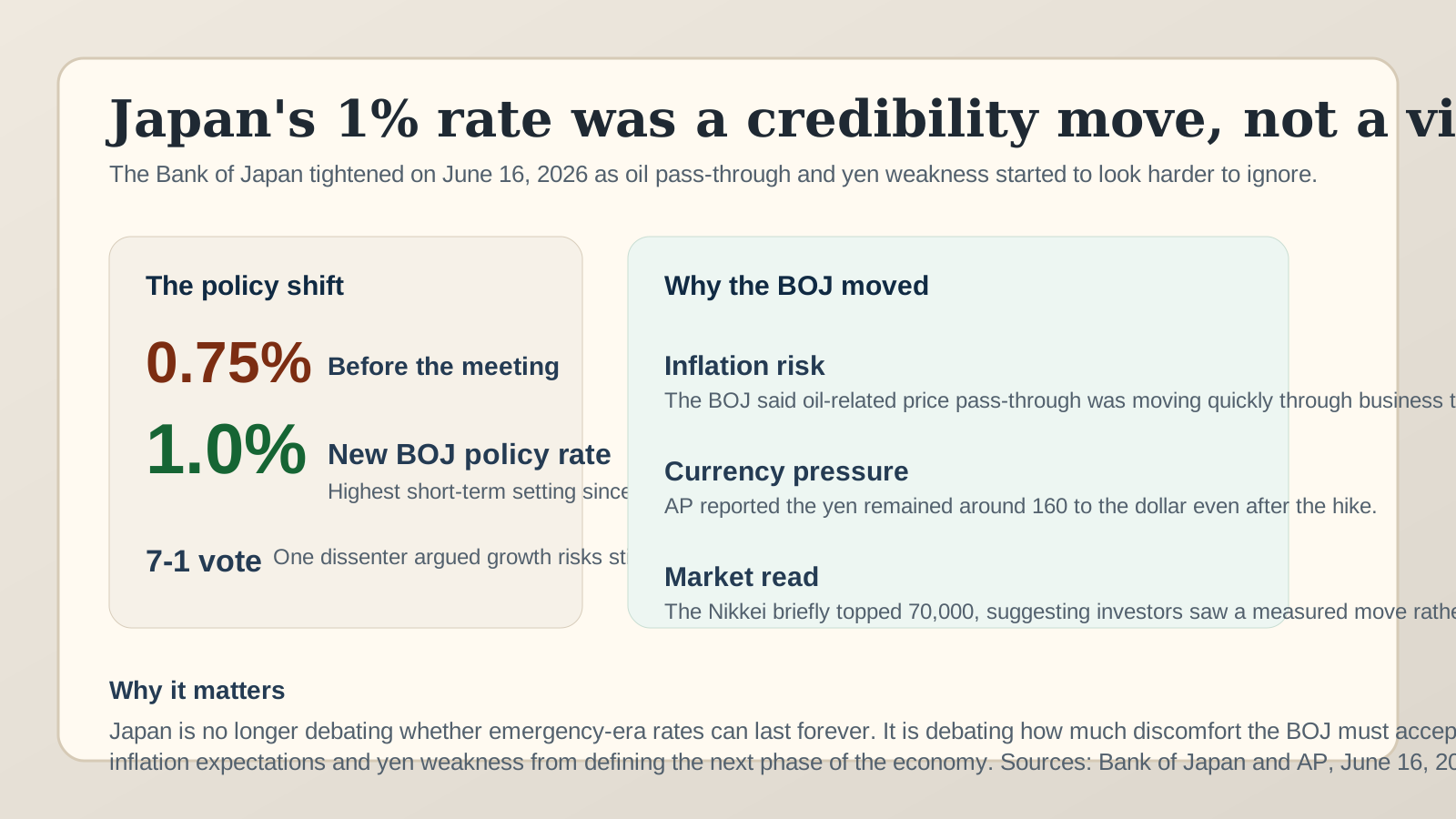
The Bank of Japan did something on Tuesday, June 16, that would have sounded almost implausible a few years ago: it pushed its policy rate up to around 1.0%, the highest setting since 1995. The official Bank of Japan policy statement shows the move was approved by a 7-1 vote, with the bank arguing that faster pass-through from higher crude-oil prices could push underlying inflation above its 2% target. That is the technical decision. The practical one is broader. Tokyo is trying to prove it can tighten policy before imported inflation and yen weakness start making the central bank look late rather than careful.
YouTube — Bank of Japan Deputy Governor Uchida Holds Press Conference
Deputy Governor Shinichi Uchida addresses reporters after the June 16, 2026 BOJ meeting. If the player does not load, use the direct YouTube link.
AP's contemporaneous report captured the public version of the story: a quarter-point increase from 0.75%, a weaker yen still hovering around 160 to the dollar, and a Nikkei market that briefly pushed above 70,000 before giving back part of the jump. But the more important reading is not that Japan finally joined the world of normal interest rates. It is that the BOJ no longer thinks waiting is the safer political option.
The rate hike was about credibility as much as inflation
The BOJ's own language makes that clear. The June 16 statement says higher crude-oil prices tied to the Middle East are already moving through business-to-business transactions at a "relatively fast pace" and could spread to consumer prices more broadly. It also says medium- to long-term inflation expectations have continued to rise. That is central-bank language for a problem policymakers do not want becoming social common sense. Once companies and households assume the next round of price increases is coming, inflation is no longer just an import problem. It becomes a behavior problem.
That helps explain why the bank moved even while acknowledging that the economy is only recovering moderately and that higher energy costs are still pressing on profits and household income. The BOJ effectively decided that the bigger risk was not a modest growth slowdown. It was letting the story harden that Japan would tolerate currency weakness and imported inflation because it remained too attached to the habits of ultra-low-rate policy.
| What changed on June 16, 2026 | Previous setting | New setting | Why it matters |
|---|---|---|---|
| Policy rate target | 0.75% | 1.0% | Japan reached its highest short-term rate since 1995 and signaled that normalization is still alive. |
| Vote split | Previous meeting held rates steady | 7-1 in favor | The dissent showed real caution inside the board, but not enough to block action. |
| Inflation frame | Energy shock still partly buffered | Risk of underlying CPI moving above 2% | The BOJ now sees pass-through risk as strong enough to justify tighter policy. |
| Market interpretation | Rates still below a symbolic threshold | Nikkei briefly topped 70,000; yen remained under pressure | Investors read the move as manageable, but the currency question did not disappear. |
The yen is still the harder problem
If this were only about inflation, the June 16 move would look cleaner. It is not. Japan also has to manage the optics and the economics of a currency that still looks fragile even after another rate increase. AP reported the yen remained around 160 to the dollar, which matters because a weak currency keeps making imported food and energy more expensive for households. A central bank can live with that for a while when domestic demand is soft and policymakers still fear deflation. It becomes much harder when price pressure is already broadening and the public starts to treat the exchange rate as proof that official policy remains behind the curve.
That is why this was not simply a growth-confidence hike. It was also a signaling exercise. The BOJ needed to show that higher oil costs and a soft currency are not just temporary annoyances it hopes fiscal measures will absorb. PanoramaDigest made a related point in its June 15 analysis of the Strait of Hormuz risk after the U.S.-Iran framework deal: even when geopolitical headlines cool, shipping and energy pressures do not normalize on command. Japan is one of the economies that feels that lag first.
The market rally was less a contradiction than a verdict on pace
At first glance, a record-setting Nikkei on the day of a rate hike looks strange. It is not, at least not in this context. Investors were never mainly asking whether the BOJ would move. They were asking whether it would panic. A quarter-point increase to 1% told markets that the bank wanted to reassert control without trying to shock the economy into discipline. That is a different message from an emergency-style move or a sharply more aggressive path.
The BOJ's shorter June 2026 summary document says accommodative financial conditions are still expected to remain in place even after the increase and that the bank will keep adjusting policy while monitoring the Middle East, markets and the outlook for activity and prices. In plain English, Japan is still tightening from a very low base. That helps explain why equities could rally even as policy moved higher. Investors heard confidence, not panic.
What readers should watch next
The next test is not whether 1% is historically high. It is whether the BOJ can make 1% feel sufficient for more than a few weeks. Three things matter now. First, does the oil shock keep feeding through into a wider basket of consumer prices? Second, does the yen stabilize enough to keep imported inflation from re-accelerating? Third, does the board keep enough unity that future moves look deliberate rather than reactive?
The June 16 statement is notable here because Governor Kazuo Ueda was absent and Deputy Governor Shinichi Uchida stood in, while board member Toichiro Asada dissented on the grounds that downside risks to production and employment still outweighed upside risks to prices. That is not a crisis. But it is a reminder that the next phase of Japanese monetary policy is less about escaping zero than about deciding how much discomfort the country is willing to accept in order to look credible again.
Watch the post-meeting press conference: if the embedded player below does not load, use the direct YouTube link at youtube.com/watch?v=XX_ST9j74jE.
Read Next
Related Stories
U.S. and Japan Buy Yen Together as Dollar Falls From 163 to 156
Japan confirmed coordinated yen buying with the U.S. after the dollar traded above 163 yen. The intervention amount will be disclosed later.
OPEC+ Raises September Oil Production Target by 188,000 Barrels a Day
Seven OPEC+ countries raised their combined September production target by 188,000 barrels a day, bringing the published required total to 31.01 million.

Microsoft Azure Revenue Passes $100 Billion as Cloud Sales Rise 27%
Microsoft said Azure passed $100 billion in annual revenue for the first time, while quarterly Microsoft Cloud sales reached $59.3 billion.