COVID Vaccine Study Found Heart Protection. The Strongest Signal Was in Older, High-Risk Adults.
A large U.S. veterans study linked the 2024-2025 COVID vaccine to fewer serious heart events, but the clearest benefit showed up where clinicians would expect it most: older adults and people already carrying more medical risk.
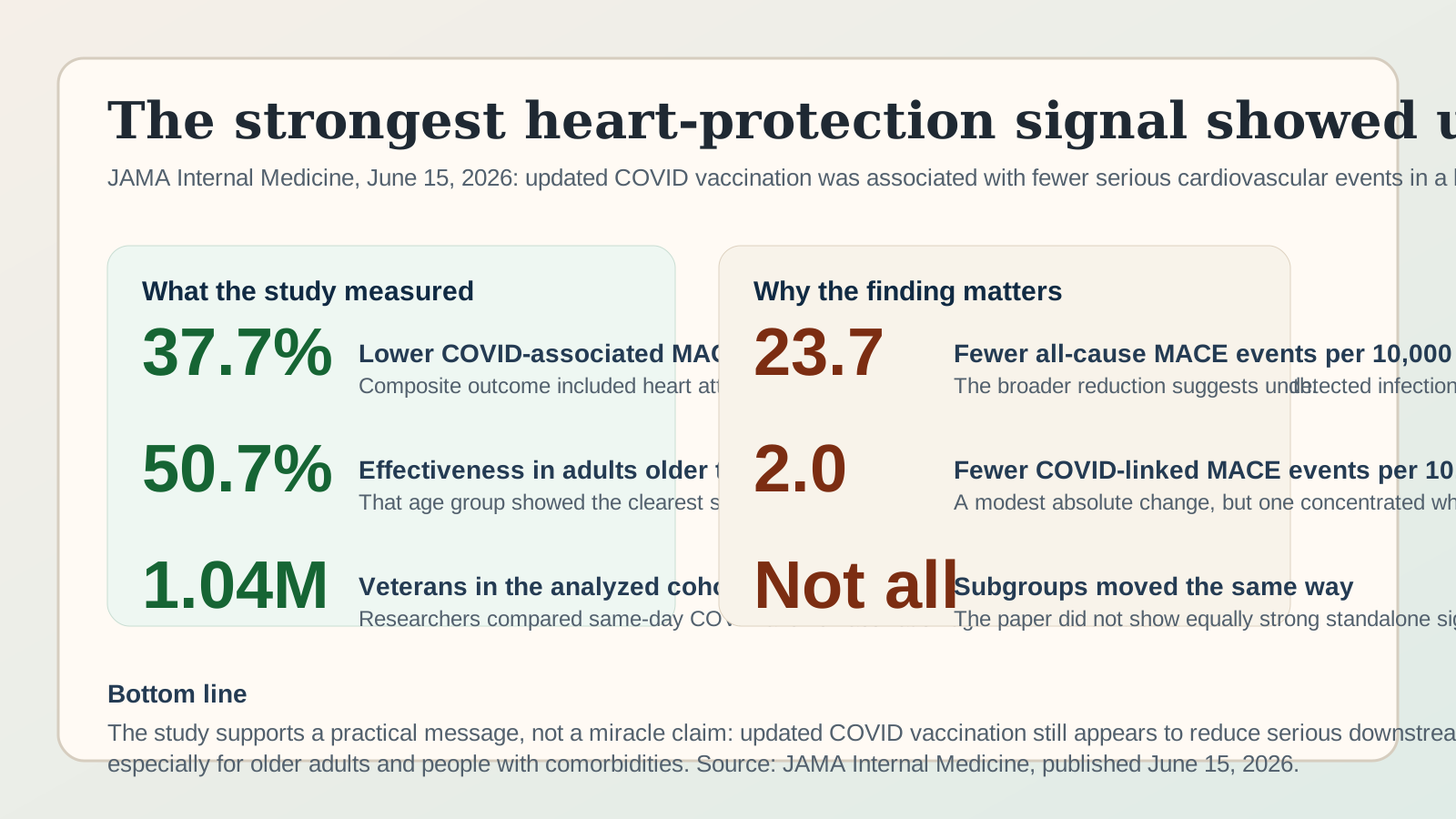
A new JAMA Internal Medicine study published June 15, 2026, makes a narrower and more useful claim than a lot of social-media vaccine rhetoric ever does. In a target-trial emulation using U.S. Department of Veterans Affairs records, researchers found that receiving the 2024-2025 COVID vaccine alongside the seasonal flu shot was associated with a lower risk of major cardiovascular events over the next eight months. The cohort was large, with 1,039,659 veterans, but the key detail is not the size alone. It is where the benefit concentrated.
The headline number was a 37.7% estimated reduction in COVID-associated major adverse cardiovascular events, a composite that included cardiovascular death, heart attack, stroke, and hospitalization for heart failure. But the authors were explicit that the strongest statistically significant effect appeared in people older than 75, where estimated vaccine effectiveness rose to 50.7%. The absolute reductions were also more meaningful in participants with comorbidities. That is the part clinicians, caregivers, and older patients should pay attention to first. Not every population got the same measurable lift, and the study does not claim otherwise.
The most important distinction is between relative effect and practical effect
The study estimated only 2.0 fewer COVID-associated major adverse cardiovascular events per 10,000 people. That sounds small because, on one level, it is. Serious cardiovascular complications remain relatively uncommon events in a vaccinated-season cohort. But the secondary analysis is what makes the paper harder to dismiss as clinically trivial. Researchers also found 23.7 fewer all-cause major adverse cardiovascular events per 10,000 people, along with lower all-cause hospitalization and death rates. In the authors' reading, that wider benefit may reflect the hidden burden of undetected or untested SARS-CoV-2 infection, not just the narrower set of cases formally recorded as COVID-linked.
| Finding from the June 15 study | What the paper reported | Why readers should care |
|---|---|---|
| Study population | 1,039,659 U.S. veterans | The sample was large enough to look beyond anecdotes and focus on measurable risk differences. |
| COVID-associated MACE effectiveness | 37.7% estimated vaccine effectiveness | The updated vaccine was associated with fewer serious heart-related complications after COVID exposure. |
| Strongest age signal | 50.7% effectiveness in adults older than 75 | The clearest benefit showed up in the group that already faces the highest clinical stakes. |
| All-cause MACE difference | 23.7 fewer events per 10,000 people | The protection signal may extend beyond diagnosed cases and into the broader real-world burden of infection. |
This is also a trust and communication story
One reason this paper matters is that it speaks to a problem health systems still have not solved: many people hear vaccine debates as if they have to choose between miracle claims and suspicion. The data here support neither extreme. As JAMA's June 11 media advisory and a related commentary by former FDA commissioner Robert Califf both suggested, the evidence keeps pointing in a fairly consistent direction even when public understanding does not. The better message is not that every healthy younger adult now has a dramatic cardiovascular reason to rush for a shot. It is that updated vaccination still appears to reduce serious downstream harm, especially in older and medically fragile groups who tend to pay the highest price for underestimation.
That framing also fits PanoramaDigest's June 11 analysis of how trust shapes responses to new pregnancy vaccine guidance. In both cases, the scientific question is only half the story. The other half is whether people can still hear a measured, evidence-based recommendation without assuming it must be either propaganda or panic.
What the study does not prove
Readers should still keep the boundaries clear. This was an observational target-trial emulation, not a randomized clinical trial. The cohort was overwhelmingly male and drawn from the VA system, so it does not map perfectly onto every population. The strongest statistically significant cardiovascular benefit was concentrated in older adults, and the study did not show a significant reduction in every subgroup or every individual outcome. Stroke, for example, did not reach statistical significance on its own. That is not a flaw to hide. It is exactly the kind of nuance that makes the result more trustworthy.
The takeaway is therefore practical rather than ideological. Older adults, people with chronic disease, and the clinicians advising them now have another credible reason to think about updated COVID vaccination as part of cardiovascular risk management, not only infection prevention. That does not end the argument. It does make the evidence harder to wave away.
Primary sources: the JAMA Internal Medicine study, its JAMA media advisory, and accessible follow-up reporting from STAT.
Read Next
Related Stories

UK Sugar Rationing Study Links the First 1,000 Days to Lower Dementia Risk
A UK Biobank natural experiment linked sugar rationing during the first 1,000 days to lower later-life risks of dementia, Alzheimer's disease, depression and anxiety, but it does not prove causation.

CDC Atlanta Study Finds 45% 90-Day Mortality in Invasive Mold Disease
CDC surveillance identified 449 invasive mold disease cases at four Atlanta hospitals, with 45% 90-day all-cause mortality in the evaluable group.

Uganda Declares Itself Ebola-Free Before WHO's 42-Day Countdown Ends
Uganda says its 2026 Ebola outbreak is over, but WHO's public timeline starts the formal 42-day countdown later and runs into late August.