French Senate Election 2026: RN's Group Breakthrough and the 10-Member Rule
RN officials announced enough senators for a group after the September 27 election. Here is why 178 seats, a 10-member threshold and a 14-member claim mean different things.

France's September 27, 2026, Senate election opened the way for the National Rally (RN) and its UDR ally to form a parliamentary group, while the right-and-center majority retained its position, according to Public Sénat's election-night reporting. The important distinction is between enough senators to announce a group and the formal membership list that establishes one.
youtube — Gerard Larcher responds to the Senate election results
Public Senat video from September 27, 2026: the Senate president discusses the result and the expected new group. French-language election-night remarks, not a final membership register.
RN vice president Sébastien Chenu announced 14 senators for the prospective RN-UDR group on September 27. That is a political announcement, not a final parliamentary register. The Senate's rules require at least 10 members, alongside the documents needed to constitute the group.
The four numbers that explain the result
| Number | What it measures | What it does not establish |
|---|---|---|
| 348 | The full Senate's membership | The number of seats contested on September 27 |
| 178 | Seats in the 2026 renewal | A complete replacement of the chamber |
| 10 | Minimum members needed for a political group | Control of the Senate |
| 14 | Chenu's announced prospective RN-UDR group size | A verified final membership list or 14 new RN election victories |
The Senate's explanation of the electoral system identifies 178 seats in the series renewed in 2026 and 170 in the other series. The contested seats therefore represent 51.1% of the 348-seat chamber, calculated as 178 divided by 348. A breakthrough in this election can change an institution without replacing its majority.
A result label is not a group membership
The Senate's dedicated 2026 election site separates three terms that are easy to blur in translated coverage. An étiquette is the political label a candidate chooses. A nuance is the classification assigned by the authorities and displayed in the official election results. A groupe politique is the parliamentary organization a senator joins after election.
That makes it unsafe to turn every result carrying a party classification into a definitive group total. The reverse mistake is to treat an announced coalition group as though all its members have just won seats under one party label. The election record answers who won; the group declaration answers who will organize together.
Article 5 of the Senate's rules requires a membership list and political declaration to be submitted to the Senate presidency for publication in the Journal officiel. The rules also provide for a declaration identifying a group as opposition or minority. Senators cannot be compelled to join a group or belong to more than one.
Why reaching 10 matters without winning a majority
The RN entered election day with three senators, Reuters reported before voting. Its institutional objective was therefore different from the contest to lead the chamber: move from a small presence to an organized parliamentary group.
The Senate's guide to political groups explains that they have administrative staff and receive funding, with both fixed and membership-related elements. Group affiliation also shapes seating and office allocation. Recognition creates an organizational base for parliamentary work; it does not make the party's policy program law.
Public Sénat reported the election of Gabriel Amard in the Rhône and Marc Péré in Haute-Garonne as a separate breakthrough for La France Insoumise. Two elected representatives and a qualifying group are not equivalent outcomes. Keeping those measures separate is more informative than putting every party advance under the same headline.
What happens after election night
The new mandates begin on October 1, 2026, according to the Senate's election calendar. When checked on the morning of September 28, its results site still marked French Guiana and French Polynesia as awaiting results. This account therefore does not present a final nationwide party tally.
For readers checking subsequent announcements, use this sequence:
- Check the official constituency result to establish who was elected.
- Check the submitted group membership list rather than inferring affiliation from a campaign label.
- Check the chamber's subsequent leadership and committee arrangements separately from election-night projections.
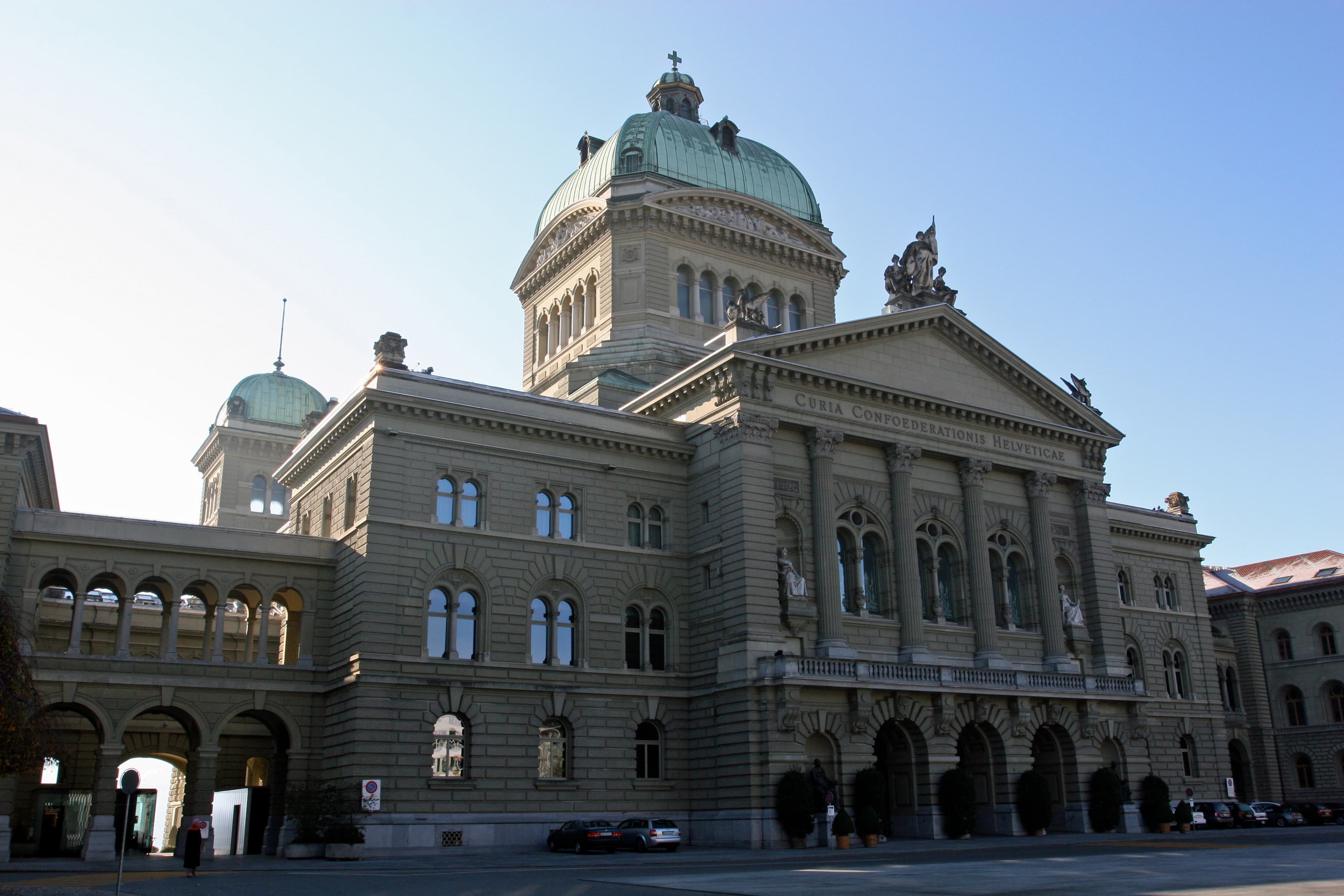
The comparison with Switzerland is useful precisely because the mechanisms differ. Our report on the Swiss neutrality referendum result concerns a direct vote on a proposal; France's senators are chosen by an electoral college. For further reporting across these different institutions, continue with our Europe coverage.
Cover: the French Senate chamber on September 17, 2005, photographed by David Monniaux, CC BY-SA 3.0. Historical context, not election-night photography; the source image is reproduced without editing.

Read Next
Related Stories
Swiss Neutrality Vote: 70.15% Reject Stricter Rules on Sanctions and Military Cooperation
Switzerland remains neutral after voters rejected a stricter constitutional definition. The official result and the sanctions exceptions explain what stays unchanged.

Denmark's 11-Month Military Service Starts With 1,600 Volunteers Across 14 Bases
Denmark's first full 11-month military-service cohort includes about 1,600 volunteers at 14 sites. Equal conscription applies if volunteers fall short.

Lula Wins PT Nomination for Brazil's 2026 Election With Alckmin as Running Mate
Brazil's Workers' Party formally selected Lula and Geraldo Alckmin for the 2026 presidential election. Candidate registration is due August 15.