Ann Patchett's Dayton Honor Treats Literary Citizenship as Part of the Prize
Ann Patchett's June 17, 2026 Dayton Literary Peace Prize honor lands as literary institutions are rewarding more than finished books. The sharper signal is that bookselling, anti-censorship work and public literary stewardship now count as part of an author's cultural record.

Ann Patchett's newest honor arrived on Wednesday, June 17, 2026 with the kind of headline that can look smaller than it really is. AP reported that the Dayton Literary Peace Prize Foundation named Patchett the 2026 recipient of its Ambassador Richard C. Holbrooke Distinguished Achievement Award, a career honor tied to the legacy of the Dayton Peace Accords. On paper, that reads like another well-deserved plaque for a writer who already has a shelf full of them. In practice, it says something more current about what literary prestige now wants to reward. Patchett is being recognized not only for the novels that made her famous, but for the public work around them: the bookstore, the anti-censorship stance, the visible defense of literary community as a civic institution rather than a private taste.
PEN America / YouTube — Ann Patchett accepts the 2026 PEN/Audible Literary Service Award
PEN America's May 14, 2026 video is the clearest recent on-camera example of the public literary role that today's Dayton honor is also rewarding. Use the visible YouTube fallback link in the article if the player is blocked.
That broader meaning is not imported from nowhere. PEN America framed its own 2026 Literary Service Award around Patchett's "singular humane voice" and her work nurturing readers through Nashville's Parnassus Books. Patchett's official site is currently led by news that Whistler became an instant No. 1 New York Times bestseller, while also reminding visitors that her public-facing platforms run through Parnassus rather than a personal celebrity feed. Put those threads together and the Dayton decision looks less like a backward-looking tribute than a very modern argument: in 2026, literary authority includes what a writer builds around books, not just what lands between the covers.
| Date | Recognition or milestone | Why it changes the reading of today's prize |
|---|---|---|
| May 14, 2026 | PEN America honors Patchett with its Literary Service Award | It formally links her fiction career to her public role in defending and sustaining literary culture |
| June 2, 2026 | Whistler reaches No. 1 on the New York Times list | Her current commercial relevance is not nostalgic; she is being honored while still shaping the market |
| June 17, 2026 | Dayton names Patchett its Holbrooke Distinguished Achievement honoree | The award folds artistic reputation and civic literary work into one frame |
| September 2026 | Dayton's fiction and nonfiction winners will be announced | Patchett's honor sets the moral and cultural tone for the rest of this year's prize cycle |
The industry keeps widening its idea of what a major author does
Entertainment coverage often mishandles literary prizes by flattening them into résumé maintenance. That misses what is changing in the culture business. Patchett's value to institutions like Dayton and PEN is not reducible to a single title, however admired Bel Canto, The Dutch House or Tom Lake may be. It also lies in her visible usefulness to the literary world that surrounds the books: independent retail, reader discovery, anti-ban solidarity and the quiet legitimizing force of an author who still behaves as if the public life of reading matters. That is why this award lands differently from a simple lifetime-achievement salute. It arrives while the industry is still sorting out whether authors are supposed to be brands, activists, booksellers, community organizers or some unstable mix of all four.
Patchett has spent the last decade making that mix look less unstable than inevitable. Her bookstore is not a side project in the way celebrity ventures often are. It has become part of the way her authority is interpreted. The result is that awards built around peace, justice and public understanding no longer have to stretch to explain why a novelist belongs in that conversation. They can point to the work surrounding the fiction and call it part of the text. That logic helps explain why the Dayton announcement feels timely even for readers who have not opened her latest novel.
Dayton is also making a statement about the literary middle
The other revealing detail in AP's report is what accompanied the honor: the foundation also announced finalists for this year's fiction and nonfiction book awards, including Amanda Knox, Danielle Leavitt, Jack Fairweather, Eve L. Ewing, Gish Jen, Karen Russell and Sam Wachman. In other words, the prize used Patchett's recognition to throw a brighter light on the wider field. That is a familiar cultural move now. Awards increasingly need a figure who can stabilize attention long enough for a broader slate to matter. Patchett fits that role unusually well because she still carries establishment credibility without feeling detached from the present anxieties of publishing.
There is also a business reading here. Literary institutions are competing in the same attention economy as streaming premieres, prestige-TV finales and celebrity confessionals. One way to survive that competition is to make the prize itself tell a larger story about values and stewardship. The Dayton foundation appears to understand that. By centering Patchett, it gets a recognizable name. By centering the Holbrooke frame, it gets a peace-and-public-life vocabulary. By releasing finalists at the same time, it turns one announcement into a small map of where serious literary attention may move next.
- Bookseller-author phase: Parnassus evolves from a bookstore association into a core part of Patchett's public identity.
- Service recognition: PEN America explicitly rewards the literary-community work around the books, not just the books themselves.
- Commercial proof: Whistler reaching No. 1 keeps Patchett current inside the market, not merely inside the canon.
- Dayton's signal: The Holbrooke honor reframes literary prestige as a blend of craft, public usefulness and cultural stewardship.
The less flashy takeaway is the most durable one
In the short term, the announcement gives entertainment desks a clean culture brief and gives Dayton a marquee name for its 20th-anniversary season. In the longer term, it reinforces a bigger shift: literary institutions are rewarding authors who can still make reading feel social, local and publicly consequential. That helps explain why Patchett keeps showing up in these conversations. She is not just admired. She is legible to institutions trying to prove that literature still belongs in public life, not only on a syllabus or a prize list.
PanoramaDigest has written before about how institutions turn prestige into a broader map of cultural power, most recently in its look at the James Beard winners as a regional story about American taste. The Dayton decision belongs in that same family of signals. It is about one person, but it is also about the standards a gatekeeping institution wants to advertise about itself. In Patchett's case, those standards now include artistic quality, independent-bookstore stewardship and a willingness to treat censorship fights as part of cultural labor rather than an optional side debate.
If the PEN America video below does not render in your browser, use the direct YouTube link at youtube.com/watch?v=23XGC_FopR8. It is not the Dayton acceptance speech, which has not been published yet, but it is the clearest recent on-camera example of the public literary role that today's prize is also recognizing.
Read Next
Related Stories
Vincent Pastore Dies at 80: The Sopranos Actor's Career Beyond Big Pussy
Vincent Pastore, who made friendship and betrayal inseparable as Big Pussy on The Sopranos, has died at 80. His manager confirmed the death to AP.

Ryan Gosling Will Play Ghost Rider in Marvel's 2028 Film Directed by Shawn Levy
Marvel confirmed Ryan Gosling as its new Ghost Rider at San Diego Comic-Con. Shawn Levy will direct the 2028 film, giving the MCU character his first standalone movie since the rights returned to Marvel.
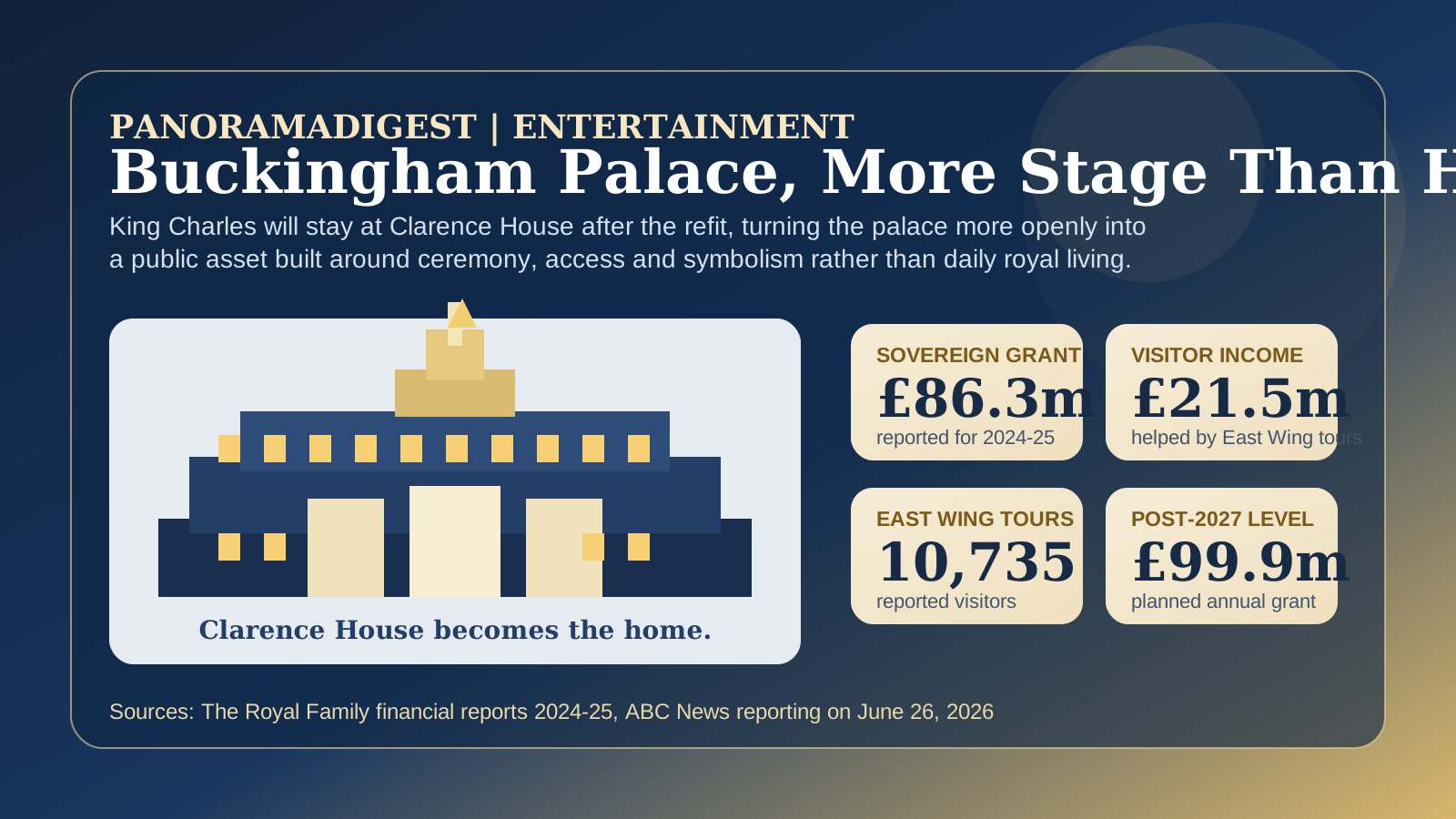
King Charles Won't Live at Buckingham Palace. That Makes the Monarchy's Biggest Symbol More Stage Than Home.
King Charles III and Queen Camilla will stay at Clarence House after Buckingham Palace's renovation. The larger cultural shift is that Britain's most famous royal address is being treated less as a private home and more as a public-facing stage set whose value must now be justified in visits, events and visible utility.