The James Beard Winners Turned Prestige Into a Regional Map of American Dining
The June 15, 2026 James Beard Awards crowned big names, but the sharper signal was geographic: from Philadelphia and Providence to Portland, Bozeman and Houston, the winners made American dining prestige look more regional and more civic than a one-city coronation.
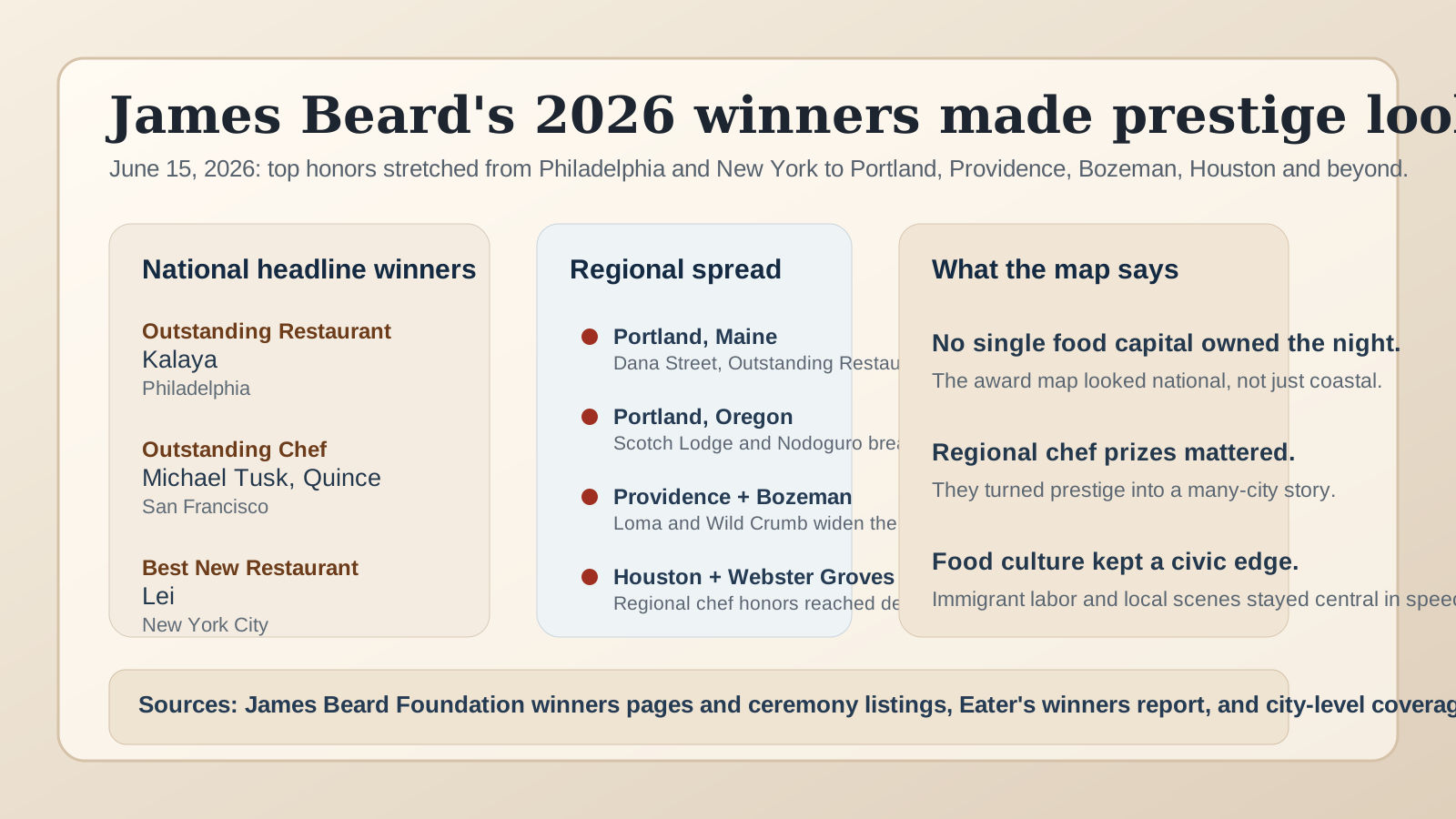
The 2026 James Beard Awards handed out the usual headline names on Monday night, June 15, at the Lyric Opera of Chicago. The James Beard Foundation's official winners page and Eater's ceremony report confirm the top-line results readers were searching for: Kalaya in Philadelphia won Outstanding Restaurant, Michael Tusk of Quince in San Francisco won Outstanding Chef, New York's Lei took Best New Restaurant, Providence's Loma won Best New Bar, and Bozeman's Wild Crumb took Outstanding Bakery. But the more interesting read is not who won a single category. It is what the full winners map said about where cultural authority in American dining now lives.
James Beard Foundation / YouTube — 2026 James Beard Restaurant and Chef Awards
Official James Beard ceremony livestream from Chicago. If the player does not load, use the direct YouTube link.
This did not feel like a one-city victory lap. It looked more like a prestige map stretching across Philadelphia, San Francisco, New York, Providence, Portland, Houston, Webster Groves, Dover and Asheville, with both Portlands collecting major moments in the same night. That matters because awards culture often drifts toward a lazy geography in which New York and Los Angeles function as default capitals and everyone else is written as an upset. The 2026 James Beard results were broader than that. They still rewarded elite institutions, but they did so in a way that made regional scenes look less like satellites and more like engines.
| Category | Winner | City | What the result signaled |
|---|---|---|---|
| Outstanding Restaurant | Kalaya | Philadelphia | A city long treated as an underdog in national food prestige now looks fully central to it. |
| Outstanding Chef | Michael Tusk, Quince | San Francisco | Classic fine-dining authority still matters when it keeps evolving rather than merely defending its legend. |
| Best New Restaurant | Lei | New York City | New York still wins, but not in a way that swallowed the rest of the board. |
| Outstanding Restaurateur | Dana Street | Portland, Maine | Institution-building in smaller markets can now command national attention on its own terms. |
| Outstanding Bar and Best Chef: Northwest & Pacific | Scotch Lodge and Ryan Roadhouse of Nodoguro | Portland, Oregon | One regional scene can own a night without needing New York-style scale to do it. |
| Regional Best Chef honors | Winners included Jesse Ito, Loryn Nalic, Evan Hennessey, Taylor Montgomery and Evelyn Garcia with Henry Lu | Philadelphia, Webster Groves, Dover, Leicester and Houston | The center of culinary ambition keeps spreading into cities that used to be treated as side notes. |
The top awards refused a single culinary capital
The Beard Awards have always needed to do two things at once: reward excellence and persuade the country that excellence is not monopolized by a tiny handful of ZIP codes. Some years they manage the first task better than the second. This year looked more balanced. Eater's recap shows the marquee prizes split across distinct food cultures rather than clustering into one prestige corridor. That balance is not cosmetic. It changes how readers, diners and investors imagine where the next serious restaurant city might be.
Philadelphia's Kalaya is the clearest example. Philly Eater's local coverage treated the win as a landmark both for the city and for Thai cuisine, which feels right. A result like that does more than validate one room. It tells the broader restaurant world that regional identity and national importance no longer have to sit in opposition. A restaurant can be fiercely of its place and still become the story of the night.
The regional chef board mattered more than it usually does
Readers often skim straight past the regional categories, but this was the part of the winners list that gave the night its strongest shape. Jesse Ito in Philadelphia, Loryn Nalic in Webster Groves, Evan Hennessey in Dover, Taylor Montgomery in Leicester, and Evelyn Garcia and Henry Lu in Houston together make a stronger argument than any speech could. The culinary center of gravity keeps widening. Prestige no longer arrives only where media density is highest; it arrives where local scenes are coherent enough to produce their own confidence.
Portland, Oregon, made that point in a slightly different register. Google News surfaced the city's double win as one of the freshest usable entertainment candidates in the feed scan, and local coverage emphasized how much those awards meant to Portland's self-image. Scotch Lodge winning Outstanding Bar and Ryan Roadhouse of Nodoguro winning Best Chef: Northwest & Pacific suggests a scene that is not begging to be noticed anymore. It expects to be taken seriously. That is a meaningful cultural shift.
The speeches kept the food industry's politics in the room
The night also resisted becoming a pure lifestyle fantasy. Eater noted that speeches repeatedly emphasized immigrant labor and the industry's dependence on it, with No Us Without You co-founder Damián Díaz making the point directly from the stage. That matters because the James Beard Awards are not only a celebration of taste. They are one of the few moments when the restaurant industry publicly narrates what kind of moral economy it wants attached to its glamour. Fine dining can still lapse into self-congratulation, but on this night the winners' map and the rhetoric around it both pushed against the idea that prestige is just luxury talking to itself.
PanoramaDigest has been writing lately about how institutions try to hold cultural credibility under pressure, from the Kennedy Center's public identity fight to the question of what makes a still-open David Hockney show feel newly alive after an obituary. The Beards sit in a different corner of culture, but the same test applies. Do they still reward something the country can feel beyond the room? This year, the answer looked more like yes.
Why this winner list will age well
The fastest version of the story is just a names list. The better version is that the 2026 James Beard Awards made American dining look nationally distributed, not merely fashionable. San Francisco still held one of the grand old prestige positions. New York still took a headline trophy. But the emotional center of the ceremony was harder to pin down to one coast, one style or one clique. That is why the results felt stronger than a coronation. They looked like a live map of a country whose most interesting food culture is now being built in several places at once.
Watch the official ceremony livestream: if the embedded player below does not load, use the direct YouTube link at youtube.com/watch?v=CwqKSoCYqoc.
Read Next
Related Stories
Vincent Pastore Dies at 80: The Sopranos Actor's Career Beyond Big Pussy
Vincent Pastore, who made friendship and betrayal inseparable as Big Pussy on The Sopranos, has died at 80. His manager confirmed the death to AP.

Ryan Gosling Will Play Ghost Rider in Marvel's 2028 Film Directed by Shawn Levy
Marvel confirmed Ryan Gosling as its new Ghost Rider at San Diego Comic-Con. Shawn Levy will direct the 2028 film, giving the MCU character his first standalone movie since the rights returned to Marvel.
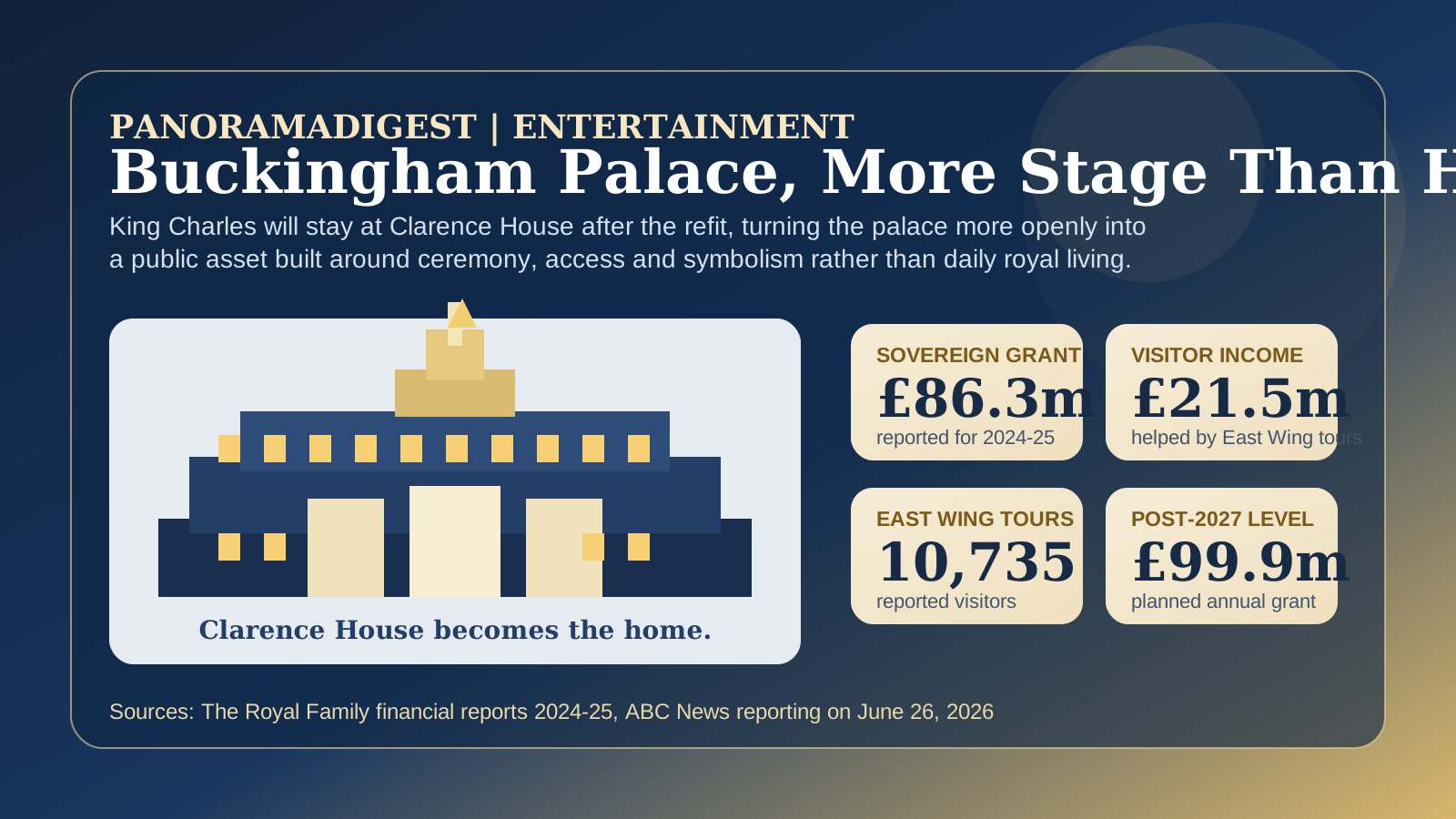
King Charles Won't Live at Buckingham Palace. That Makes the Monarchy's Biggest Symbol More Stage Than Home.
King Charles III and Queen Camilla will stay at Clarence House after Buckingham Palace's renovation. The larger cultural shift is that Britain's most famous royal address is being treated less as a private home and more as a public-facing stage set whose value must now be justified in visits, events and visible utility.