Toy Story 5's Huge Opening Is Really a Test of Whether Family Movies Still Beat the Tablet
Toy Story 5 did more than open to a franchise-best $160 million. It showed that families will still turn a sequel into a shared theatrical event when the movie speaks directly to a live parental anxiety about screens, attention and play.
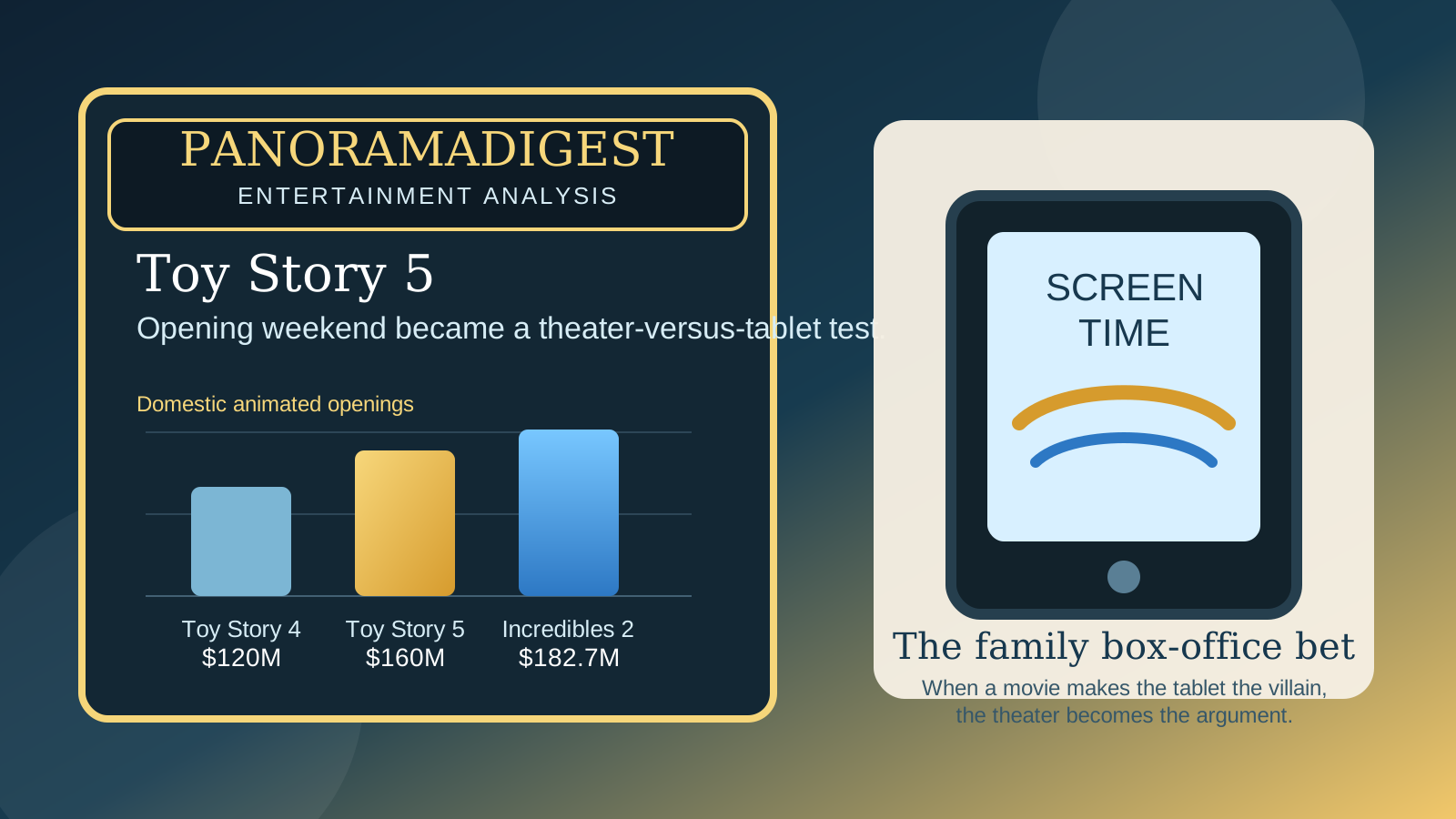
The easy headline on Sunday, June 21, 2026, is that Toy Story 5 opened like a machine. The Associated Press reported that Disney and Pixar's sequel pulled in an estimated $160 million domestically and $312 million worldwide, easily the biggest global launch of 2026 so far. Disney's own Sunday release understandably celebrated the same result as the franchise's best opening and the second-biggest domestic animated debut ever. Those numbers matter. The more useful reading is what kind of movie generated them. This was not a random family turnout or a routine nostalgia tax. It was a theatrically scaled vote for a story that turns one of modern parenting's most recognizable arguments into the villain: the glowing screen that keeps replacing shared playtime with managed attention.
Pixar / YouTube — Toy Story 5 | Official Trailer | In Theaters June 19
Pixar's official trailer is the cleanest current embed for readers who want the film's setup alongside the box-office story. The article body includes a direct-watch fallback link.
That is why the box-office result says something broader than "people still like Pixar." Pixar's official synopsis makes the conflict explicit. Bonnie gets pulled toward Lilypad, a new tablet character voiced by Greta Lee, and the toys have to fight for relevance inside a room that now has a shinier center of gravity. The Guardian's same-day analysis argues that the movie does not become a crude anti-tech sermon. That restraint is part of the point. Parents do not live inside a simple screen-time morality play either. They live inside compromise, guilt, convenience and hope. Toy Story 5 found a way to package that tension inside a franchise families already trust, then sent them to the one place that still asks them to put the tablet away for two hours.
Watch: Pixar's official trailer is here: Toy Story 5 | Official Trailer | In Theaters June 19. If the embedded player is blocked in your browser, that direct link remains available.
The weekend numbers are strong. The comparison is stronger.
AP noted that the film's $160 million domestic launch blew past Toy Story 4's $120 million start in 2019, while Disney said only Incredibles 2 opened bigger among animated releases in North America. AP also reported that the summer box office is now running 15% ahead of summer 2025 and only 1.9% behind the same point in 2019, not adjusted for inflation. That matters because Toy Story 5 did not arrive into a dead marketplace waiting for a miracle. It arrived into a summer that is recovering because audiences are responding to a mix of big brands and distinct originals. The movie's contribution to that recovery is especially revealing because family audiences have been among the easiest to lose to living-room convenience.
| Opening benchmark | Verified figure | Why it matters |
|---|---|---|
| Toy Story 4 domestic opening | $120 million | It shows how much higher the fifth film opened than the previous series high-water mark. |
| Toy Story 5 domestic opening | $160 million | The franchise did not merely hold value seven years later. It expanded it. |
| Toy Story 5 worldwide opening | $312 million | The appeal was not just domestic nostalgia; it traveled immediately. |
| Incredibles 2 domestic opening | $182.7 million | That remains the animated record ahead of Toy Story 5, which helps keep the result impressive without exaggeration. |
Why the tablet angle matters more than the sequel angle
Hollywood will be tempted to learn the laziest lesson first: known brands still print money. That is true, but it is incomplete to the point of being dangerous. Plenty of familiar brands limp into theaters as obligation purchases and never become a real conversation. What Toy Story 5 did differently was turn its premise into a recognizable family argument with unusually broad reach. The toys are not battling a generic threat. They are battling the fear that a child's imaginative life can be reorganized by a device that is useful, portable, socially normal and very hard for adults to regulate cleanly. That is not background flavor. It is the business case.
The irony is obvious and Pixar knows it. Guardian's review makes clear that the movie does not pretend technology is a cartoon evil, and Disney will eventually stream the film to the same devices it dramatizes as competition. That paradox does not weaken the story. It strengthens the theatrical reading. For one weekend at least, families paid premium prices to watch a movie about screen-time displacement in the one format that still imposes a collective screen on everyone at once. The theater was not just where the film played. The theater was part of the thesis.
PanoramaDigest made a different version of the shared-audience argument in its recent look at James Burrows and the disappearing common room of sitcom TV. This is the family-film version of the same anxiety. Viewers keep returning when culture still feels communal enough to deserve a trip rather than a scroll.
The real risk now is that studios confuse event discipline with sequel permission
That is where this weekend should make executives a little less comfortable than the gross suggests. AP reported that Toy Story 5 cost $250 million before marketing, which means the bar was always going to be high. Disney got the payoff this time because the movie arrived with a clear emotional frame, strong reviews and an A CinemaScore. But the lesson is not that every inherited property can be revived forever. The lesson is that even giant franchises need a current social hook, an intelligible reason for parents to feel that leaving home still adds something to the experience. Toy Story 5 found one in the pressure families already feel from screens, short attention loops and the fear that play itself is becoming more managed than invented.
The next few weeks will matter because the staying power may end up being as revealing as the launch. If the movie holds, that will support the argument that family audiences were not just satisfying curiosity. They were endorsing a story that speaks to the present tense. If it fades fast, then the weekend may tell a narrower story about brand loyalty and summer timing. Either way, Sunday already delivered one firm conclusion. The family box office is not gone. It is choosier. When Hollywood gives parents and kids a reason to think the theater itself is part of the answer, they still show up in blockbuster numbers.
Reader Sentiment & Impact Pulse
How do you evaluate the primary outcome of this development?
Select an option to cast your perspective. Responses are anonymous and aggregated in real time.
Key Context & Frequently Asked Questions
Toy Story 5 did more than open to a franchise-best $160 million. It showed that families will still turn a sequel into a shared theatrical event when the movie speaks directly to a live parental anxiety about screens, attention and play. This analysis from PanoramaDigest examines primary documentation, operational implications, and broader institutional impacts across entertainment.
Read Next
Related Stories

Vincent Pastore Dies at 80: The Sopranos Actor's Career Beyond Big Pussy
Vincent Pastore, who made friendship and betrayal inseparable as Big Pussy on The Sopranos, has died at 80. His manager confirmed the death to AP.

Ryan Gosling Will Play Ghost Rider in Marvel's 2028 Film Directed by Shawn Levy
Marvel confirmed Ryan Gosling as its new Ghost Rider at San Diego Comic-Con. Shawn Levy will direct the 2028 film, giving the MCU character his first standalone movie since the rights returned to Marvel.
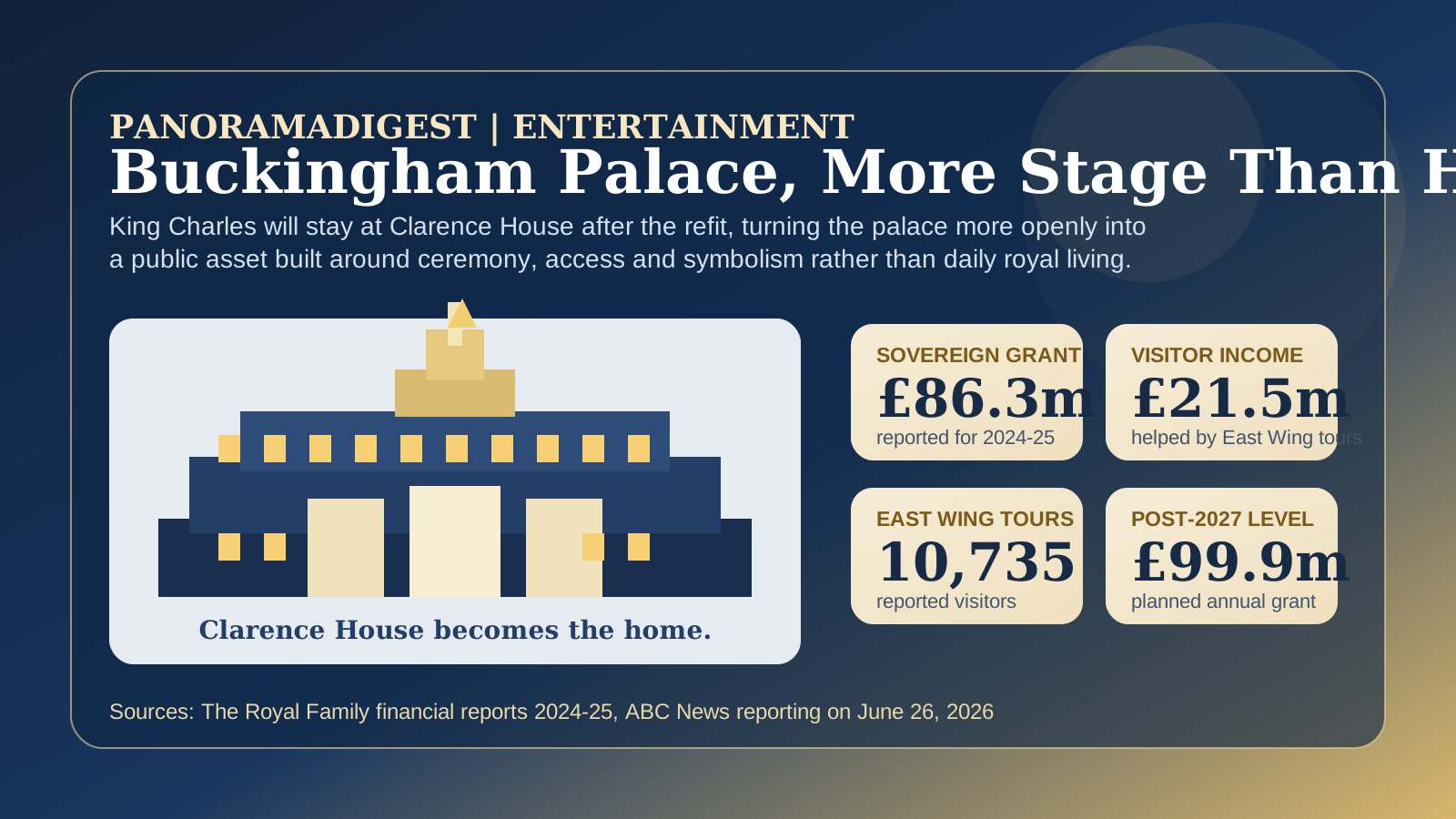
King Charles Won't Live at Buckingham Palace. That Makes the Monarchy's Biggest Symbol More Stage Than Home.
King Charles III and Queen Camilla will stay at Clarence House after Buckingham Palace's renovation. The larger cultural shift is that Britain's most famous royal address is being treated less as a private home and more as a public-facing stage set whose value must now be justified in visits, events and visible utility.