World Food Safety Day 2026: WHO Estimates and Prevention Priorities
The new WHO burden estimates gave World Food Safety Day a sharper edge on June 7, 2026: unsafe food is not a hygiene slogan but a public-health systems problem measured in illness, trust, and policy follow-through.
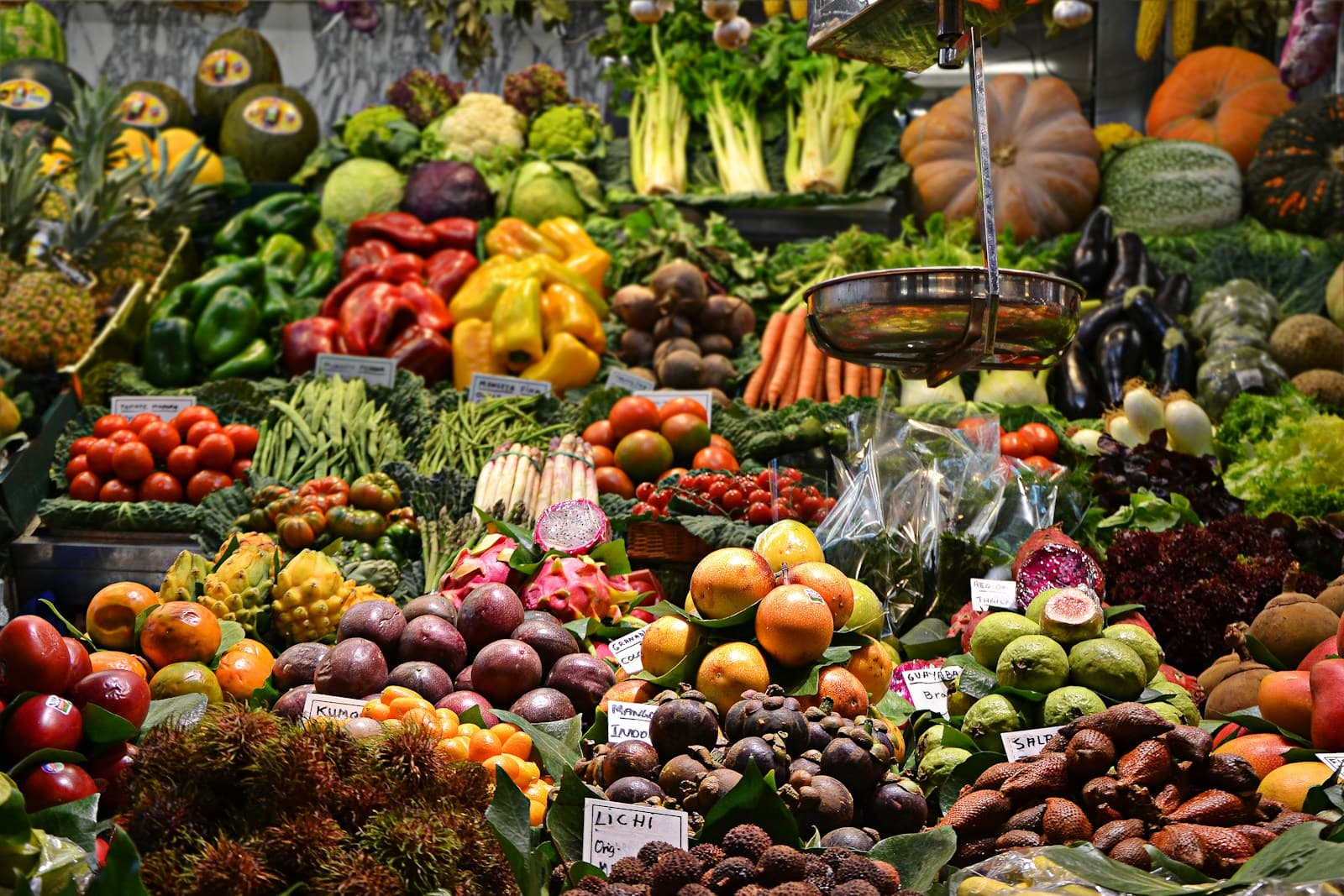
World Food Safety Day can sound like the sort of calendar observance readers are expected to nod at politely and then forget before lunch. This year, that would miss the point.
World Health Organization (WHO) — World Food Safety Day: From burden to solutions – safe food everywhere
Official WHO video for World Food Safety Day 2026, focused on turning updated burden estimates into prevention and policy action.
On June 4, 2026, the World Health Organization released updated estimates showing that unsafe food causes about 866 million illnesses and 1.5 million deaths each year worldwide. By the time World Food Safety Day arrived on June 7, the annual awareness campaign had stopped looking like a soft public-service ritual and started looking more like a hard question for governments, regulators, food companies, and consumers: what exactly are they doing with the data now that the burden is harder to minimize?
The official theme this year, From burden to solutions - safe food everywhere,
is not subtle. The WHO campaign page and the FAO/WHO Codex World Food Safety Day page both frame the day around a simple idea: counting illness is only useful if the count changes policy, business practice, and everyday behavior. Public health systems fail all the time not because nobody has a slogan, but because too many institutions treat evidence as a press release instead of an operating instruction.
The WHO numbers sharpen the scale of that failure. The agency says children younger than five face almost three times the risk of illness from unsafe food compared with older children and adults, while chemical hazards drive a disproportionate share of deaths. That shifts the conversation away from the familiar image of a brief stomach bug and toward something less comfortable: food safety is a development issue, a clinical issue, an industrial issue, and a trust issue at the same time.
- June 4, 2026: WHO published new global estimates linking unsafe food to 866 million illnesses and 1.5 million deaths annually.
- June 7, 2026: World Food Safety Day put those figures at the center of its
From burden to solutions
campaign. - June 8, 2026: The Codex program schedules a follow-up webinar on standards and implementation, underscoring that the next step is policy execution, not just messaging.
The new numbers make the old public-health split harder to defend
Food safety often gets trapped between two unsatisfying narratives. In wealthy countries, it is reduced to personal caution: wash your hands, cook things thoroughly, avoid cross-contamination, check expiration dates. In poorer settings, it is treated as one more sprawling infrastructure problem that is too large to explain clearly. Both narratives are incomplete.
The new WHO release argues, in effect, that the modern burden comes from both household decisions and system design. Water and sanitation matter. Surveillance matters. Enforcement matters. Supply chains matter. Agricultural practices matter. Clear risk communication matters. If any one of those breaks badly enough, the burden shows up at the clinic, the pharmacy, the factory floor, the school attendance ledger, and the family budget.
That is why the campaign's emphasis on solutions is more important than the awareness branding. Awareness without implementation is mostly mood. A better count is useful only if it tells regulators where to inspect, helps ministries prioritize chemical hazards, gives local health agencies evidence for prevention budgets, and pressures food businesses to treat contamination control as core operations rather than compliance theater.
The U.S. is not outside this story just because its food system is richer
American readers should resist the temptation to read global food-safety stories as problems that happen somewhere else. The FDA's foodborne-pathogens page says the federal government estimates roughly 48 million foodborne illnesses a year in the United States, equivalent to about 1 in 6 people getting sick, with around 128,000 hospitalizations and 3,000 deaths. That is a different data set from the WHO estimate, and it should not be treated as a direct apples-to-apples comparison. But it makes the same broader point: even in a country with strong regulators, advanced laboratory capacity, and a relatively safe food supply, the burden remains big enough to matter in ordinary life.
| What the data says | Source | Why it matters |
|---|---|---|
| 866 million illnesses and 1.5 million deaths annually worldwide | WHO, released June 4, 2026 | Unsafe food remains a mass-casualty public-health issue, not a niche sanitation topic. |
| Children under five face nearly triple the risk of illness | WHO | The burden is not evenly shared; it falls hardest on children and vulnerable households. |
| About 48 million illnesses, 128,000 hospitalizations, and 3,000 deaths each year in the United States | FDA federal estimate | Even high-capacity systems still carry a large foodborne-disease burden. |
| Chemical hazards accounted for 73% of deaths linked to contaminated food in the 2021 WHO analysis | WHO | The danger is not limited to short-term infection; long-horizon exposures matter too. |
The instinctive U.S. version of the food-safety debate often focuses on recalls once the damage is visible. That is understandable, but it is backward. The better test is whether public agencies, retailers, producers, and consumers can act before a recall becomes the first headline most people notice. The burden numbers support a more preventive standard: better inspection targeting, clearer labeling, smarter outbreak detection, stronger communication to vulnerable groups, and less tolerance for the assumption that contamination is just an occasional accident.
Why trust matters as much as science
The WHO and Codex framing this week is heavy on science, and rightly so. Reliable data helps identify which hazards are doing the most damage and where the interventions are likeliest to work. But the second half of the story is trust.
Consumers have to believe warnings, understand labels, and know what advice applies to them. Workers in processing, retail, and food service need systems that make safe behavior realistic under real time pressure. Businesses have to believe that prevention is cheaper than cleanup and reputation repair. Governments need enough public credibility that official guidance is not instantly treated as background noise or political spin.
That trust problem is one reason food safety can become politically invisible even when the burden is enormous. It rarely arrives as one spectacular event. More often it is diffuse, undercounted, misattributed, and spread across many jurisdictions. That makes it easier for institutions to talk about food safety as values rather than capacity. The WHO release is a reminder that capacity is the whole argument.
What should happen after June 7
World Food Safety Day is useful only if June 8 feels different from June 6. That means three practical shifts should follow this year's campaign.
First, governments should treat burden estimates as budget instructions. If the numbers show where the illness and death are concentrating, surveillance, laboratory capacity, inspection priorities, and public messaging should follow that map. Second, food businesses should stop treating standards as a static compliance checklist and start treating them as risk management in public view. Third, readers should stop hearing food safety
as a lecture about kitchen etiquette and hear it for what it really is: a chain of decisions that links farms, imports, factories, transport, retail, regulation, water systems, and households.
The best thing about this year's campaign is that it makes that chain harder to ignore. The worst outcome would be to absorb the new numbers, praise the awareness day, and keep operating as if contaminated food were mostly a matter of personal carelessness.
It is not. On June 7, 2026, the more honest conclusion is this: unsafe food remains a systems problem hiding inside ordinary life, and the value of better data will be measured by whether institutions finally behave like they believe it.
For further reporting on this subject, see our WHO coverage.
Read Next
Related Stories

2026-27 Flu Vaccine Match: Why Lab Results Are Not an Effectiveness Rate
Early CDC testing finds encouraging recognition of sampled flu viruses. The denominators explain why those results cannot tell you a vaccine's real-world protection rate.
WHO Pregnancy-Hypertension Roadmap: Priorities Through 2035
WHO’s October 8 roadmap connects pregnancy-hypertension research, clinical standards and access to care. Here is what its figures and five priorities actually measure.

UK Sugar Rationing Study Links the First 1,000 Days to Lower Dementia Risk
A UK Biobank natural experiment linked sugar rationing during the first 1,000 days to lower later-life risks of dementia, Alzheimer's disease, depression and anxiety, but it does not prove causation.