France's 2026 Wildfire Season Reaches Northern Forests as July Heat Dries the Landscape
France's 2026 wildfire danger has spread beyond the Mediterranean as exceptional heat, dry soils and wind raise the risk across regions that historically faced fewer large fires.
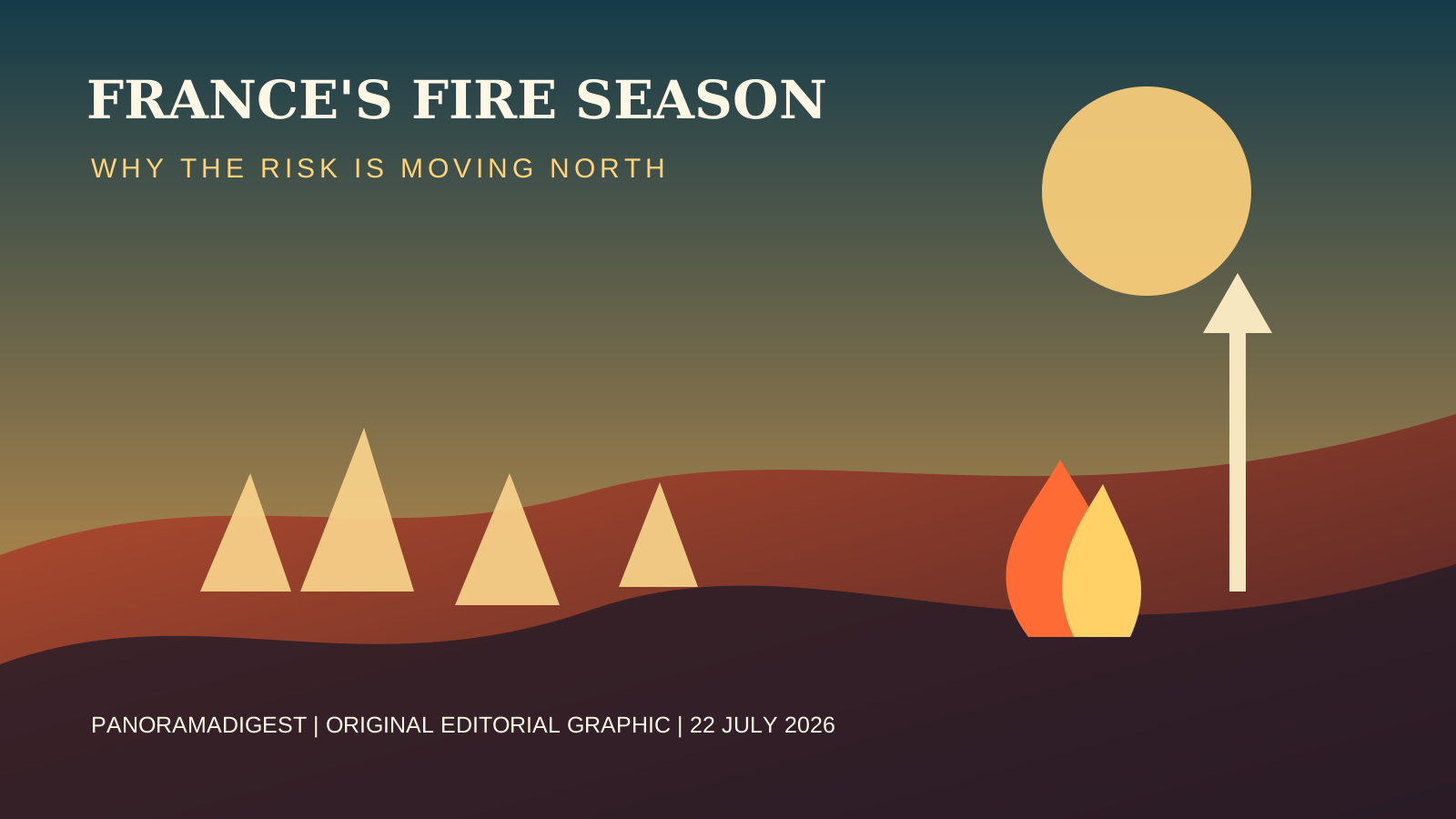
France's 2026 wildfire season is unusually broad, not simply unusually hot: by July 8, 54 departments were under elevated or very high forest-fire danger, compared with a pre-2026 maximum of 29 in 2025, according to Météo-France. The immediate explanation is a combination of heat, very dry soils, low humidity and wind, but the durable lesson is geographic. Fire risk is reaching farther north and earlier in the summer than France's traditional Mediterranean-centered model assumed.
Euronews — Fast-moving wildfire rips through southern France
Euronews video context on the current southern France wildfire. If the player fails, use the direct YouTube link.
Today's active story is the scale of the destruction. Euronews reported on July 22 that firefighters had brought a southern French wildfire under control while France continued to record an exceptional number of outbreaks. That video context is useful, but the national risk picture comes from French public agencies: Météo-France, the government's information service and the forest-fire warning system.
PanoramaDigest previously explained how the Conwy Mountain wildfire triggered evacuations and how official warning systems shaped the Texas flood response. France's case adds a different public-safety problem: the warning is not only where flames are burning, but where conditions make a small ignition capable of becoming a fast-moving fire.
| Indicator | Official figure or finding | What it means |
|---|---|---|
| Geographic spread | 54 departments at elevated or very high danger on July 8 | Risk extended well beyond the Mediterranean south. |
| Previous benchmark | Maximum of 29 departments at those levels before 2026 | The July 8 footprint was nearly twice the previous 2025 peak. |
| Soil moisture | Extremely low nationally by July 17, according to Météo-France | Dry ground and vegetation can sustain faster spread after ignition. |
| Human ignition | France's government says about nine of ten forest-fire starts are human-caused | Prevention and behavior remain as important as firefighting capacity. |
What changed in the geography of risk
For decades, France's most familiar wildfire risk was concentrated around the Mediterranean basin and other dry southern landscapes. Météo-France now describes a northward expansion of the meteorological conditions that favor fire. Its climate assessment says higher temperatures, lower rainfall in fire-prone periods and drier vegetation can make regions from the Loire toward the Paris Basin face levels of danger historically associated with the Mediterranean hinterland.
That does not mean every northern department will experience a large wildfire. The Météo des forêts is a danger indicator, not a live map of fires. It combines weather forecasts and vegetation dryness to estimate how conditions affect ignition and spread. A low danger rating reduces the meteorological pressure but does not make an ignition impossible; a high rating means that an avoidable spark has more opportunity to become a serious incident.
Why the soil-moisture number matters
Météo-France said on July 20 that soil moisture had reached an extremely low level nationwide by July 17, earlier in the summer than comparable reference years including 1976, 2022 and 2025. That is not the same as saying every forest is equally dry. It is a national signal that the background conditions are worsening the fire-weather problem even when a particular department receives a short rainstorm.
Fire behavior is shaped by several variables at once: temperature increases evaporation, low humidity removes moisture from vegetation, wind carries flames and embers, and the amount and continuity of dry fuel determine how quickly a fire can move. A rainfall event can lower danger locally without resetting the broader seasonal balance. That is why agencies publish repeated, department-level updates rather than one national all-clear.
The operational pressure on France
The French government's July 2 crisis update recorded nearly 7,000 fire starts and 8,700 hectares burned since the beginning of the season, with about 2,000 professional, volunteer, civilian and military firefighters mobilized each day at that point. The figures are an early-season snapshot, not a final annual total, but they show why a geographically wider season creates a logistics problem. Aircraft, crews, command teams and evacuation capacity cannot be in two departments at once.
The same government briefing said nine out of ten forest-fire starts are human in origin, whether deliberate or accidental. That statistic does not assign blame for any particular incident. It identifies the practical prevention opportunity: cigarette disposal, barbecues, machinery, road sparks and other everyday activities can become high-consequence events when vegetation is dry and wind is strong.
The French government has also outlined extreme-heat response measures, including local cooling centers and registers for vulnerable people. Those systems matter during wildfire episodes because smoke, evacuation, heat exposure and interrupted services can compound one another. Readers can use PanoramaDigest's Emergency Preparedness hub for the broader principles: follow official alerts, know evacuation routes, protect medicines and documents, and do not drive toward smoke or active fire.
What to watch next
- Department-level danger maps: whether the high and very high zones continue to include central and western departments, rather than retreating quickly to the Mediterranean.
- Soil and vegetation recovery: whether meaningful rainfall changes the underlying dryness or only produces short-lived local relief.
- Firefighting demand: whether multiple simultaneous incidents stretch aircraft, crews and evacuation resources.
- Prevention measures: whether prefectures restrict access, machinery or recreational fires as conditions worsen.
The durable conclusion is narrower than a claim that climate change caused any one French fire. Official data show that France entered July 2026 with a wider and earlier danger footprint, while Météo-France's climate analysis explains why warmer and drier conditions can lengthen the season and move risk toward regions that once faced fewer large fires. That is the public-interest story: the map of preparedness is changing before the map of flames is complete.
Watch related context: the official Euronews report Fast-moving wildfire rips through southern France shows the current fire context. If the player does not load, use the direct YouTube link.
Read Next
Related Stories
Old Trails Fire Damage Estimate Reaches 640 Structures in Spokane
Spokane County's preliminary estimate says the Old Trails fire destroyed 640 structures, while evacuation zones remain active across northwest Spokane.

USCIS Can Now Refer Asylum Cases to Immigration Court Without an Interview
A DHS rule effective July 28 lets USCIS send some affirmative asylum applications directly to immigration court. Referral is not a denial, but the interview is no longer guaranteed.

Seattle Center Shooting Kills Three and Injures Four at Bite of Seattle Festival
Seattle police say a shooting at the Bite of Seattle festival killed three people and injured four others, including a 2-year-old boy. One suspect was arrested and police continued searching for another.