ASEAN Foreign Ministers Open Manila Talks as South China Sea Incident Raises Regional Stakes
ASEAN foreign ministers opened three days of meetings in Manila as a new incident near Second Thomas Shoal and the wider Iran crisis put maritime security and energy routes at the center of regional diplomacy.
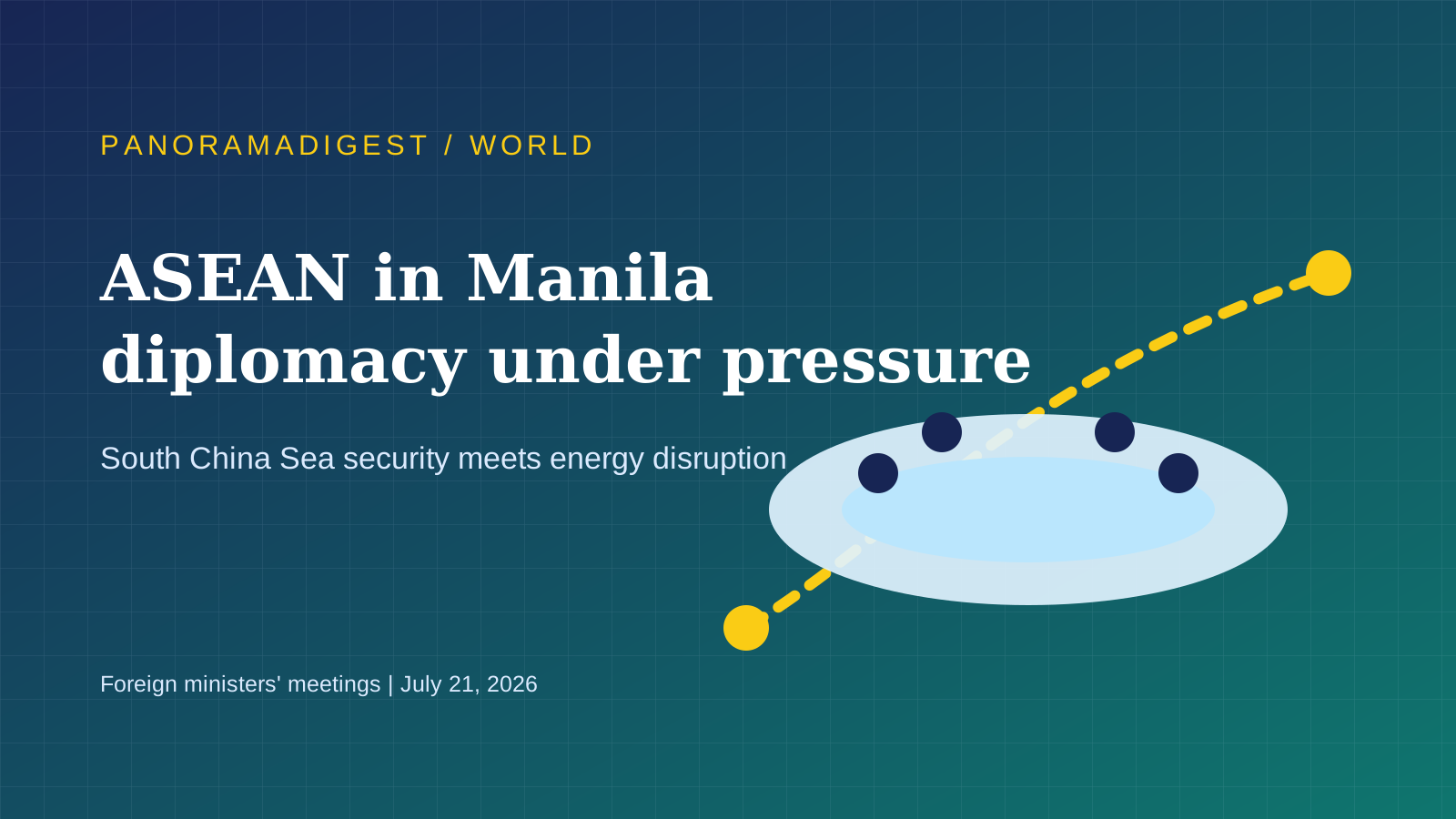
ASEAN foreign ministers opened their 59th meeting in Manila on July 21, 2026, with regional diplomacy pulled in two directions: an incident near the Philippines' Second Thomas Shoal and the wider security and energy shock from renewed U.S.-Iran fighting. The meetings are scheduled through July 24, with the bloc expected to address the South China Sea, Myanmar, the Strait of Hormuz and relations with major powers.
ASEAN Secretariat — Animated ASEAN Film
The official ASEAN Secretariat film provides context on the bloc's institutions and cooperation model. If the player fails, use the direct YouTube link.
The immediate regional trigger was an incident on July 20 near Second Thomas Shoal, known in the Philippines as Ayungin Shoal, in which a Philippine Navy serviceman was injured. The Philippine News Agency reported that the incident was raised before the ASEAN foreign ministers, while the EU delegation in Manila expressed concern and called for restraint.
Separately, the ministers issued a joint statement expressing serious concern about renewed Middle East hostilities and calling for an immediate halt to fighting and the full and safe reopening of the Strait of Hormuz, according to Associated Press reporting from Manila. The two issues are connected by a common problem: ASEAN is trying to preserve room for diplomacy while its members face pressure from disputes over sovereignty, shipping and energy security.
PanoramaDigest has tracked China's regional role in its Shanghai World AI Conference coverage and maintains a broader Taiwan intelligence-reporting portal coverage. The Manila meetings add a Southeast Asian diplomatic angle: not a new military alliance, but a test of whether ASEAN can keep dialogue open when maritime incidents and global crises arrive at the same table.
| Pressure point | What happened | Why it matters |
|---|---|---|
| South China Sea | A Philippine serviceman was injured near Second Thomas Shoal on July 20. | Incidents involving Philippine and Chinese vessels can raise escalation risks during a ministerial meeting. |
| Middle East and Hormuz | ASEAN ministers called for an immediate halt to fighting and safe reopening of the strait. | Shipping disruption can become an energy and inflation problem for import-dependent economies. |
| Myanmar | ASEAN ministers are discussing implementation of the Five-Point Consensus. | The bloc's credibility depends on whether dialogue produces access and humanitarian progress. |
| Major-power relations | The meeting brings ASEAN together with the United States, China, Russia, the EU and other partners. | ASEAN must avoid becoming only a venue for rivalry while preserving its central diplomatic role. |
Why Second Thomas Shoal keeps returning to the agenda
Second Thomas Shoal is a submerged feature in the Spratly Islands where the Philippines maintains the BRP Sierra Madre, a grounded naval vessel used as an outpost. Philippine resupply and rotation missions have repeatedly brought Philippine and Chinese coast guard and maritime militia vessels into close contact.
The legal dispute is layered over a physical problem. A vessel, crew or supply mission can be operating under different national narratives about sovereignty, jurisdiction and maritime rights, while the practical risk is immediate: a collision, injury or failed maneuver can create pressure for a political response before diplomats have time to stabilize the situation.
The July 20 incident arrived as ASEAN ministers were preparing to discuss security. The Philippine News Agency reported that Manila raised the matter before the meeting and that the EU delegation in the Philippines expressed concern over the injury. Those are not the same as an ASEAN collective finding, and the distinction is important: public concern is evidence of diplomatic pressure, not proof that the bloc has agreed on a response.
What ASEAN said about the Strait of Hormuz
ASEAN's second pressure point is far from Southeast Asia. The ministers said they were seriously concerned about renewed hostilities involving the United States and Iran and called for the full and safe reopening of the Strait of Hormuz. The strait carries a major share of global energy shipments, so disruption can reach Southeast Asia through fuel costs, freight insurance, food prices and slower growth.
The statement also reflects ASEAN's preferred diplomatic language. Rather than align the bloc with one great power, the ministers reaffirmed peaceful dispute resolution, sovereignty and territorial integrity. That language is familiar, but it becomes more consequential when the same meeting is dealing with a local maritime incident and a conflict that affects energy routes worldwide.
The Myanmar question remains the hardest internal file
ASEAN's regional-security agenda also includes Myanmar and the bloc's Five-Point Consensus, which calls for an immediate cessation of violence, constructive dialogue, a special envoy, humanitarian assistance and a visit to meet all parties. The Philippines holds the ASEAN chair in 2026, making its ability to manage the Myanmar file part of the credibility question around the Manila meetings.
That is why the gathering is more than a sequence of bilateral meetings. ASEAN is trying to demonstrate that its centrality means practical convening power: bringing rivals into the same room, keeping channels open and turning carefully negotiated language into limited steps that reduce risk. The record is mixed, and the current incidents make the gap between diplomatic access and measurable results more visible.
What to watch through July 24
- South China Sea language: whether the final ASEAN or related statements mention the July 20 injury, restraint, the 2016 arbitration award or the long-discussed Code of Conduct.
- Energy security: whether ministers connect the Hormuz disruption to coordinated economic, fuel or supply-chain measures, or keep the issue at the level of a ceasefire appeal.
- Myanmar access: whether the Five-Point Consensus produces a concrete humanitarian or dialogue step rather than another reaffirmation.
- Partner meetings: whether the United States, China, Russia, EU and ASEAN members use the forum to lower tensions or simply restate competing positions.
The Manila meetings will not settle the South China Sea or the Middle East. Their measurable value is narrower: whether ASEAN can prevent separate crises from collapsing into one regional security spiral while preserving the diplomatic channels it needs for the next incident.
Watch related ASEAN context: the official ASEAN Secretariat YouTube film Animated ASEAN Film provides background on the bloc's institutions and cooperation model. If the player does not load, use the direct YouTube link.
Read Next
Related Stories

French Senate Election 2026: RN's Group Breakthrough and the 10-Member Rule
RN officials announced enough senators for a group after the September 27 election. Here is why 178 seats, a 10-member threshold and a 14-member claim mean different things.
Swiss Neutrality Vote: 70.15% Reject Stricter Rules on Sanctions and Military Cooperation
Switzerland remains neutral after voters rejected a stricter constitutional definition. The official result and the sanctions exceptions explain what stays unchanged.
Denmark's 11-Month Military Service Starts With 1,600 Volunteers Across 14 Bases
Denmark's first full 11-month military-service cohort includes about 1,600 volunteers at 14 sites. Equal conscription applies if volunteers fall short.