The Boyle Heights Fire Is Now an Air-Quality Trust Test for Los Angeles
On June 17 and 18, 2026, the Boyle Heights warehouse fire turned from a black-smoke spectacle into a public-trust problem: how fast should Los Angeles residents believe the air is safe again after an industrial plume and ammonia scare?
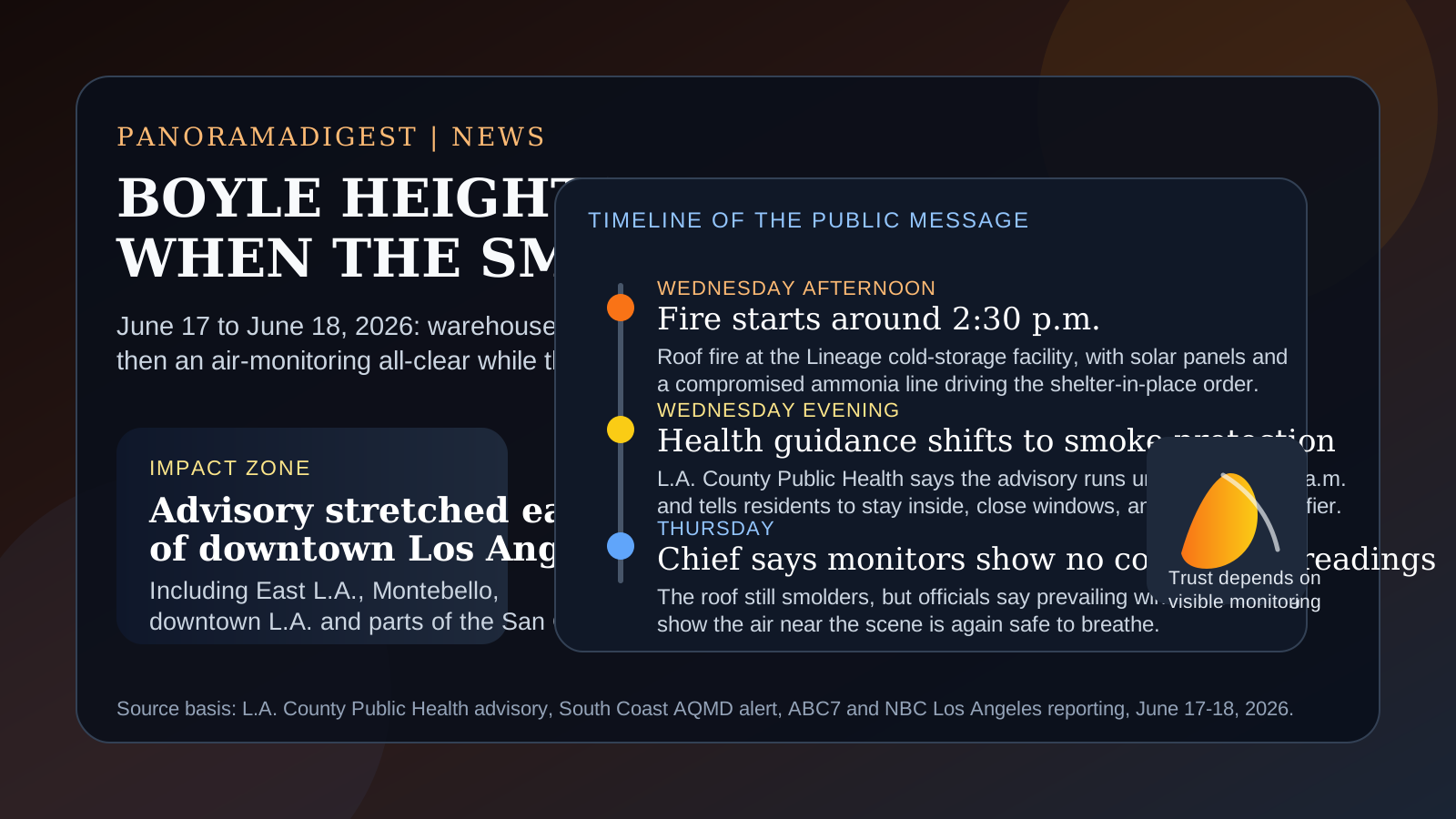
By Thursday, June 18, the most important question in Boyle Heights was no longer whether firefighters had gained the upper hand. It was whether neighbors were supposed to trust the air again. On Wednesday evening, the Los Angeles County Department of Public Health warned that smoke from the warehouse fire could affect areas east of downtown Los Angeles and parts of the San Gabriel Valley through 10 a.m. Thursday, telling residents to stay indoors, close windows and use an air purifier if possible. By Thursday, ABC7 reported that LAFD Chief Jaime Moore said monitors were showing no readings of concern and that the air at the scene was again safe to breathe. Those messages are not necessarily contradictory. But when a neighborhood has spent a night watching a black industrial plume and hearing about an ammonia line, the shift itself becomes the story.
NBC Los Angeles — LAFD chief talks shelter-in-place for Boyle Heights residents
NBC Los Angeles video of LAFD Chief Jaime Moore briefing the public on the Boyle Heights shelter-in-place order. If the player does not load, use the direct YouTube link in the article.
That is why this fire matters beyond one building. The roof blaze at the Lineage cold-storage facility on South Los Palos Street was dramatic enough on its own, with rooftop solar panels, helicopters dropping water, and a shelter-in-place zone stretching south of the 101 Freeway to Washington Boulevard and east of Soto Street to Indiana Street. NBC Los Angeles reported that about 70 people were evacuated on two streets, and that an ammonia line compromised by the blaze was later contained after firefighters shut valves. But the sharper civic issue is what happens after the first emergency order: how clearly can officials explain that the visible smoke, the chemical concern, and the measured risk are not always the same thing on the same timeline?
Why the official message changed so quickly
The chronology matters. Public Health said on Wednesday evening that the fire had started around 2:30 p.m., was still actively smoldering as of 5:30 p.m., and was affecting air quality east of downtown Los Angeles, including portions of the San Gabriel Valley. The advice was straightforward: stay inside if you smell or see smoke, avoid bringing polluted air indoors, and seek medical help for serious breathing symptoms. The South Coast AQMD carried the same broad warning on its site, describing a smoke advisory tied to the warehouse fire on Los Palos Street in Boyle Heights.
By Thursday, the picture had narrowed. ABC7's updated coverage quoted Moore saying officials were monitoring the building, the outside air and the downwind smoke columns and were getting no readings of concern. That does not mean Wednesday's alarm was overblown. It means smoke events move with wind, temperature and combustion conditions, and agencies learn more once the worst release is contained. The communication challenge is that residents do not experience those technical distinctions first. They experience the plume, the smell, the shelter order and the uncertainty.
| Stage | What officials were saying | What residents were being asked to do |
|---|---|---|
| Wednesday afternoon | Firefighters respond to a major roof fire at a cold-storage warehouse with rooftop solar panels and an ammonia concern. | Stay clear of the area as emergency crews lock down roads and begin evacuations. |
| Wednesday evening | Public Health and AQMD say smoke is affecting areas east of downtown Los Angeles and keep the advisory in place through Thursday morning. | Remain indoors if smoke or ash is present, close windows and doors, and use an air purifier if available. |
| Thursday | LAFD says monitors are showing no concerning readings near the scene even though the roof continues to smolder. | Watch for ground-level smoke and symptoms, but treat the broad emergency phase as easing rather than escalating. |
The hardest part of this story is credibility, not combustion
Industrial fires create a credibility problem because the visible evidence and the measured evidence rarely arrive in the same emotional register. A huge black column over Boyle Heights suggests danger long after agencies begin to say conditions are improving. That makes official transparency more important than official certainty. Readers do not only need the phrase "safe to breathe." They need to know what was monitored, where it was monitored, and why an all-clear can coexist with a roof that is still smoking and a building that crews were initially unable to enter safely.
That is where the local reporting adds useful texture. NBC Los Angeles said three water-dropping helicopters were used to keep the fire from spreading beyond the roof and solar panels, while firefighters also had to account for structural concerns from the added roof weight. ABC7 reported Thursday that the blaze had been extinguished by late afternoon on Wednesday but that the building still had not been considered fully safe for interior access. In other words, Los Angeles was not facing a neat before-and-after. It was working through a messy middle: the point where the immediate toxic threat may have eased, but visible smoldering keeps public anxiety alive.
- Wednesday, June 17, around 2:30 p.m.: the fire begins at the Boyle Heights Lineage cold-storage facility.
- Wednesday evening: Public Health says smoke is affecting communities east of downtown Los Angeles and leaves an advisory in place until 10 a.m. Thursday.
- Overnight into Thursday: crews keep watching a smoldering roof while air agencies and fire officials continue monitoring the area.
- Thursday: LAFD says field readings are showing no concerning air-quality results, shifting the story from emergency warning to public trust in the all-clear.
What readers should watch next
The next useful signal is not whether social media still shows smoke. It is whether officials keep publishing precise, local guidance as the cleanup phase starts. If smoke or ash settles again at ground level, Public Health's own advice still applies: stay indoors, limit outside exposure, avoid using ventilation that pulls outdoor air inside, and seek care if breathing symptoms worsen. If the air remains clear, this incident will still leave behind a larger lesson for Los Angeles. The city now has more industrial, logistics and rooftop-energy infrastructure operating close to dense neighborhoods. That makes post-plume communication almost as important as the firefight itself.
Source card: If the local video below does not render in your browser, use the direct link to NBC Los Angeles' LAFD chief briefing. For the official health guidance, keep the L.A. County Public Health smoke advisory and the South Coast AQMD alert page bookmarked if conditions change again.
Reader Sentiment & Impact Pulse
How do you evaluate the primary outcome of this development?
Select an option to cast your perspective. Responses are anonymous and aggregated in real time.
Key Context & Frequently Asked Questions
On June 17 and 18, 2026, the Boyle Heights warehouse fire turned from a black-smoke spectacle into a public-trust problem: how fast should Los Angeles residents believe the air is safe again after an industrial plume and ammonia scare? This analysis from PanoramaDigest examines primary documentation, operational implications, and broader institutional impacts across news.
Read Next
Related Stories

Jensen Huang Reframed AI Doom Debate as National Opportunity in Discourse With Donald Trump
Nvidia CEO Jensen Huang addressed existential AI fears during conversations with Donald Trump, advocating for American leadership and innovation over restrictive regulatory caution.
Old Trails Fire Damage Estimate Reaches 640 Structures in Spokane
Spokane County's preliminary estimate says the Old Trails fire destroyed 640 structures, while evacuation zones remain active across northwest Spokane.

USCIS Can Now Refer Asylum Cases to Immigration Court Without an Interview
A DHS rule effective July 28 lets USCIS send some affirmative asylum applications directly to immigration court. Referral is not a denial, but the interview is no longer guaranteed.