Central Park's Carriage Death Turned a Tourist Tragedy Into a Safety Deadline for New York
After an 18-year-old tourist died in a runaway-carriage crash, New York's horse-carriage industry stopped rides and City Hall set a July hearing on a ban bill. The real news is that the city has run out of room to treat carriage safety as a nostalgic side issue.
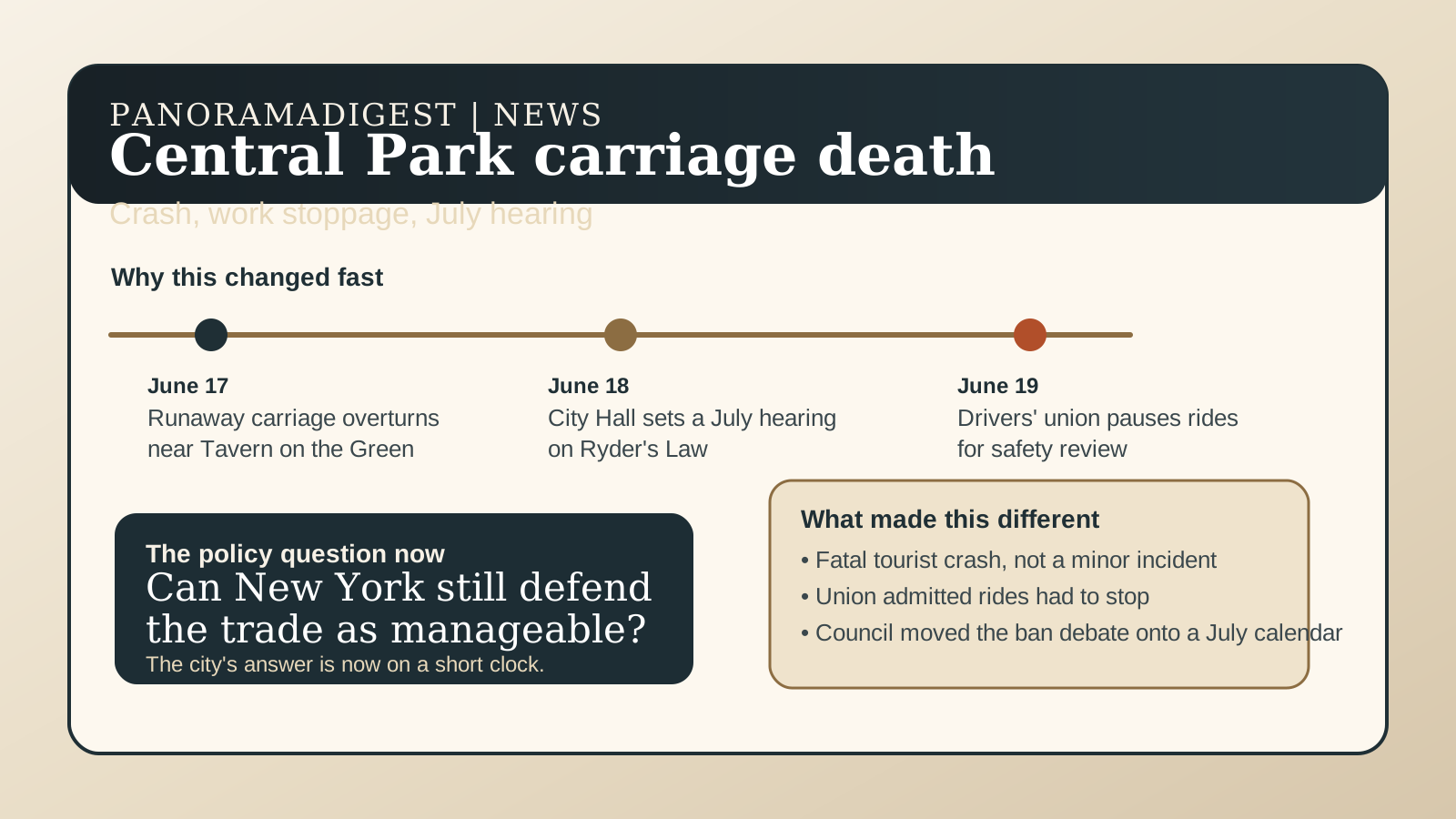
By Friday morning, June 19, the hardest question in Central Park was no longer what happened to one family. It was why New York still needed a death to force a real decision. ABC7's initial reporting on June 18 said 18-year-old Romanch Mahajan, a tourist visiting from India, was thrown from a runaway carriage near Tavern on the Green after the horse bolted, clipped another carriage and overturned. By early June 19, the station reported that the drivers' union had halted operations, the medical examiner had ruled Mahajan's death an accident caused by blunt-force trauma, and city leaders were openly moving the argument toward whether horse carriages should remain in the park at all.
ABC7 New York — Carriage horse rides pause after 18-year-old tourist's death in Central Park
ABC7 New York's June 19 follow-up tracks the ride stoppage and the city's next policy steps. If the player does not load, use the direct YouTube link in the article.
That is the sharper New York story here. This was not a freak civic interruption to an otherwise settled trade. It was the moment the city's nostalgic exception collided with the way Central Park actually works now: crowded, fast-moving, heavily photographed, politically symbolic and unforgiving when basic control fails. CBS New York reported on June 18 that the City Council plans to consider a bill to ban carriage horses after the fatal crash, while the union says rides have already been paused. The City Council's own June 17 statement said lawmakers will hold a hearing in July on Ryder's Law, which would address long-running public-safety and horse-welfare concerns. The city's political posture has shifted from vague discomfort to a live deadline.
How the city's position changed in less than two days
The sequence matters because it shows how quickly officials moved once the outcome became impossible to soften. ABC7 reported that the horse named Sampson apparently bolted around 2:45 p.m. on Wednesday, June 17, while the driver was away from the carriage. The outlet also cited a union statement saying drivers are not supposed to leave the carriage to take photos and that the driver's actions were "unacceptable." By Thursday evening, CBS reported that Council Speaker Julie Menin planned to hold a July hearing on Ryder's Law and that Mayor Zohran Mamdani reiterated his view that it is time to end the horse-carriage industry in city parks. On Friday, ABC7 said the union had stopped all rides while it reviewed safety protocols.
| When | What changed | Why it matters |
|---|---|---|
| Wednesday, June 17 | A carriage horse bolted near Tavern on the Green, clipped another carriage and overturned, fatally injuring Romanch Mahajan. | The debate stopped being theoretical once a routine tourist ride turned into a fatal public-safety failure. |
| Thursday, June 18 | City leaders said the Council would take up Ryder's Law in July, while CBS reported the mayor again backed ending the trade. | The policy fight moved from advocacy pressure to an official legislative clock. |
| Friday, June 19 | The drivers' union said operations were paused while safety procedures were reassessed. | Even the industry stopped pretending that minor reassurance could carry the moment. |
Why this now looks like a city-governance story, not a park anecdote
Central Park is one of the most intensively used public spaces in America, not a controlled heritage display. That is what makes the old carriage defense harder to sustain. Supporters can still argue the industry is part of the city's character and that thousands of rides happen without incident. They can also point, as the union has, to possible reforms such as tougher driver training, hitching posts and stricter handling rules for newer horses. But those arguments now sit next to a fatal crash, a recent horse death in the park and a public record that increasingly reads like repeated warnings rather than isolated bad luck.
The City Council's June 17 statement was restrained in tone, but it effectively acknowledged that point. Lawmakers said it was time to act and promised a July hearing that would review both horse welfare and public safety. That is careful political language, but the calendar itself is the signal. When a city that has avoided a decisive answer for years suddenly sets a hearing after a death, it is admitting that delay has become part of the story.
- Before June 17: New York was already dealing with fresh scrutiny after another carriage horse died in Central Park earlier in June.
- June 17: the runaway-carriage crash killed an 18-year-old tourist and turned safety concerns into a fatal event.
- June 18: City Hall and the Council shifted from abstract concern to a scheduled legislative response.
- June 19: the union paused rides, making clear that the industry's own defense now depends on proving it can still be governed at all.
What readers should watch next
The next useful signal is not another sentimental argument for or against carriage rides. It is what the city demands in July. If the hearing produces only softer language and procedural drift, New York will have learned the wrong lesson from a preventable death. If it forces a clear decision on whether the trade can meet a modern safety standard in a packed urban park, then this week's tragedy may at least produce a civic answer that years of incremental discomfort did not.
Source card: If the local video below does not render in your browser, use the direct link to ABC7 New York's June 19 report on the work stoppage and policy fallout. Readers tracking the official political response should also keep the City Council statement on the July hearing handy.
Reader Sentiment & Impact Pulse
How do you evaluate the primary outcome of this development?
Select an option to cast your perspective. Responses are anonymous and aggregated in real time.
Key Context & Frequently Asked Questions
After an 18-year-old tourist died in a runaway-carriage crash, New York's horse-carriage industry stopped rides and City Hall set a July hearing on a ban bill. The real news is that the city has run out of room to treat carriage safety as a nostalgic side issue. This analysis from PanoramaDigest examines primary documentation, operational implications, and broader institutional impacts across news.
Read Next
Related Stories

Jensen Huang Reframed AI Doom Debate as National Opportunity in Discourse With Donald Trump
Nvidia CEO Jensen Huang addressed existential AI fears during conversations with Donald Trump, advocating for American leadership and innovation over restrictive regulatory caution.

Old Trails Fire Damage Estimate Reaches 640 Structures in Spokane
Spokane County's preliminary estimate says the Old Trails fire destroyed 640 structures, while evacuation zones remain active across northwest Spokane.

USCIS Can Now Refer Asylum Cases to Immigration Court Without an Interview
A DHS rule effective July 28 lets USCIS send some affirmative asylum applications directly to immigration court. Referral is not a denial, but the interview is no longer guaranteed.