Cernavoda Unit 1 Shuts Down as Danube Drought Cuts Cooling-Water Margin
Romania disconnected Cernavoda Unit 1 on July 28 after unprecedentedly low Danube water levels reduced its operating margin. The shutdown is preventive, not a nuclear incident.

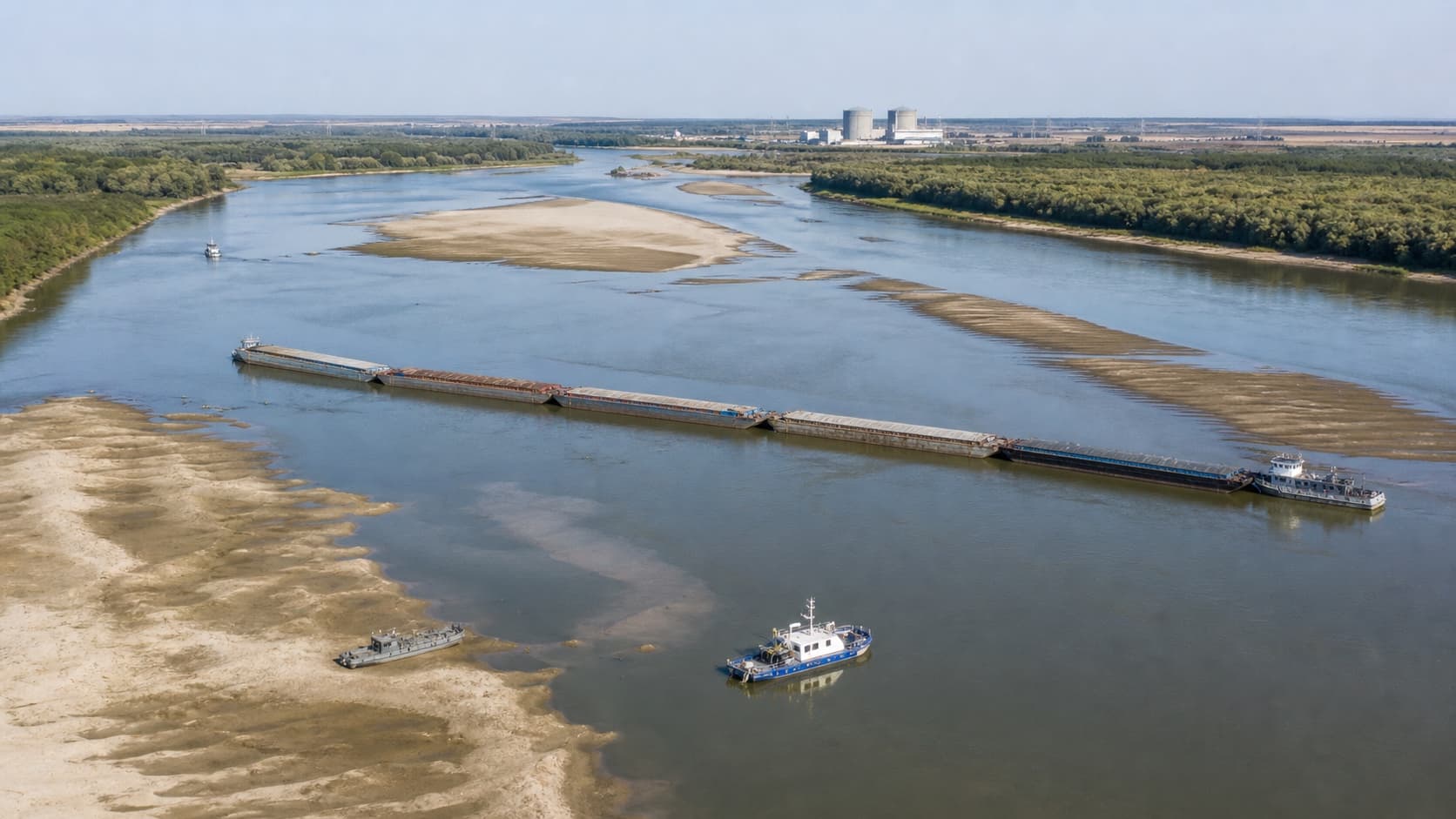
Romania shut down Cernavoda nuclear power plant Unit 1 and disconnected it from the national grid on July 28, 2026, because severe drought had pushed the Danube to what operator Nuclearelectrica called an unprecedentedly low level. The company described the move as preventive and said the unit remains in a safe shutdown with no effect on nuclear safety, personnel or the environment.
The immediate answer for electricity users is narrower than the most alarming version of the story: one of Cernavoda's two reactors is offline, but the operator did not report an accident, equipment failure or radiation release. It also did not set a restart date. Reconnection depends on the river level and the plant's operating parameters returning to an acceptable range.
Cernavoda draws water from the Danube system for plant operations, including cooling. A nuclear reactor cannot simply ignore a shrinking water margin and continue at full output until a hard limit is crossed. The operator's July 27 market disclosure says experts acted under the plant's severe-drought procedures and after reviewing forecasts from Romania's National Institute of Hydrology and Water Management.
That sequencing matters. The shutdown was an operational response to a forecast and defined safety margins, not evidence that those margins had already failed. Nuclearelectrica said it is monitoring the Danube and would take further measures if conditions do not improve, including shutting Unit 2 if necessary.
The grid effect is still material. Nuclearelectrica's official corporate documents list Unit 1 at 706.5 megawatts and Unit 2 at 704.8 megawatts. Together, the two reactors normally provide roughly 18% to 20% of Romania's electricity production. Taking Unit 1 offline therefore removes about half of the country's installed nuclear capacity until it reconnects, although installed capacity is not the same as electricity generated in every hour.
The company has not published a timetable for that reconnection. Its commitment is event-based: it will issue a new release when Unit 1 is synchronized with the National Energy System. Until then, the useful indicators are Danube conditions, any update to the hydrological forecast, Unit 2's status and the mix of replacement generation or imports used by the grid.
The drought shutdown also lands during an important transition for the same reactor. On July 16, Nuclearelectrica announced that the European Investment Bank's board had approved an €800 million loan for the Unit 1 refurbishment project. That long-term programme is separate from the July 28 shutdown, but it shows why the unit's availability matters beyond a single week: Romania is preparing to extend the life of a reactor that has operated since 1996 while preserving enough dependable capacity for the national system.
This episode should not be read as proof that every low-water period will stop a reactor, or that nuclear generation alone is uniquely exposed to drought. Hydropower, thermal plants, navigation and water users can all face different constraints when river levels fall. What Cernavoda demonstrates is more specific: a low-carbon power source with strong year-round output can still depend on local hydrology, so energy security planning has to include water conditions as well as fuel and grid capacity.
PanoramaDigest's Energy security coverage tracks that wider reliability question. For the domestic cost backdrop, the report on Romania's diesel-excise proposal explains another current pressure point in the country's energy economy. A comparison with China's grid-reliability targets shows how other systems are pairing generation goals with resilience planning.
The controlling record is Nuclearelectrica's July 27 current report to the Bucharest Stock Exchange. The company's technical figures and national generation share come from its official shareholder expectations document. Those records support the shutdown, capacity and safety claims; they do not yet establish a restart date or the eventual electricity-price effect.
Read Next
Related Stories

China's Renewable-Energy Plan Sets 2030 Targets for Wind, Solar and Grid Reliability
China's 2026-2030 renewable-energy plan targets 3.5 billion kilowatts of renewable capacity by 2030 and ties wind and solar growth to storage, flexible demand and grid reliability.

Romania Senate Passes Fuel Bill Cutting Diesel Excise by 300 Lei per 1,000 Liters
Romania's Senate adopted a six-month fuel-market bill that would cut diesel excise by 300 lei per 1,000 liters, apply 19% VAT to gasoline and diesel, cap markups and restrict diesel exports. It is not yet law.
Romania Funds 7 Million Lei Danube Barge Plan to Keep Cernavoda Unit 2 Online
Romania approved a 7 million lei temporary barge intervention at the Bala-Dunarea Veche split to preserve the Danube flow needed by Cernavoda Unit 2.