Romania Funds 7 Million Lei Danube Barge Plan to Keep Cernavoda Unit 2 Online
Romania approved a 7 million lei temporary barge intervention at the Bala-Dunarea Veche split to preserve the Danube flow needed by Cernavoda Unit 2.
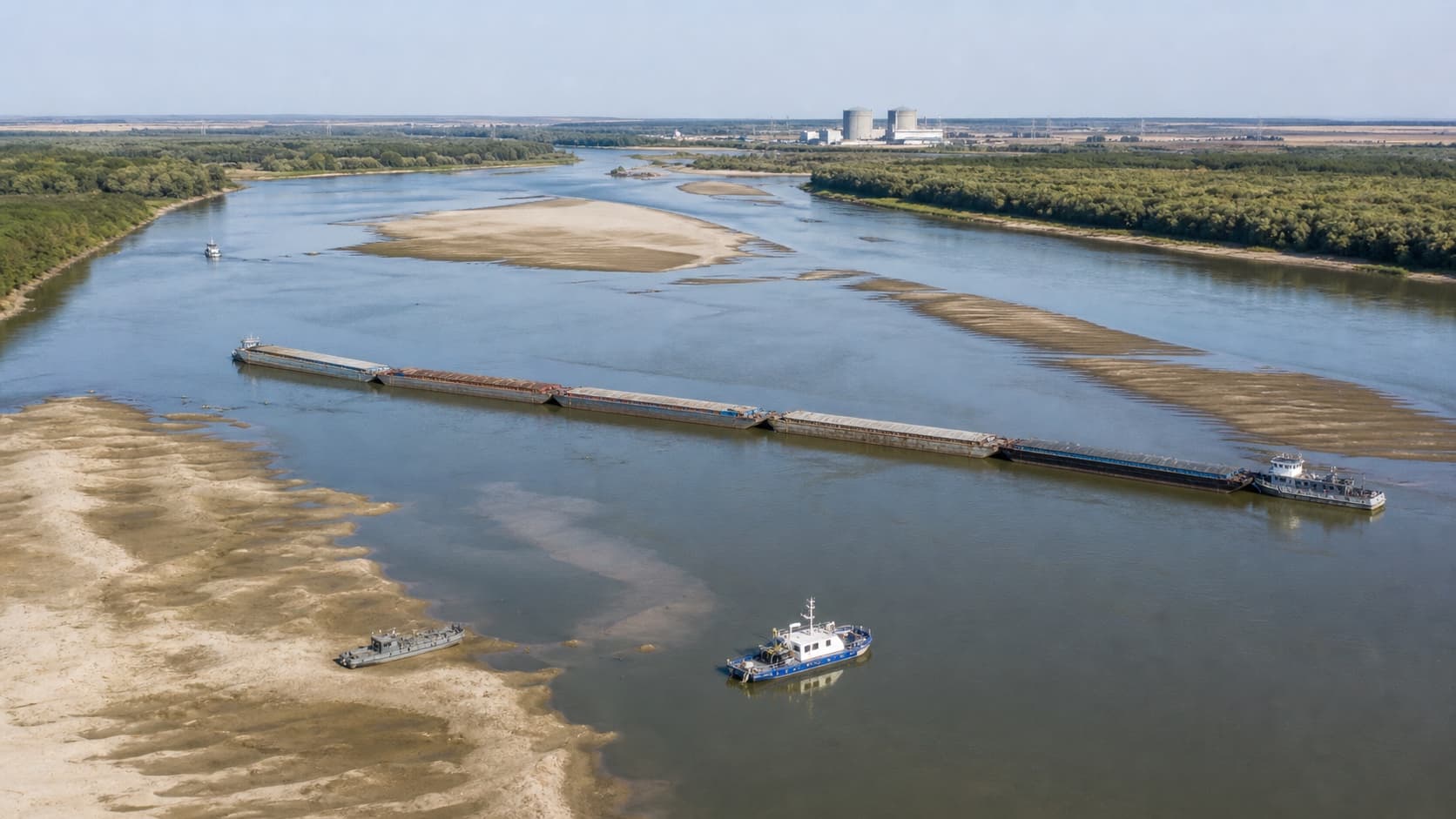
Romania has approved 7 million lei for a temporary barge intervention on the Danube intended to keep enough water moving toward the Cernavoda nuclear plant for Unit 2 to remain online. The government announced the measure on July 31, 2026 after severe drought forced Unit 1 into a controlled shutdown three days earlier. The plan buys operating margin; it does not guarantee that Unit 2 can avoid a shutdown.
The intervention is aimed at the Bala-Dunarea Veche branching area, where the government says metal barges will be positioned in stages to redistribute part of the river flow toward Dunarea Veche. That channel supplies the Cernavoda area. The government allocated the money from its reserve fund and declared a 30-day national alert beginning July 31 so agencies could coordinate emergency energy measures.
The government puts Unit 2's contribution at about 10% of Romania's electricity consumption. Losing it while Unit 1 is already offline would remove the country's remaining operating nuclear unit during a period of high system pressure. That explains the urgency, but not the sensational versions of the story. The official decision describes barges, hydrological work and flow redistribution. It does not describe an operation at the reactor or promise uninterrupted generation.
For the sequence that brought Romania to this point, PanoramaDigest's report on the July 28 Cernavoda Unit 1 shutdown explains why the first reactor was disconnected and why the operator classified that move as preventive rather than an accident.
The barges target the Bala-Dunarea Veche split, not the reactor
The location is central to understanding the engineering choice. The Danube divides around the Bala branch and Dunarea Veche, creating a flow-distribution problem well upstream of the plant's operating equipment. Romania's proposal is to alter that distribution temporarily by using heavy floating structures as a hydraulic barrier. It is an emergency river-management measure, not a modification to Cernavoda's nuclear systems.
Romanian Naval Forces carried out a hydrographic survey around kilometres 345 and 346 of the Danube, according to local newsroom Digi24. The survey helps planners understand depth, riverbed profile and safe placement before positioning the barges. The government said the transport, positioning and anchoring work would be coordinated by the relevant ministries and public authorities, with the Defence Ministry among the institutions assessing the solution.
This distinction matters for both safety and expectations. A barge arrangement can influence where a constrained volume of river water travels, but it cannot create new water. Its value depends on actual Danube discharge, channel conditions, installation speed and the plant's intake parameters. Continued drought can therefore overwhelm the additional margin the intervention is designed to provide.
The wider issue belongs in PanoramaDigest's energy-security coverage: dependable generation is not only a question of fuel and installed capacity. Water availability, grid reserves and emergency coordination can become binding constraints even for a reactor whose nuclear systems remain healthy.
Seven million lei buys time, not a restart guarantee
Nuclearelectrica's July 30 market filing gives the clearest boundary. The operator said Unit 2 could remain connected temporarily after parameters stabilized overnight, but that teams were monitoring the situation continuously. It also warned that a controlled shutdown might still become necessary at any moment if the relevant limits required it. Unit 1 remained safely shut down.
The 7 million lei allocation should therefore be read as the cost of a time-sensitive intervention, not the value of recovered electricity and not a guarantee of success. The government release does not provide a completion date, a promised increase in channel flow or a target restart date for Unit 1. Those omissions prevent a credible calculation of how many megawatt-hours the barges could preserve.
There are now three observable tests. First, whether the barges can be positioned without creating unacceptable navigation or structural risks. Second, whether measured flow toward Dunarea Veche improves enough to maintain Unit 2's operating margin. Third, whether Danube levels stabilize before the temporary arrangement reaches its practical limit. Any official update should be judged against those measurements rather than against political claims that the intervention has already solved the problem.
Romania's existing climate-risk reporting provides the durable context: low-water events can affect hydropower, thermal generation, navigation and water users at the same time. Cernavoda makes the link unusually visible because one reactor is already offline and the second supplies a large, identifiable share of national demand.
The controlling records for this account are the Romanian government's July 31 energy-measures decision and Nuclearelectrica's July 30 Unit 2 filing. The earlier Unit 1 shutdown filing establishes the drought chronology. A later headline about blasting a rock was not used because that detail does not appear in the government decision or operator filings reviewed here. The cover is an original editorial illustration, not documentary photography.
Reader Sentiment & Impact Pulse
How do you evaluate the primary outcome of this development?
Select an option to cast your perspective. Responses are anonymous and aggregated in real time.
Key Context & Frequently Asked Questions
Romania approved a 7 million lei temporary barge intervention at the Bala-Dunarea Veche split to preserve the Danube flow needed by Cernavoda Unit 2. This analysis from PanoramaDigest examines primary documentation, operational implications, and broader institutional impacts across technology & science.
Read Next
Related Stories

Zoox Wins Federal Approval for Paid Robotaxis, but State Permits Still Control Launches
NHTSA cleared Zoox's steering-wheel-free robotaxi for a limited paid-service path, but state and local permits still determine where fares can begin.

Kenya Footprints Show Eight Large Hominins Moving Together 1.43 Million Years Ago
A PNAS study describes tracks from eight large hominins at Kenya's Koobi Fora, while leaving open whether they were Paranthropus boisei or Homo erectus.

Cernavoda Unit 1 Shuts Down as Danube Drought Cuts Cooling-Water Margin
Romania disconnected Cernavoda Unit 1 on July 28 after unprecedentedly low Danube water levels reduced its operating margin. The shutdown is preventive, not a nuclear incident.