NOAA Says El Niño Has Arrived. The Bigger Signal Is How Fast Uncertainty Is Narrowing.
NOAA's June 11, 2026 El Niño advisory matters less because the label became official and more because the forecast window got sharper: forecasters now see a 63% chance of a very strong event by winter, which changes how governments, utilities and food markets should read the rest of the year.

The important change in Thursday's NOAA Climate Prediction Center advisory is not that the words "El Niño" finally became official. It is that the uncertainty around the event is starting to contract fast enough that planners can no longer treat this as a distant climate possibility. On June 11, 2026, the agency shifted the ENSO alert system to El Niño Advisory, said conditions are present, and said the pattern is expected to strengthen into the Northern Hemisphere winter.
That may sound technical, but it has a practical meaning. Once forecasters move from "likely" to "present," the burden changes for everyone who depends on seasonal risk. Utilities, insurers, agriculture traders, emergency managers and water agencies do not need El Niño to explain every storm or drought. They need it to tilt the odds far enough that waiting becomes its own bad decision.

The advisory changed the burden of proof
NOAA's discussion says El Niño conditions developed over the past month, with the latest weekly Niño-3.4 index at +0.7 degrees Celsius and the Niño-1+2 region at +2.1 degrees Celsius. The agency also said there is a 63% chance of a very strong El Niño during November through January, a level that would rank among the largest events in the historical record going back to 1950.
That wording matters because it is much more disciplined than the loose "super El Niño" language that tends to dominate headlines. NOAA is not promising catastrophe in every region, and it is not claiming that every historical analogue will replay on cue. What it is doing is narrowing the plausible range enough that a stronger event is no longer a fringe scenario. For a climate pattern that pushes rainfall, heat, crop stress, wildfire risk and hurricane behavior around the planet, that is the moment institutions start moving from curiosity to preparation.
| What NOAA confirmed on June 11 | What still remains uncertain |
|---|---|
| El Niño conditions are present now, not just forecast to emerge later. | How strongly individual regions will feel the pattern this summer and fall. |
| The event is expected to strengthen into winter 2026-27. | Which historical analogue will prove most useful, including whether impacts look more like 1997-98, 2015-16, or a weaker hybrid. |
| There is a 63% chance of a very strong event in November through January. | How much local weather noise, ocean heat and background warming will distort the classic El Niño playbook. |
| The advisory rests on both ocean temperature signals and atmospheric changes, not one hot patch of water alone. | Exactly how quickly governments, commodity markets and utilities will price the risk into decisions. |
Why the word choice matters more than the hype
There is a reason careful forecasters prefer probability language to spectacle. "Very strong" is a forecast category with a threshold and a time window. "Super" is a mood. The NOAA text is not a permission slip for every heat wave, flood or crop scare to be blamed on one Pacific pattern. It is a warning that the climate background signal just became harder to ignore.
AP's reporting captured the broader stakes well: meteorologists expect this El Niño to add heat to a world already warmed by fossil fuel pollution and to raise the odds of expensive extremes, from drought and wildfire in some regions to flood risk in others. That is the right way to understand Thursday's update. The global economy is already operating in a period of strained food supply, expensive energy and more fragile disaster budgets. A stronger El Niño does not create every weakness, but it can expose several at once.
Preparation starts before local forecasts look dramatic
That is the part many readers understandably miss. El Niño is not useful only when it produces an immediate weather spectacle over one city. Its real power is as an advance nudge to many separate systems. Farmers use it to think about planting risk and fertilizer exposure. Grid operators use it to think about cooling demand and storm vulnerability. Public-health teams use it to think about heat, smoke, vector-borne disease and water stress. Coastal officials use it to think about winter rainfall, erosion and flood planning before the high-impact months arrive.
If NOAA had remained in watch mode, those preparations could still be framed as prudent but optional. An advisory changes the tone. It says the event is here, the strengthening path is credible, and the prudent move is to update assumptions now instead of waiting for a winter autopsy.
The most honest takeaway is narrower and more useful
The cleanest reader takeaway is not "panic" and it is not "another climate buzzword." It is this: Thursday's advisory gives the rest of 2026 a more demanding risk backdrop. Some places will overreact to that, some will shrug too long, and many will still discover that El Niño never delivers a perfectly scripted local outcome. But the climate system has moved past rumor. The official agencies now see a real event with a meaningful chance of becoming one of the biggest of the modern record.
That is why the smarter response is not to memorize a viral label. It is to pay attention to which institutions quietly start revising plans, prices and warnings around it. In climate coverage, that is usually where the real story begins.
For further reporting on this subject, see our NOAA coverage.
Read Next
Related Stories
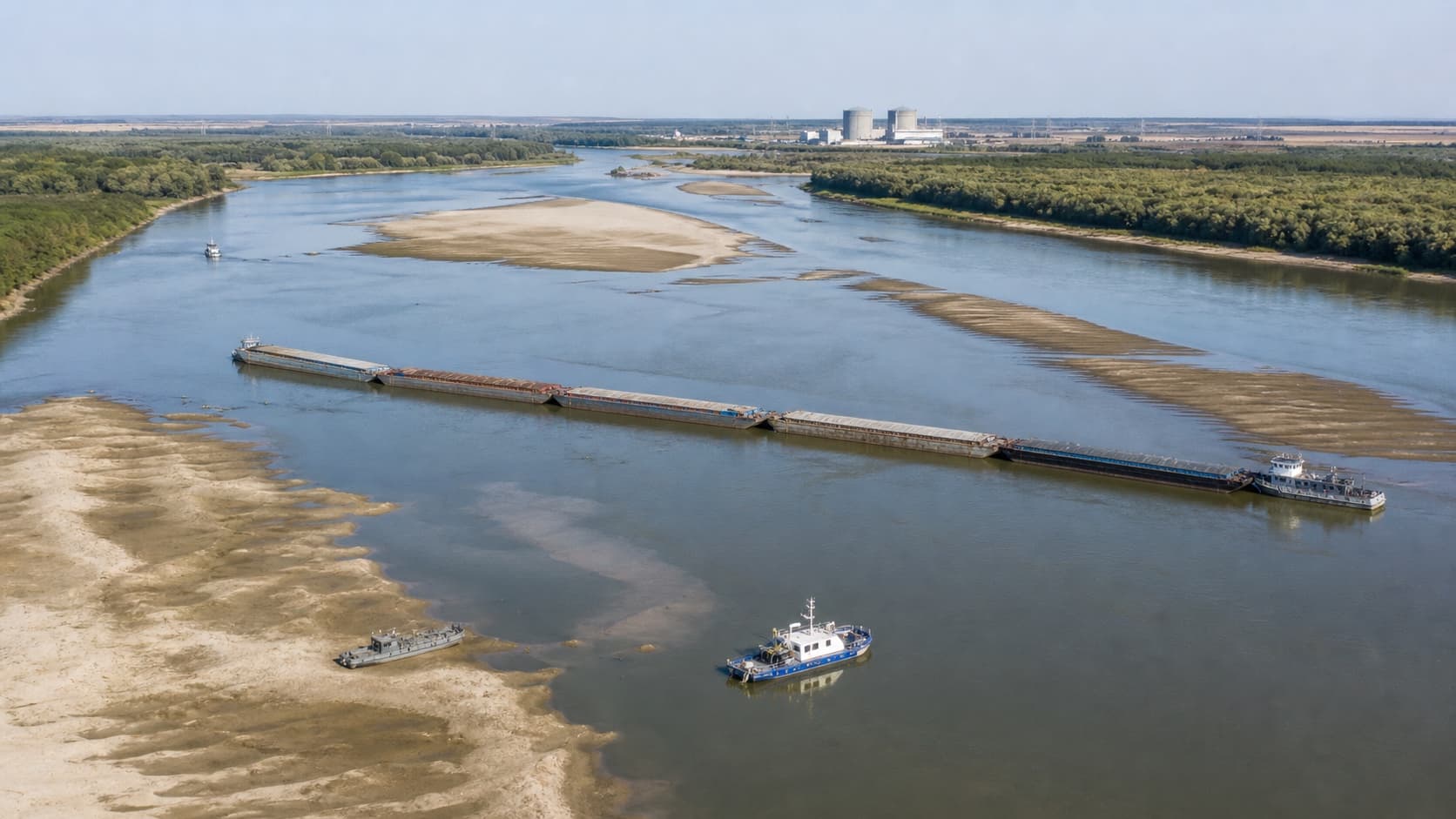
Romania Funds 7 Million Lei Danube Barge Plan to Keep Cernavoda Unit 2 Online
Romania approved a 7 million lei temporary barge intervention at the Bala-Dunarea Veche split to preserve the Danube flow needed by Cernavoda Unit 2.

Cernavoda Unit 1 Shuts Down as Danube Drought Cuts Cooling-Water Margin
Romania disconnected Cernavoda Unit 1 on July 28 after unprecedentedly low Danube water levels reduced its operating margin. The shutdown is preventive, not a nuclear incident.

China's Renewable-Energy Plan Sets 2030 Targets for Wind, Solar and Grid Reliability
China's 2026-2030 renewable-energy plan targets 3.5 billion kilowatts of renewable capacity by 2030 and ties wind and solar growth to storage, flexible demand and grid reliability.