OPEC+ Raises September Oil Production Target by 188,000 Barrels a Day
Seven OPEC+ countries raised their combined September production target by 188,000 barrels a day, bringing the published required total to 31.01 million.
OPEC+ will raise the combined September 2026 oil-production target for seven participating countries by 188,000 barrels a day. The decision announced on August 2 assigns the largest increases to Saudi Arabia and Russia, at 62,000 barrels a day each, and lifts the seven-country required-production total to 31.01 million barrels a day.
That is a quota decision, not a forecast that exactly 188,000 additional barrels will reach buyers every day in September. OPEC's statement repeatedly ties the plan to conformity and compensation for earlier overproduction. Actual supply will depend on what each country produces, what it can export and how compensation obligations affect those volumes.
The participating countries are Saudi Arabia, Russia, Iraq, Kuwait, Kazakhstan, Algeria and Oman. They met virtually on August 2 and scheduled their next review for September 6. OPEC said the September adjustment comes from voluntary reductions first announced in April 2023.
The allocation is uneven because the underlying production levels are uneven. Iraq receives a 26,000-barrel increase, Kuwait 16,000, Kazakhstan 10,000, Algeria 6,000 and Oman 5,000. Those published country figures sum to 187,000 barrels a day rather than 188,000. That one-thousand-barrel difference is consistent with OPEC presenting each country increment in whole thousands; it should not be interpreted as a separate unassigned quota.
Saudi Arabia and Russia receive two-thirds of the headline increase
Saudi Arabia's required September production rises to 10.478 million barrels a day, while Russia's rises to 9.949 million. Together they account for 20.427 million barrels a day, roughly 66% of the seven-country required total as well as about 66% of the announced increase.
Iraq's required level is 4.431 million barrels a day, followed by Kuwait at 2.676 million, Kazakhstan at 1.628 million, Algeria at 1.007 million and Oman at 841,000. Adding the seven required levels produces the 31.01 million-barrel total. This calculation is useful because OPEC's release publishes the country schedule as an image rather than stating the combined required level in its text.
September completes the planned return of the April 2023 voluntary adjustment for this seven-country group after the United Arab Emirates left OPEC earlier in 2026. It does not remove every OPEC+ restraint. Separate production adjustments and country-specific compensation plans can continue to affect the alliance's effective supply.
Readers tracking the consumer side can compare the international quota change with PanoramaDigest's report on Romania's proposed diesel-excise reduction. That measure illustrates why a crude-supply decision and a pump-price change are not interchangeable: taxes, refining, distribution, margins and currency movements sit between a barrel of oil and a litre of fuel.
A 31.01 million-barrel target is not a supply forecast
OPEC's language about conformity is the reason to keep the distinction sharp. The seven countries reaffirmed that the Joint Ministerial Monitoring Committee will track compliance and said they intend to compensate fully for volumes produced above agreed levels since January 2024. A country can therefore receive a higher headline target while still facing a requirement to offset past overproduction.
The separate August 2 monitoring-committee statement says the committee reviewed May and June production data and retained authority to call additional meetings. It did not publish a promise that the September target would translate one-for-one into exports or lower retail fuel prices.
Market effects also depend on demand, inventories, refinery activity, shipping access and production outside OPEC+. PanoramaDigest's ECB energy-shock analysis explains how energy costs can feed inflation without moving mechanically through every consumer price. The broader oil-prices topic provides the next-reading context for that transmission.
The controlling record is OPEC's August 2 production statement and country schedule. Reuters independently reported the decision and described it as completing the rollback of the participating countries' April 2023 voluntary cuts. Neither source establishes what September crude prices or consumer fuel bills will be.
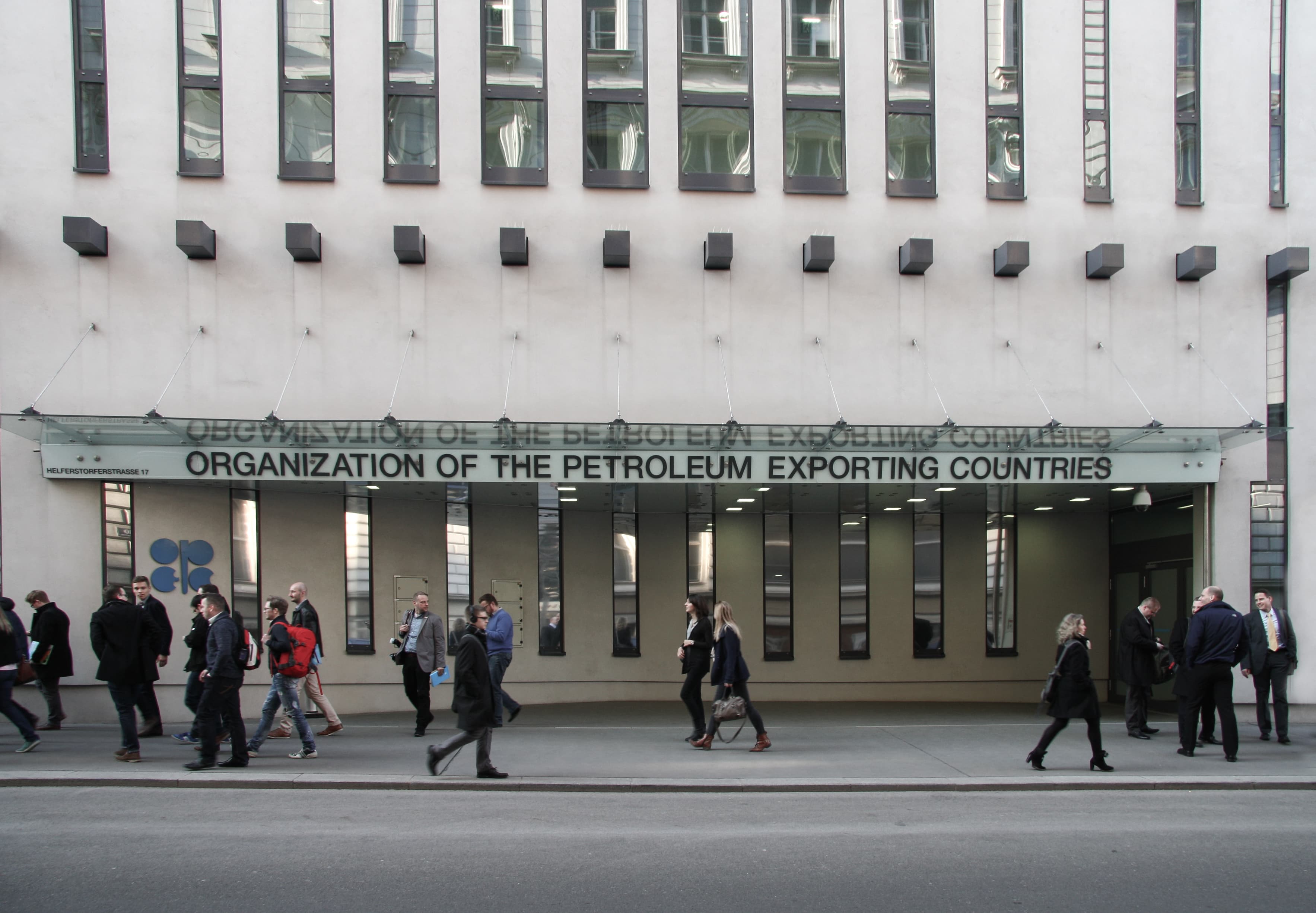
Cover photograph: Vincent Eisfeld / nordhausen-wiki.de, licensed under CC BY-SA 4.0. The 2015 photograph shows OPEC's Vienna headquarters and is contextual, not an image of the August 2 virtual meeting.

Reader Sentiment & Impact Pulse
How do you evaluate the primary outcome of this development?
Select an option to cast your perspective. Responses are anonymous and aggregated in real time.
Key Context & Frequently Asked Questions
Seven OPEC+ countries raised their combined September production target by 188,000 barrels a day, bringing the published required total to 31.01 million. This analysis from PanoramaDigest examines primary documentation, operational implications, and broader institutional impacts across business.
Read Next
Related Stories

Forbes Ranks San Antonio Titans Among Nation's Richest as Regional Wealth Multiplies
Forbes’ latest wealth evaluation spotlights San Antonio’s expanding economic clout, placing two prominent local figures among the country's wealthiest individuals. The rankings underscore the enduring profitability of regional retail enterprise and strategic capital deployment in South Texas.

Federal Reserve Raises Interest Rates Amid Resurgent Inflation, Defying Political Pressure
In a decisive move to tame persistent price pressures, the Federal Reserve executed its first interest rate hike since 2023, signaling institutional independence despite mounting political friction.
U.S. and Japan Buy Yen Together as Dollar Falls From 163 to 156
Japan confirmed coordinated yen buying with the U.S. after the dollar traded above 163 yen. The intervention amount will be disclosed later.