Andy Burnham Didn't Just Win Makerfield. He Turned Labour's Succession Problem Into a Vote Count.
Andy Burnham's June 19, 2026 Makerfield byelection win was more than a seat gain for Labour. It showed how a midterm succession argument can become legible in raw numbers long before a party admits it is holding one.
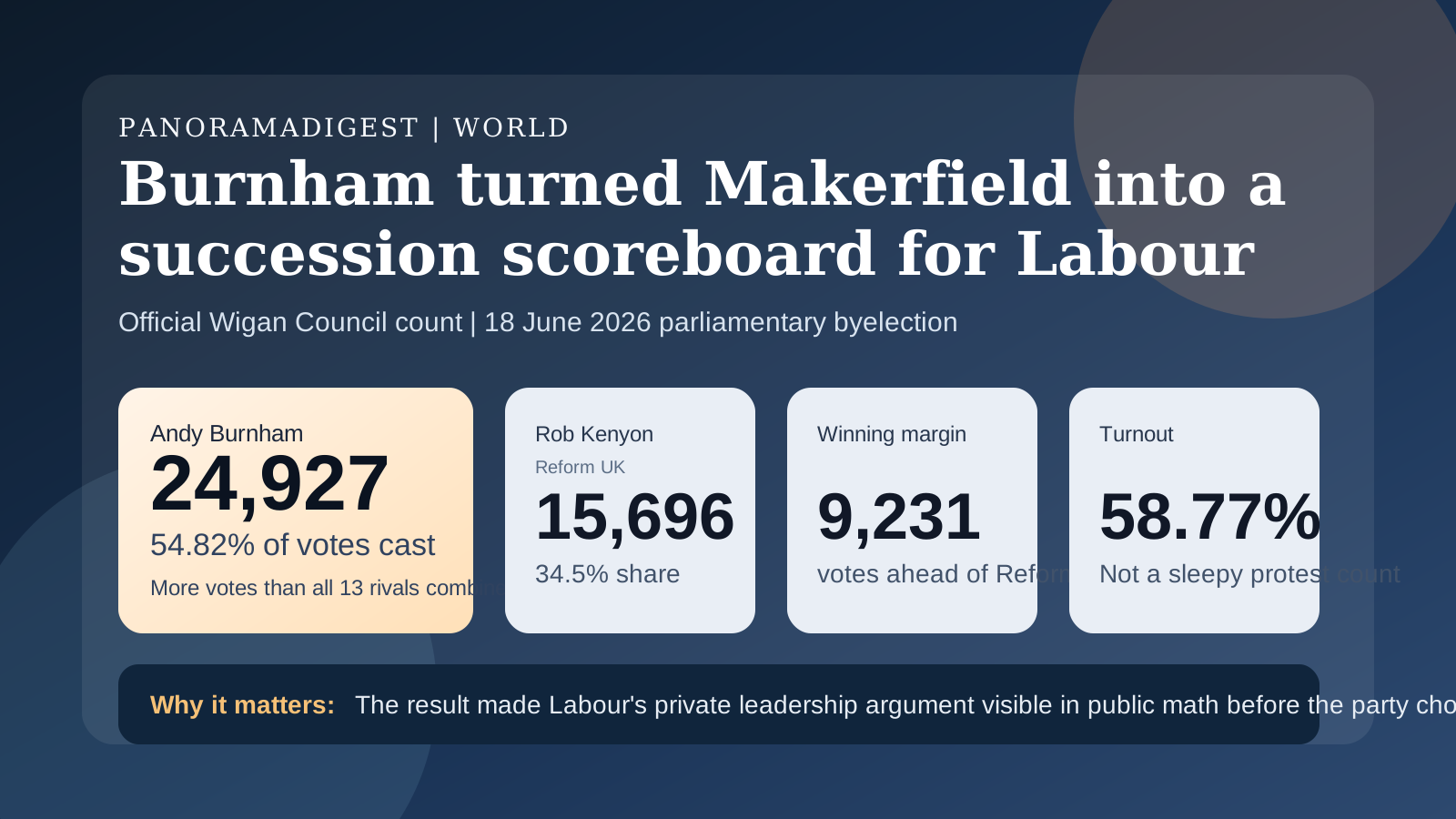
Andy Burnham's return to Parliament on Friday, June 19, 2026, was not only a by-election result. It was a public demonstration of what Labour's internal succession problem looks like when it finally acquires arithmetic. The official Wigan Council result put Burnham on 24,927 votes in Makerfield, well clear of Reform UK's Rob Kenyon on 15,696, with a turnout of 58.77%. In an ordinary cycle that would be a strong local story. In Britain's current cycle, it reads more like a leadership rehearsal staged in a constituency count hall.
BBC News — Andy Burnham wins Makerfield by-election | BBC News
BBC News' June 19 report captures the official Makerfield result and why it instantly raised the pressure on Keir Starmer. Use the direct YouTube link in the story if the player is blocked.
The Associated Press reported that Burnham's decisive victory instantly intensified pressure on Prime Minister Keir Starmer and gave the former Greater Manchester mayor a clean runway back into Westminster. The Guardian's same-day numbers analysis sharpened the scale of it: Burnham took 54.82% of the vote and finished ahead of all 13 rivals combined. That is the detail that matters most. The story is not merely that Labour held a seat. The story is that Burnham converted a supposedly turbulent midterm environment into a result so emphatic that the question stopped being whether he could challenge Starmer and became how long the party can pretend that question is still theoretical.
If the BBC clip below does not render in your browser, use the direct link to BBC News' June 19 report on Burnham's Makerfield win.
What the official count actually showed
The raw result is worth slowing down for because it explains the political mood better than any slogan. Burnham won by 9,231 votes. Reform came second but still trailed badly. Restore Britain finished on 3,111, while the Conservatives, Greens and Liberal Democrats were reduced to three-digit totals. That pattern matters because it suggests Makerfield was not a simple left-versus-right split. It behaved more like a constituency that decided only one candidate looked large enough to block fragmentation and turn anxiety into a governing option.
The Guardian noted that Reform slightly improved its vote share versus the 2024 general election, which means the right-populist pressure inside English politics has not disappeared. But it also means Burnham's win was not built on the easy version of tactical politics, where the insurgent side simply collapses. Reform remained present. Burnham still overwhelmed it. That distinction is why this result has travelled so fast through Westminster. Labour grandees do not panic over routine hold-the-seat victories. They panic when a colleague proves that poor national polling, anti-incumbent drag and a loud Reform campaign can all coexist with a near-55% result for someone who looks more electable than the prime minister.
| Makerfield metric | What the verified sources showed | Why it matters now |
|---|---|---|
| Burnham's vote | Wigan Council recorded 24,927 votes for Andy Burnham, or 54.82% of ballots cast. | The win was not narrow enough to dismiss as a lucky midterm hold. |
| Margin over Reform | Burnham finished 9,231 votes ahead of Rob Kenyon's 15,696. | Labour did not just survive Reform pressure in Makerfield; it clearly contained it. |
| Opposition fragmentation | Restore Britain took 3,111 votes, while Conservatives, Greens and Liberal Democrats were all pushed into small totals. | Burnham looked like the only anti-chaos vessel large enough for tactical and soft-Labour voters alike. |
| Turnout | Official turnout reached 58.77%. | The result carried more weight than a sleepy, low-participation by-election protest. |
Why this result is harder on Starmer than a normal setback
Starmer's problem is not simply that Burnham won. It is that Burnham won in a way that made an alternative Labour future feel administratively possible. AP's reporting captured the pressure point: Burnham described the result as a moment to "lay out a new path" for Britain, while Starmer signaled he would resist any challenge. That leaves Labour in the most awkward place a governing party can occupy. Its formal leader is still in office, but one of its most plausible successors has just compiled a live electoral argument for replacing him.
This is also where Burnham's long-running political brand becomes relevant. AP's profile of him described a politician who has spent his mayoral years turning Greater Manchester into a test bed for regional transport, devolution and a more interventionist centre-left pitch often described as "Manchesterism." That AP backgrounder matters because it shows why Makerfield spooked Labour insiders so quickly. Burnham is not a novelty challenger or a television insurgent. He is a familiar senior figure who can claim institutional competence, regional authenticity and, now, a fresh electoral mandate.
What Burnham still has to prove before a leadership handover becomes inevitable
That does not make him an automatic prime minister-in-waiting. It makes him the clearest live threat to Starmer. Those are different things. Burnham still has to show that a constituency-style triumph and a big-city mayoral record can be translated into a national governing programme. The Guardian's explainer on what comes next made the weakness plain: even admirers concede that his policy platform is still more legible as instinct than as a finished governing blueprint.
There is also the machinery problem. Leadership contests are not awarded by atmosphere alone. Burnham would need the backing, patience and discipline of Labour MPs who may agree Starmer is damaged but still fear a rushed overthrow. He would need to persuade wavering centrists that his north-of-England populism is portable rather than provincial. And he would need to convince anxious voters that he is not only more relatable than Starmer, but more durable than the improvisations that often follow leadership panic.
What readers should watch next
The next useful signals are practical, not theatrical. Watch whether senior ministers start speaking about Starmer in legacy language rather than future language. Watch whether Burnham begins moving from broad national mood music into specific promises on energy bills, public services and local government power. And watch Reform closely: not because Makerfield proved it unbeatable, but because its 15,696 votes were still a reminder that Labour's leadership question is inseparable from a wider contest over economic resentment, migration politics and anti-London feeling.
That is why Makerfield matters beyond one north-west seat. A by-election rarely settles a governing party's future on its own. But sometimes it reveals that the future is already being negotiated in public, even if the party leadership has not yet admitted it. On June 19, 2026, Burnham did not merely win a constituency. He made Labour's succession debate impossible to keep abstract.
Reader Sentiment & Impact Pulse
How do you evaluate the primary outcome of this development?
Select an option to cast your perspective. Responses are anonymous and aggregated in real time.
Key Context & Frequently Asked Questions
Andy Burnham's June 19, 2026 Makerfield byelection win was more than a seat gain for Labour. It showed how a midterm succession argument can become legible in raw numbers long before a party admits it is holding one. This analysis from PanoramaDigest examines primary documentation, operational implications, and broader institutional impacts across world.
Read Next
Related Stories

Japan Surpasses 100,000 Centenarians for the First Time, Highlighting Global Demographic Pressures
Japan's centenarian population has officially breached the 100,000 threshold for the first time, signaling an unprecedented demographic milestone with profound implications for labor markets, social security, and global aging policy.

Houthi Advances Expand Iranian Leverage Over US and Saudi Arabia Amid Rising Domestic Discontent
Strategic military gains by the Houthi movement have bolstered Tehran's position in regional negotiations with Washington and Riyadh, even as severe economic strain threatens the group's domestic legitimacy within Yemen.
Saudi Arabia Alleges Houthi Drone Attack Targeting Mecca, Escalating Regional Tensions
Riyadh has accused the Iran-backed Houthi movement of launching an aerial drone targeting the holy city of Mecca, a charge the militant group has vehemently denied. The incident threatens to derail fragile diplomatic efforts across the Middle East.