Lebanon's Ceasefire Just Saved the U.S.-Iran Deal. It Did Not Solve the Harder Problem.
The renewed June 19, 2026 ceasefire between Israel and Hezbollah kept the U.S.-Iran track alive. The deeper problem is that the truce still leaves southern Lebanon, Hezbollah's future and Israel's security zone fundamentally unsettled.
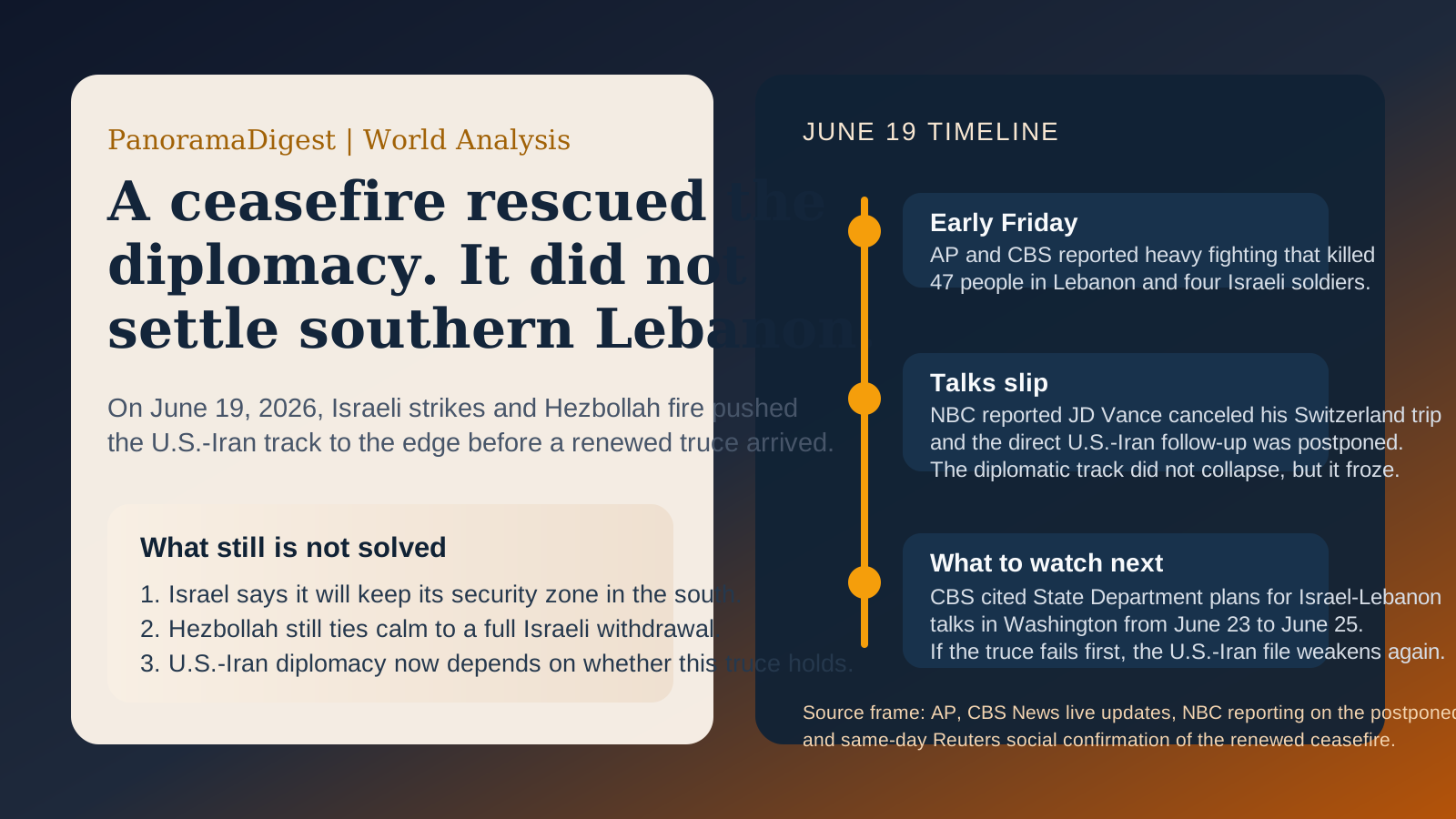
The renewed ceasefire announced on June 19, 2026 did something important before it did anything durable: it prevented the Lebanon front from formally breaking the still-fragile U.S.-Iran diplomatic track. That matters. It is also not the same thing as peace. The immediate rescue story is clear enough. After a day of Israeli strikes and Hezbollah fire that killed 47 people in Lebanon and four Israeli soldiers, major news organizations reported that the two sides had agreed to halt fighting again. The more revealing story is what the truce did not answer. Israel still wants to keep a security zone in southern Lebanon. Hezbollah still treats any lasting calm as contingent on Israeli withdrawal. Washington still has to prove that its regional diplomacy can survive allies and proxies who never fully signed on to its timetable.
Reuters — Reuters on the renewed Israel-Hezbollah ceasefire
Reuters posted a same-day visual update on the renewed ceasefire. If the embed does not load, use the direct Instagram link in the article.
That is why this is a real follow-up to PanoramaDigest's earlier look at southern Lebanon as the first real test of the U.S.-Iran deal, not a duplicate of it. Earlier in the day, the test was whether the agreement could absorb a battlefield shock. By evening, the question had shifted. The ceasefire kept the deal alive, but it also exposed how much of the arrangement still depends on actors who are interpreting the same map in incompatible ways.
What changed on June 19
| Timeframe | Verified development | Main source | Why it matters |
|---|---|---|---|
| Early Friday | Israeli strikes and bombardments killed at least 47 people in Lebanon, while Israel said four soldiers were killed. | Associated Press and CBS News live updates | The casualty toll showed the Lebanon front was strong enough to derail wider diplomacy. |
| Friday morning | Direct U.S.-Iran follow-up talks in Switzerland were postponed and Vice President JD Vance canceled the trip. | NBC reporting | Washington's next diplomatic step was delayed because the battlefield moved first. |
| Friday afternoon | Reuters and other major outlets reported a renewed ceasefire between Israel and Hezbollah. | Reuters social post and same-day reporting | The truce prevented an immediate collapse of the broader diplomatic track. |
| After the truce | CBS reported that the U.S. State Department still expects Israel-Lebanon talks in Washington from June 23 to June 25. | CBS News citing the State Department | The next test is no longer whether talks exist, but whether they can produce something more durable than another pause. |
The battlefield paused, but the underlying argument did not
Associated Press described the renewed halt in fighting as an attempt to stop southern Lebanon from unraveling the interim U.S.-Iran understanding. That framing is useful because it keeps the hierarchy of the crisis intact. The immediate violence was in Lebanon. The strategic damage risked spreading far beyond it. NBC reported that Iranian and American officials did not proceed with the Switzerland meeting as planned, which means the truce was already doing work before it was even tested for durability. It created room for diplomacy. It did not create consensus.
CBS's live updates gave the clearest picture of what comes next. The outlet reported that Secretary of State Marco Rubio, in a call with Lebanese President Joseph Aoun, still pointed toward negotiations in Washington next week. That is the encouraging part. The harder line came from other same-day statements carried by CBS as well. Israeli ambassador Yechiel Leiter said Israel remained committed to the ceasefire while also making clear that Israel intends to keep pressing for Hezbollah's removal as a military force and does not plan to leave its southern security zone soon. Those positions are not details around the edges of the agreement. They are the core dispute that keeps turning ceasefires into countdown clocks.
Why the U.S.-Iran deal still looks fragile from Lebanon
The Lebanon file matters because it measures whether the U.S.-Iran arrangement can discipline the region's most combustible secondary fronts. A deal can reopen a shipping lane, delay escalation or create diplomatic theater. It becomes something sturdier only when allied and proxy actors start behaving as if the deal changes their incentives. That has not happened cleanly here. Hezbollah's leverage comes from its ability to make southern Lebanon unquiet. Israel's leverage comes from its willingness to keep military pressure in place even while endorsing a ceasefire in principle. Washington's leverage depends on turning pause into process before either side decides that a few more days of violence are cheaper than a political concession.
Readers do not mainly need another headline saying the ceasefire exists. They need a map of the unresolved terms underneath it. The first is territory: whether Israeli forces remain in the south as an open-ended buffer. The second is sovereignty: whether the Lebanese state can negotiate reconstruction and calm while an armed movement outside state control still claims a veto. The third is sequence: whether the U.S. can keep Iran engaged in follow-up talks while the Lebanon file remains conditional and reversible.
What to watch before the next diplomatic round
Three signals matter now. First, whether the casualty count really stops rising after the declared truce window. Second, whether Washington's June 23 to June 25 talks with Israel and Lebanon happen on schedule and produce a clearer enforcement mechanism. Third, whether the U.S.-Iran channel regains momentum quickly or starts looking like a process that can be postponed every time southern Lebanon flares. The ceasefire saved the diplomacy from immediate embarrassment. The next few days will show whether it saved anything larger than that.
Visual update: Reuters' same-day Instagram post on the renewed ceasefire is embedded below. If it does not render in your browser, use the direct link to Reuters on Instagram. For rolling verified updates, readers should also keep CBS News' live updates page and the Associated Press report open alongside this analysis.
Reader Sentiment & Impact Pulse
How do you evaluate the primary outcome of this development?
Select an option to cast your perspective. Responses are anonymous and aggregated in real time.
Key Context & Frequently Asked Questions
The renewed June 19, 2026 ceasefire between Israel and Hezbollah kept the U.S.-Iran track alive. The deeper problem is that the truce still leaves southern Lebanon, Hezbollah's future and Israel's security zone fundamentally unsettled. This analysis from PanoramaDigest examines primary documentation, operational implications, and broader institutional impacts across world.
Read Next
Related Stories

Japan Surpasses 100,000 Centenarians for the First Time, Highlighting Global Demographic Pressures
Japan's centenarian population has officially breached the 100,000 threshold for the first time, signaling an unprecedented demographic milestone with profound implications for labor markets, social security, and global aging policy.

Houthi Advances Expand Iranian Leverage Over US and Saudi Arabia Amid Rising Domestic Discontent
Strategic military gains by the Houthi movement have bolstered Tehran's position in regional negotiations with Washington and Riyadh, even as severe economic strain threatens the group's domestic legitimacy within Yemen.
Saudi Arabia Alleges Houthi Drone Attack Targeting Mecca, Escalating Regional Tensions
Riyadh has accused the Iran-backed Houthi movement of launching an aerial drone targeting the holy city of Mecca, a charge the militant group has vehemently denied. The incident threatens to derail fragile diplomatic efforts across the Middle East.