France's Red Heat Alert Turned Fête de la Musique Into a Public-Safety Test
France's June 21 music festival is still on, but a red heatwave alert across 35 departments and a street-alcohol ban have turned the celebration into a public-safety stress test.
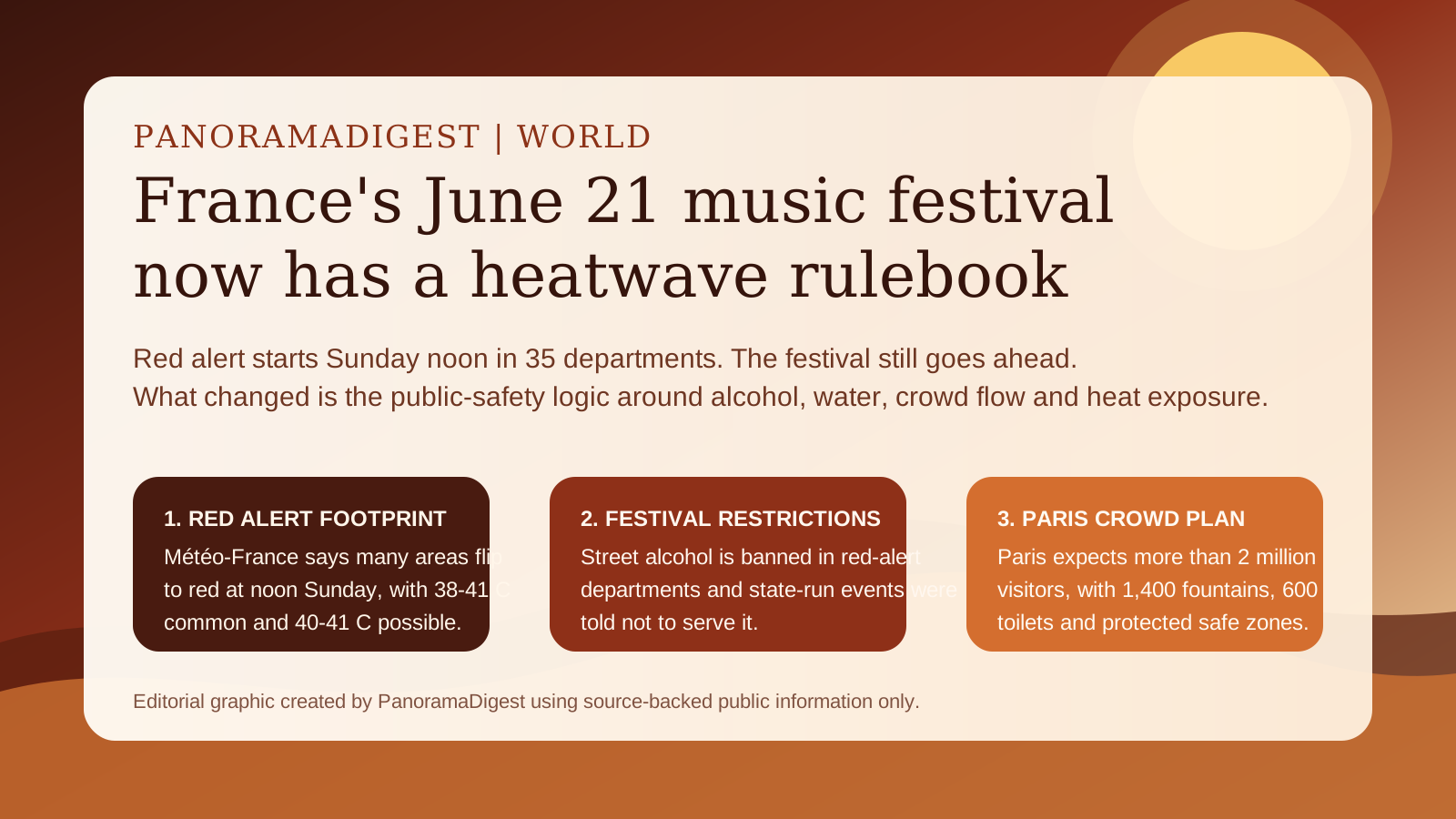
France's annual Fete de la Musique is still supposed to feel democratic on June 21, 2026: streets full of amateur sets, public squares turned into temporary stages, and a city like Paris behaving as if music can dissolve ordinary borders for a night. What changed this weekend is not the existence of the party. It is the operating assumption around it. After Meteo-France warned that 35 departments would move to red heatwave alert from noon on Sunday, with temperatures often reaching 38 to 41 C and some areas likely to touch 40 or 41 C, the festival stopped looking like a cultural calendar item and started looking like a crowd-management problem.
That is why the government's alcohol restriction matters more than it first appears. Reuters and other outlets reported that prefects will ban alcohol consumption on public streets in departments under the red alert, while state-run events were instructed not to serve it. In other words, the French state is not canceling the ritual. It is rewriting the conditions under which the ritual can be tolerated. The issue is not morality. It is hydration, heat stress, night-time recovery and the basic fact that a summer street festival behaves differently when the country is entering what French forecasters describe as an unusually intense, early and durable episode of canicule.
What officials have already changed
| Signal | Verified detail | Main source | Why it matters |
|---|---|---|---|
| Heat alert | 35 departments shift to red alert from Sunday noon, with much of France facing 38 to 41 C heat and locally higher peaks. | Meteo-France | The festival opens under conditions that now trigger the country's highest heat vigilance level. |
| Alcohol rule | Public-street alcohol consumption will be banned in red-alert departments, and state-run events were told not to offer alcohol. | Le Monde and Reuters-syndicated reporting | The state is treating dehydration and crowd behavior as central risk factors, not side issues. |
| Paris planning | Paris expects more than 2 million people and says about 1,400 water fountains, 600 public toilets and dedicated safe spaces will be available. | The Guardian | The city's preparation shows officials assume both heat stress and crowd density will be exceptional. |
| Historical context | Meteo-France says Monday's national average temperature could approach the hottest day ever measured in France across any month. | Meteo-France | This is not routine summer discomfort. It is a climate benchmark arriving on a major public event day. |
Why this matters beyond one night in Paris
The useful mistake is to treat the ban as a quirky France story about policing revelers. The more important story is administrative. Governments across Europe are learning that cultural events now need the same layered planning once reserved for transport strikes, major sports finals or terror alerts. Le Monde's English coverage made the sequence plain: the heat alert widened first, then the crowd rules hardened around it. That order matters because it shows the weather is not background scenery. It is setting the policy agenda.
Paris is an especially revealing case because officials are planning for more than heat. The Guardian reported that the city expects more than 2 million attendees, has added thousands of bins and recycling points, is steering people toward 600 round-the-clock public toilets, and will operate protected spaces for women and disabled people after last year's reports of sexual violence and syringe-pricking incidents. That means the festival is no longer a simple question of whether temperatures are survivable. It is a stress test for how many overlapping public-safety systems a city can keep coherent once a celebratory crowd arrives under extreme weather.
The climate-era version of a public festival
Meteo-France's own language is the clearest warning against complacency. The agency said the heat event began on Wednesday, June 17, that it is unusually early for this level of intensity, and that the coming days could rival some of the country's most severe modern heat episodes. It also said nights will remain abnormally warm, which is one reason alcohol policy becomes more than symbolism. A city can hand out water and open cooling points. It cannot improvise overnight recovery for millions of people once heat, dehydration, transit pressure and crowd movement all start reinforcing one another.
That is why the real June 21 question is not whether the Fete de la Musique still happens. It will. The harder question is whether France can keep the social meaning of a free, open-air celebration while accepting that climate adaptation now reaches all the way into the rules of the street party itself. If Sunday ends with fewer medical emergencies, calmer crowd flow and a cleaner overnight exit, that will not mean the heatwave was a footnote. It will mean the state treated culture as infrastructure for a day and got away with it.
Readers following the event should keep Meteo-France's live vigilance page, Paris crowd and safety reporting, and the latest French coverage of the alcohol restrictions side by side. The next meaningful update is not another festival teaser. It is whether Sunday noon brings orderly enforcement before Monday brings the hotter day.
Reader Sentiment & Impact Pulse
How do you evaluate the primary outcome of this development?
Select an option to cast your perspective. Responses are anonymous and aggregated in real time.
Key Context & Frequently Asked Questions
France's June 21 music festival is still on, but a red heatwave alert across 35 departments and a street-alcohol ban have turned the celebration into a public-safety stress test. This analysis from PanoramaDigest examines primary documentation, operational implications, and broader institutional impacts across world.
Read Next
Related Stories

Russia Extends Parliamentary Elections to Occupied Ukrainian Territories in Defiance of International Law
Moscow's decision to conduct parliamentary voting inside illegally occupied regions of Ukraine has drawn sharp international condemnation, underscoring ongoing sovereignty disputes and challenges to the rule of law.
Philippines School Shooting Leaves Three Dead, Sparking Urgent Security Review
A tragic shooting at a Philippine educational institution has left three people dead, including the gunman, prompting immediate calls for national campus safety reforms.

Scientists Warn of Escalating Glacial Flood Risks Across Eight Himalayan Nations Following Nepal Disaster
Following catastrophic inundations in Nepal, climate scientists warn that over 240 million people across eight South and Central Asian countries face heightened risks from glacial lake outburst floods and extreme weather events.