Mark Carney’s Dublin Pitch to Europe Is Really a G7 Message to Washington
Mark Carney used a high-profile Dublin stop to argue that Canada and Europe should coordinate more tightly before the G7, turning a friendly bilateral visit into a larger signal about trade, security, and U.S. volatility.

Mark Carney’s stop in Dublin on Saturday, June 13, 2026, looked ceremonial on the surface: a bilateral meeting with Irish Taoiseach Micheál Martin, a joint cooperation statement, and a speech at Trinity College. In practice, it was a carefully staged argument about the shape of the next Western coalition.
CPAC — PM Carney and Irish Taoiseach hold joint news conference in Dublin
Watch the June 13, 2026 Dublin news conference via CPAC. If the player is blocked, use the direct YouTube link.
The Canadian prime minister did not travel to Ireland just to celebrate ancestry, optics, or another friendly European photo line before the Group of Seven summit in France. He used the visit to push a sharper thesis: countries that are wealthy, democratic, and militarily capable enough to matter should stop behaving like petitioners around Washington and start acting like a bloc with leverage of its own.
That does not mean Canada is abandoning the United States. It does mean Ottawa is trying to reduce the costs of overdependence while Donald Trump again injects uncertainty into trade, alliance management, and summit diplomacy. The message from Dublin was that Europe is not merely a values partner for Canada. It is becoming an insurance policy.
Why the Dublin visit mattered more than the ceremony
Officially, the Canada-Ireland package was practical and specific. In the Canadian readout and a matching joint statement, the two governments said they would deepen cooperation on artificial intelligence, pharmaceuticals and biotechnology, food security, research, and economic resilience. Ireland’s government published the same framework through the Department of the Taoiseach.
Those details matter because they give Carney something sturdier than rhetoric. AI policy, biotech, strategic technology, and supply chains are precisely the areas where medium-size powers can cooperate without pretending they can replace the U.S. alone. The emerging pitch is not separation. It is redundancy.
That is also why the political language around the visit was more ambitious than a normal bilateral communiqué. According to AP reporting from Dublin, Carney argued that countries in the middle tier of global power should combine their weight rather than compete for American favor. That line lands differently on the eve of a G7 summit than it would during an ordinary overseas stop. It was aimed at European capitals, but it was also aimed at Washington.
What changed in 48 hours
| Date | Development | Why it matters |
|---|---|---|
| Friday, June 12, 2026 | Carney met French President Emmanuel Macron in Paris ahead of the summit circuit. | Canada framed its European outreach as coordinated, not improvised. |
| Saturday, June 13, 2026 | Carney and Martin announced a broader Canada-Ireland cooperation framework in Dublin. | The visit produced concrete sector agreements in AI, life sciences, food security, and strategic technologies. |
| Saturday, June 13, 2026 | Carney used a Trinity College event to argue for a stronger middle-power alignment. | The bilateral visit became a geopolitical message before leaders gather in France. |
| Monday, June 15, 2026 | The G7 summit opens in France. | Dublin now reads as a pre-summit marker for how Canada wants to approach trade and alliance politics. |
The Ireland piece is smaller than the Europe argument, but it makes the Europe argument credible
Ireland is not the main strategic prize here. It is the proof point. Dublin offers Carney an English-speaking EU capital with strong U.S. business ties, a major role in pharmaceuticals and technology, and an incoming Presidency of the Council of the European Union on July 1. If Ottawa wants to show that “Europe” can be more than a slogan, Ireland is a useful place to do it because the relationship can be sold as commercial, technological, and political at the same time.
That is why the official statements stressed strategic technologies, trusted supply chains, and long-term competitiveness instead of just heritage and friendship. The framing suggests that Canada wants more than symbolic distance from U.S. turbulence. It wants operational alternatives in sectors that determine bargaining power.
There is a second layer here as well. Carney can talk about Europe without sounding anti-American so long as the pitch is framed as resilience. That matters because Canada still depends heavily on the U.S. market, and Carney acknowledged in Dublin that the United States does not appear interested in reopening the basic structure of the USMCA framework. The Canadian position, then, is not to blow up continental trade. It is to keep the floor while widening the exits.
What to watch when the G7 opens
The test is whether Carney’s Europe-first language survives contact with the summit agenda. If the G7 becomes dominated by crisis management around Iran, tariffs, or Trump-style bilateral brinkmanship, the Dublin message may look aspirational. But if Canada emerges from France with even modest evidence of deeper policy coordination with European partners on AI governance, critical minerals, food security, or defense procurement, Saturday’s visit will look less like pre-summit theater and more like the first visible step in a longer strategic shift.
For PanoramaDigest readers, the cleanest way to read the moment is this: Canada is not trying to choose Europe over America. It is trying to make sure that Washington is no longer its only serious option. That is a much narrower claim, and a much more plausible one.
The G7 will show whether other middle powers want that same bargain, or whether they still prefer the old habit of waiting for the United States to set the temperature. The broader summit context also intersects with diplomacy issues already on PanoramaDigest’s radar, including the still-unsettled U.S.-Iran negotiating gap that leaders and reporters were already asking about in Dublin.
Read Next
Related Stories
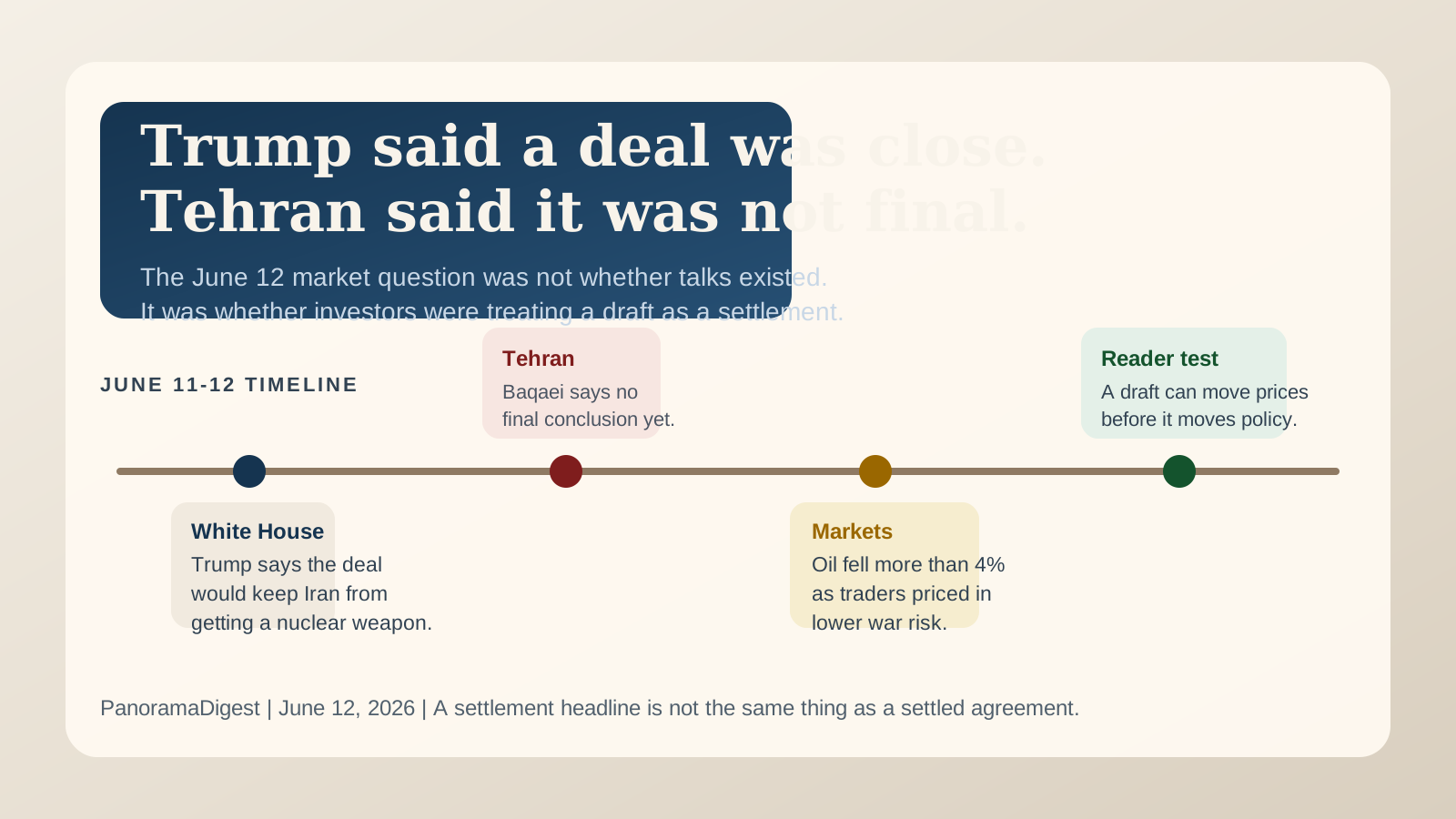
The U.S.-Iran Deal Now Has a Text. The Harder Part Is Getting Two Capitals to Own It.
Pakistan says Washington and Tehran have agreed on the wording of a June 13, 2026 peace deal, but the real test has shifted to final approval, Hormuz enforcement and whether the region is being asked to live with a settlement neither side has fully owned in public.
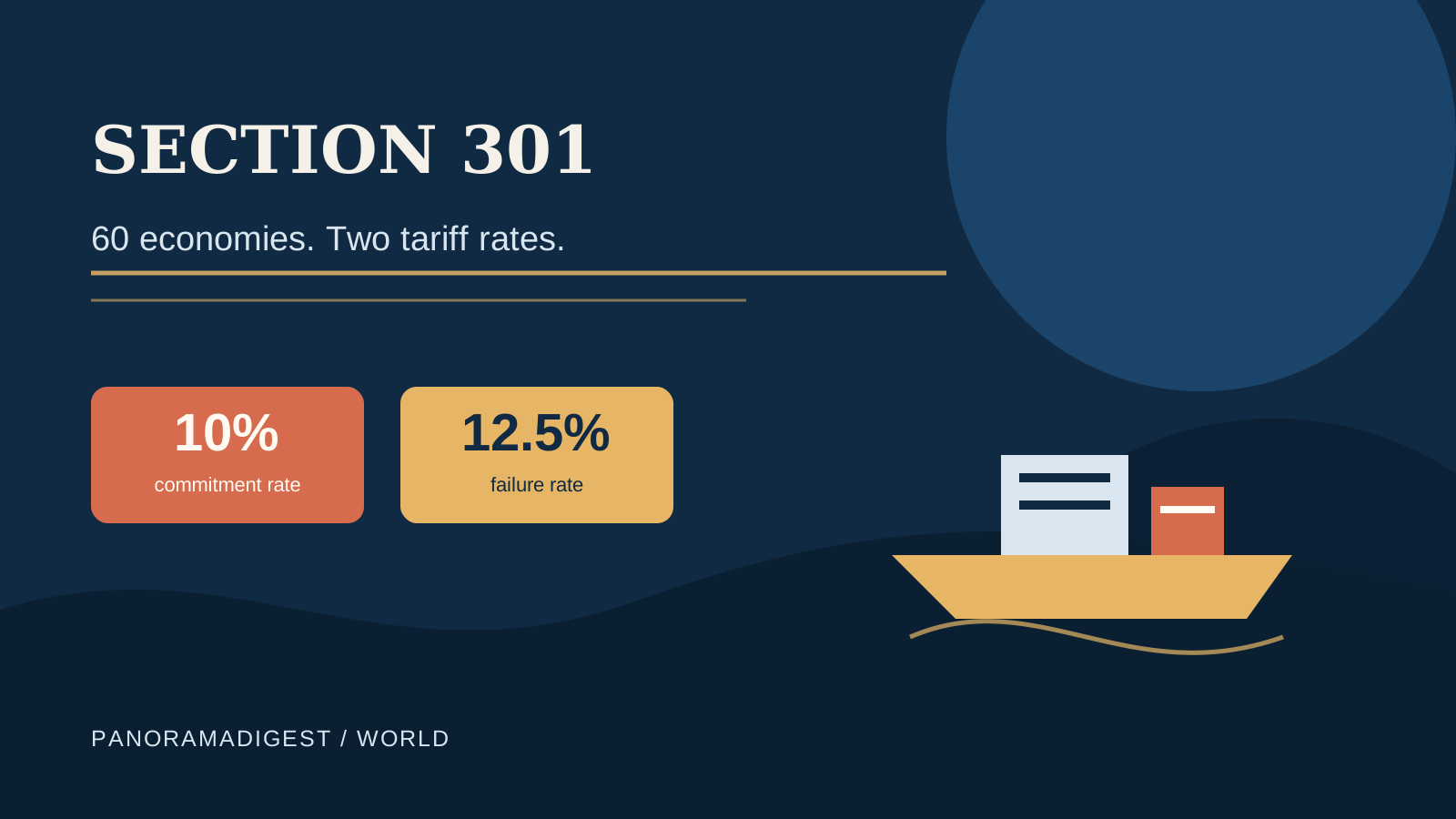
U.S. Section 301 Tariffs Set 10% and 12.5% Rates for 60 Economies
The U.S. has set new Section 301 tariff rates for 60 economies, with a 10% rate for governments making specified forced-labor enforcement commitments and 12.5% for those the administration says failed to do so.
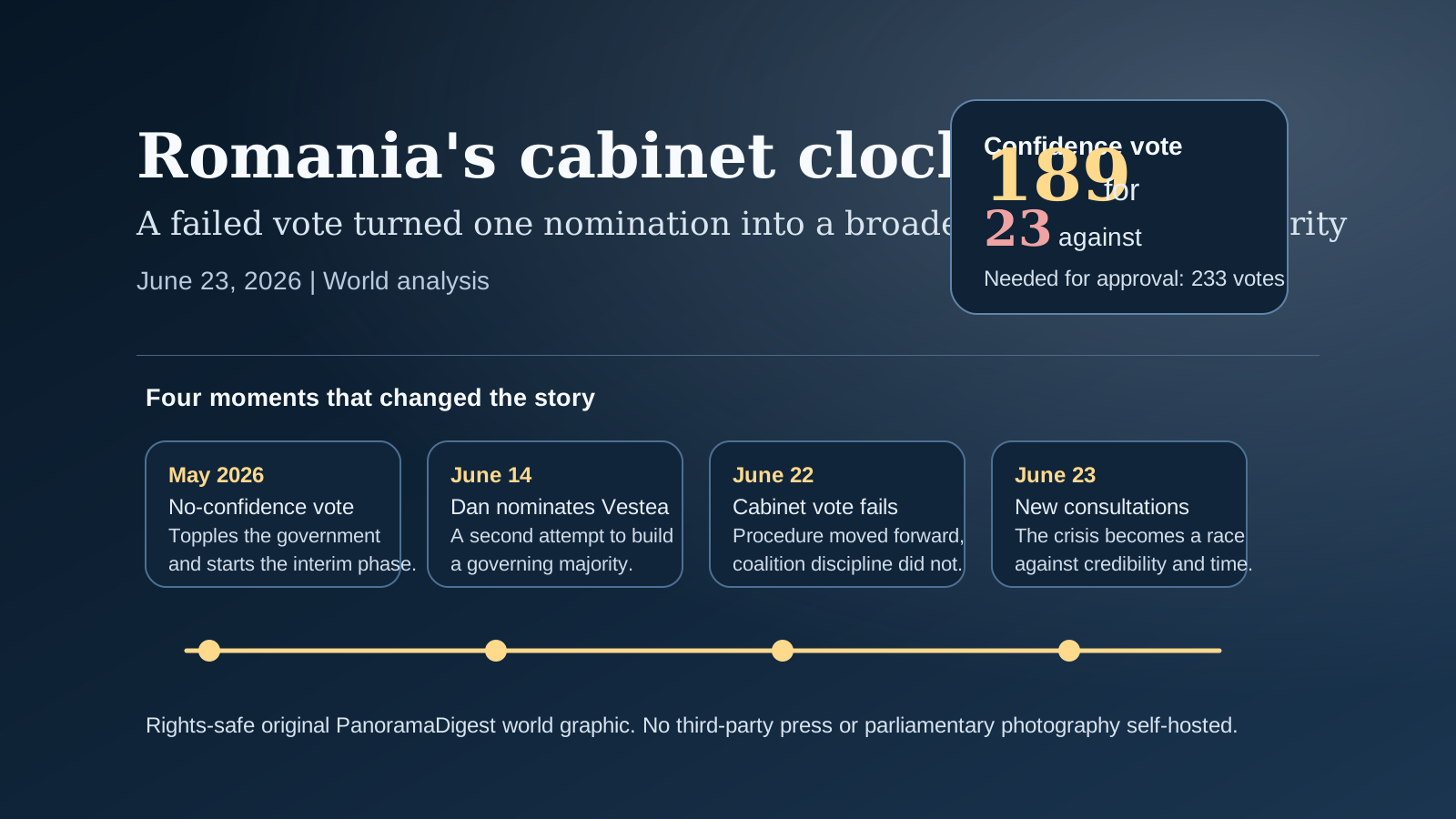
Romania's Failed Cabinet Vote Turned a Budget Crisis Into a Legitimacy Clock
Romania's parliament rejected Adrian Vestea's cabinet, forcing fresh consultations and turning a political stalemate into a more dangerous test of fiscal credibility, EU timing, and public trust.