Switzerland’s 10-Million Population Vote: Migration and Economic Tradeoffs
Swiss voters head to the polls on June 14, 2026 over a proposal to cap the population at 10 million. The sharper question is how much migration friction a wealthy export economy can absorb before it starts damaging its own labor model.
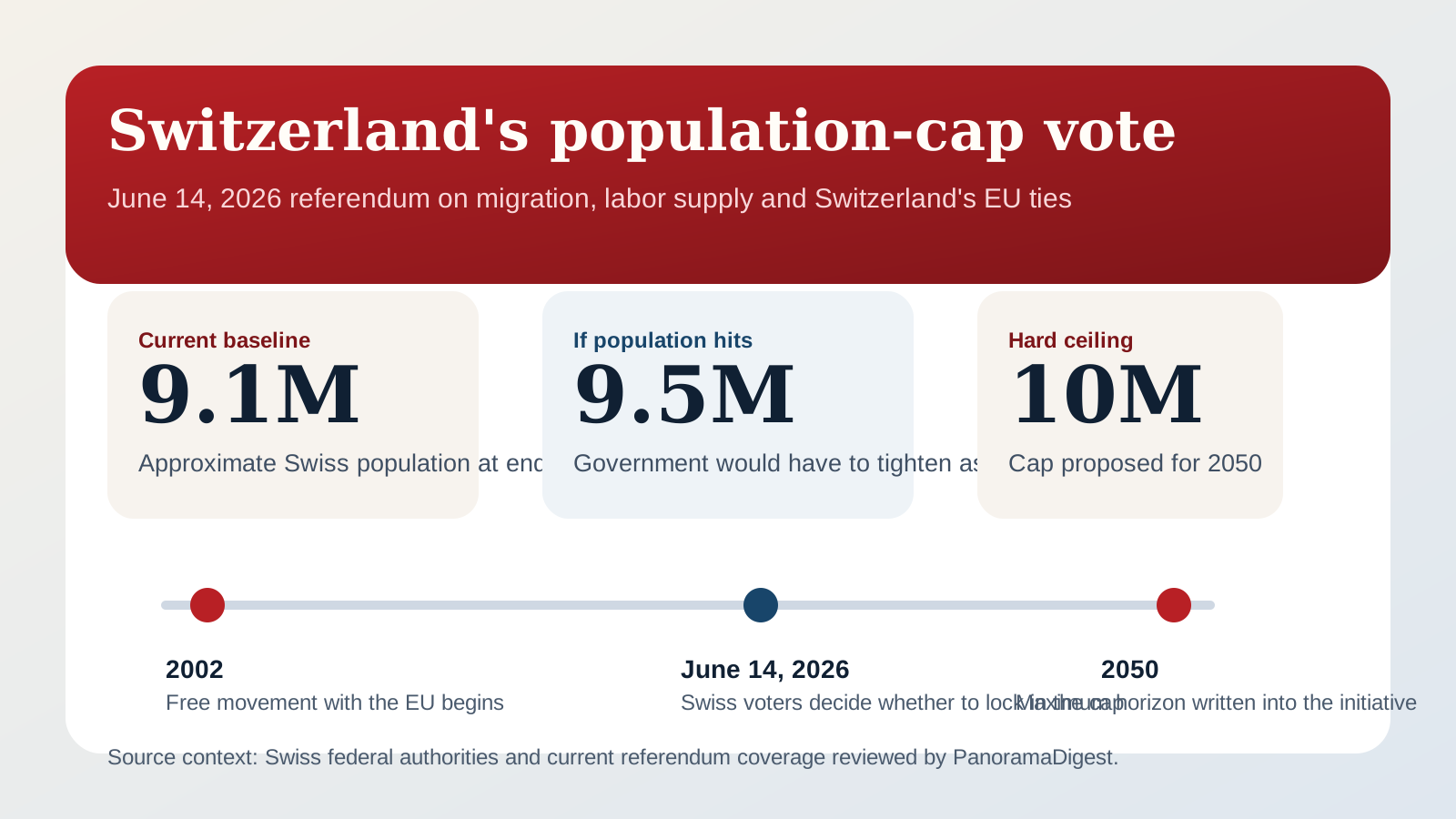
Swiss voters are not really being asked a narrow question about whether 10 million sounds like too many people. On Sunday, June 14, 2026, they are being asked whether one of Europe's richest, most labor-hungry economies wants to solve housing, congestion and cultural unease by making migration harder even when migration is one of the systems that keeps the country working.
Reuters — Swiss decide on June 14 on right-wing plan to cap population
Reuters' explainer lays out the referendum stakes ahead of the June 14 vote. Use the direct YouTube link if the embedded player is blocked.
The official Swiss government summary of the initiative is blunt about the mechanics. Federal authorities say Switzerland's permanent resident population stood at about 9.1 million at the end of 2025 and has grown by roughly 1.7 million since free movement with the European Union began in 2002. Under the proposal, if the resident population passes 9.5 million before 2050, the Federal Council and Parliament would have to tighten policy, particularly on asylum and family reunification. If the country crosses 10 million, Switzerland would have to terminate the agreements that contribute to that growth, including the EU free-movement accord after two years.
AP's current preview from Geneva captures the political split clearly: the Swiss People's Party is selling the measure as a defense against overcrowding and strain, while the federal government, parliament and leading business groups are warning that the country would be choosing self-inflicted economic drag. That is why this vote matters beyond Swiss domestic politics. It is a referendum on whether a high-wage country can keep the benefits of openness while constitutionally promising to retreat from the labor flows that help sustain healthcare, finance, pharmaceuticals, technology and elder care.
Why the 9.5 million trigger matters more than the 10 million slogan
The campaign branding makes the initiative sound like a distant ceiling. The official text makes it a nearer policy tripwire. Once the population reaches 9.5 million, Bern would be expected to act, and the list of likely pressure points is telling: asylum policy, family reunification and the international agreements that shape labor mobility. In other words, the practical argument starts before the symbolic number does.
That distinction is one reason critics keep describing the measure as a Swiss version of Brexit logic without the Brexit name. The government summary says that if the 10-million threshold is breached, Switzerland would have to terminate the agreement with the EU on the free movement of persons, which in turn would put the rest of Bilateral Agreements I at risk. That is not a side effect. It is the mechanism that gives the initiative force.
| Threshold or fact | What it means | Why readers should care |
|---|---|---|
| 9.1 million | Approximate Swiss resident population at the end of 2025, according to federal authorities. | The country is not debating an abstract future. It is debating a policy turn while already close to the trigger politics. |
| 9.5 million | The point at which the government would have to take restrictive action before 2050. | This is where asylum, residency and family rules become immediate instruments rather than campaign rhetoric. |
| 10 million | The constitutional cap proposed by the initiative. | If ultimately exceeded, the initiative would force a much sharper confrontation with the EU free-movement framework. |
| June 14, 2026 | The day of the referendum's in-person balloting. | The result will show whether voters want relief from density pressures even at the cost of more economic friction. |
Business and the federal government are arguing from the same vulnerability
The most revealing part of this campaign is that business lobbies and the federal government are not merely sharing a slogan. They are defending the same structural dependence. Swissinfo's reporting on the latest SBC poll said 52% of respondents opposed the initiative, but the same coverage also showed why the issue remains politically volatile: supporters have succeeded in turning housing pressure, transport bottlenecks and the feeling of density into a broader cultural argument about control.
That is the hidden argument beneath the slogans. Switzerland wants labor, market access and strategic autonomy at the same time. The initiative assumes the country can tighten the first without damaging the second or weakening the third. That is a much harder claim than the campaign posters suggest. Hospitals and care homes do not run on symbolic sovereignty. Neither do labs, construction sites or export firms trying to recruit specialists faster than an aging population can replace them.
The proposal is politically legible because the pressures are real
That does not mean opponents can dismiss the vote as simple xenophobic theater. The pressure points are real, and pretending otherwise is part of why anti-immigration campaigns keep finding room to grow across Europe. Housing has become more expensive. Transport systems feel fuller. Voters can look at population growth and feel that daily life has become more negotiated, more crowded and less forgiving. The initiative's strength comes from turning that feeling into a constitutional promise.
The weakness is that constitutional promises do not build apartments, expand rail capacity or train nurses. They change who gets in line first. AP's preview notes that supporters present the measure as protection of Swiss life and infrastructure, while opponents call it a wound the country would inflict on itself. The truth is that both camps are arguing over scarcity. One side wants to ration access more aggressively. The other wants to preserve economic openness and manage the stress with policy rather than rupture.
What to watch when the votes are counted
Readers should watch three things after polls close. First, the headline result itself: not just yes or no, but how narrow the margin is. Second, whether the debate immediately shifts from migration to Europe, because the EU implications are the real strategic payload inside the proposal. Third, whether the losing side accepts the underlying diagnosis even if it wins the referendum. If the initiative fails but the density argument remains politically potent, Switzerland will still be pulled toward tougher migration politics.
Watch: Reuters' explainer on the vote is here: Swiss decide on June 14 on right-wing plan to cap population. If the embedded player below does not load, the direct YouTube link remains available.
What makes Sunday's vote worth wider attention is not that Switzerland is suddenly abandoning pragmatism. It is that pragmatism itself is on the ballot. The country has long balanced prosperity with selective openness and a sense of control. This referendum asks whether voters still believe that balance is manageable, or whether they now want the reassurance of a hard limit even if the real cost arrives later, in quieter forms: fewer workers, harder negotiations with Europe, and an economy asked to run with more political drag than it is used to carrying.
For further reporting on this subject, see our Switzerland coverage.
Read Next
Related Stories
Swiss Neutrality Vote: 70.15% Reject Stricter Rules on Sanctions and Military Cooperation
Switzerland remains neutral after voters rejected a stricter constitutional definition. The official result and the sanctions exceptions explain what stays unchanged.
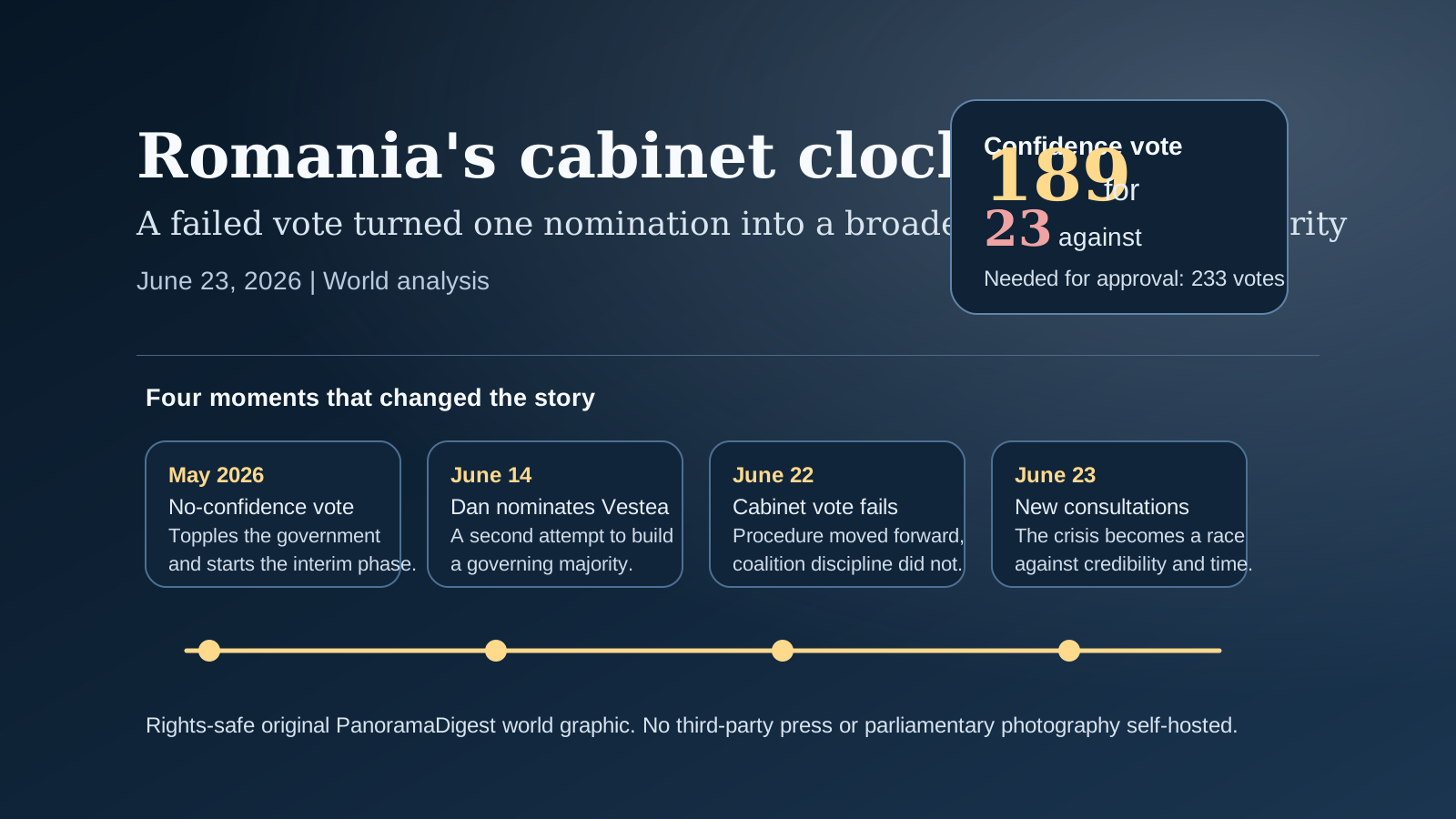
Romania's Failed Cabinet Vote Turned a Budget Crisis Into a Legitimacy Clock
Romania's parliament rejected Adrian Vestea's cabinet, forcing fresh consultations and turning a political stalemate into a more dangerous test of fiscal credibility, EU timing, and public trust.

The Geneva G7 Protests Made Security the Summit's First Real Headline
The anti-G7 march in Geneva on Sunday, June 14, did more than disrupt the eve of the Evian summit. It showed that before leaders could debate the Middle East, Ukraine, growth or artificial intelligence, France and Switzerland were already being judged on whether they could keep one border region governable under maximum political strain.