Michigan's Screwworm Move Shows the Livestock Economy No Longer Thinks This Is Just a Texas Problem
Michigan's new animal-entry rules took effect on June 17 with no local cases on the ground. That is the clearest sign yet that the screwworm problem has become a supply-chain and biosecurity story, not a regional oddity.
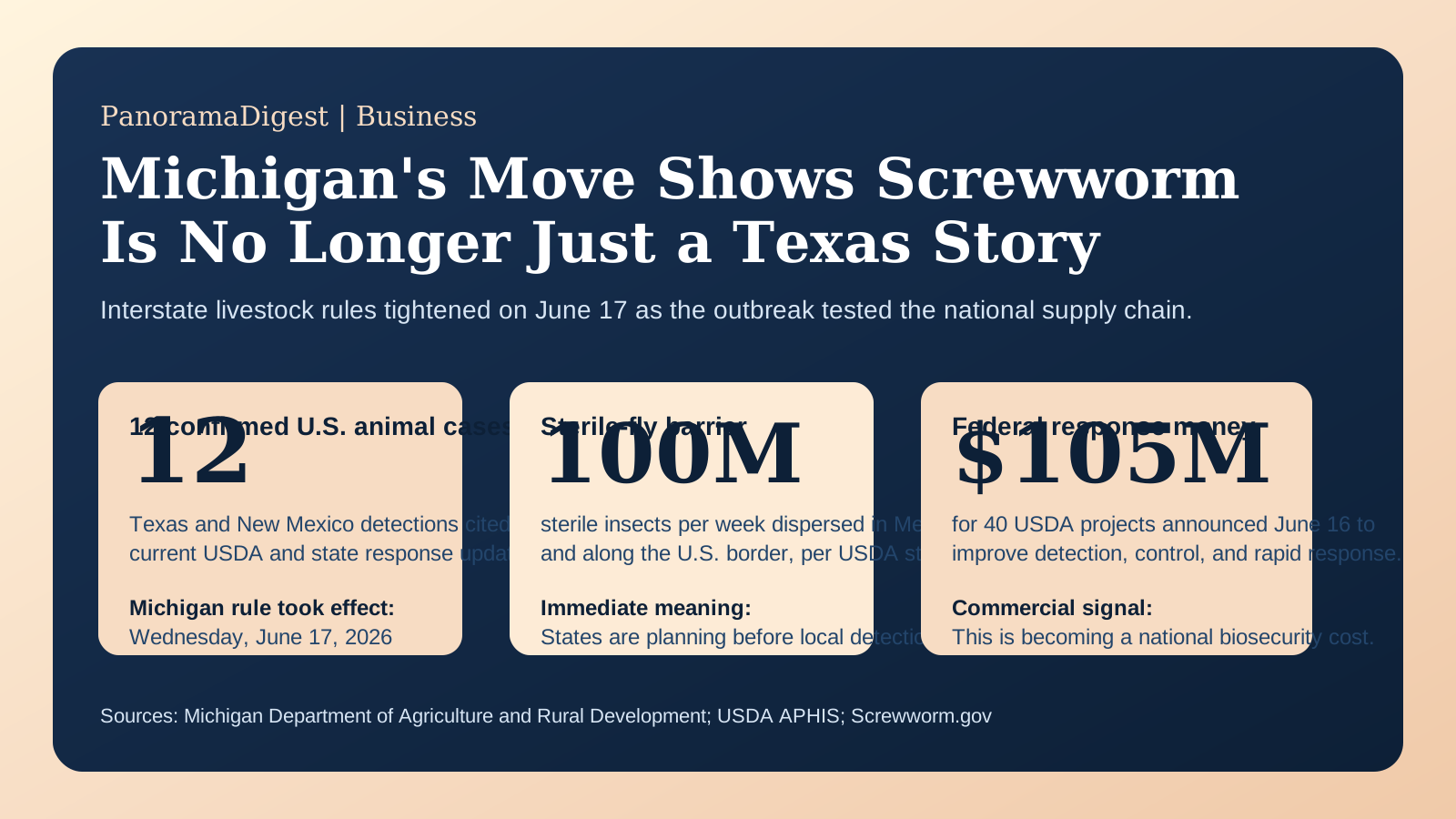
Michigan's new New World screwworm entry rules, which took effect on Wednesday, June 17, 2026, matter for a simple reason: states do not tighten livestock movement paperwork in mid-June unless they think the economic map is already shifting. Michigan has no confirmed screwworm detections. The parasite is still centered in Texas and New Mexico. But once a Midwestern state with large dairy, livestock, veterinary and fair-circuit exposure starts adjusting its border rules anyway, the story is no longer just about one infected calf in South Texas. It is about how fast the domestic animal economy begins acting as if distance is a weak defense.
The USDA's June 3 confirmation described the first U.S. case as a 3-week-old calf in Zavala County, Texas, and laid out a textbook containment plan: a 20-kilometer infested zone, movement controls, surveillance, and immediate sterile-fly releases. But the federal current-status page now frames the problem in broader terms. It tracks confirmed detections, trade restrictions, closed southern livestock ports, and a response architecture that is already operating across the border. In other words, the federal government is not treating screwworm like a local veterinary nuisance. It is treating it like a national agricultural defense problem.
The commercial signal is stronger than the biology headline
Michigan's agriculture department said the new requirements are meant to protect animal health and limit the economic damage that could follow if screwworm reaches the state. That choice of emphasis is telling. Screwworm is biologically horrifying because the larvae burrow into living tissue. But the larger market issue is friction. Once more states impose origin-based checks, certifications, inspections or movement conditions, the cost is not measured only in sick animals. It is measured in slower sales, more paperwork, more veterinary bottlenecks, and less confidence in the speed of interstate movement. That is how a pest outbreak starts behaving like an inflation and logistics story before most consumers can even name the insect.
The federal side is already spending like it understands that risk. USDA announced on June 16 that it would fund 40 projects worth about $105 million to improve detection, control and rapid-response capacity. Its status page also says the agency is dispersing 100 million sterile insects per week in Mexico and along the U.S. border. That is not what a government does when it believes the main task is cleaning up one county map. It is what a government does when it thinks the containment line could fail without a deeper production, surveillance and transport response.
| Pressure point | What the sources show | Why the business stakes are growing |
|---|---|---|
| Interstate movement | Michigan imposed new entry requirements even without in-state detections. | States are preparing for animal-trade friction before local spread is confirmed. |
| Containment cost | USDA says it is releasing sterile flies and maintaining a cross-border suppression effort. | Containment is already operating at national-program scale, not ranch scale. |
| Confirmed spread | USDA and follow-up reporting show cases in Texas and New Mexico beyond the first Texas detection. | Each new case raises the odds that more states will harden their movement rules. |
| Capital response | USDA announced $105 million for 40 screwworm preparedness projects on June 16. | Washington is treating surveillance and eradication capacity as an investment problem, not just an emergency bulletin. |
This is what border risk looks like after it leaves the border
There is also a strategic lesson here. The supply chain does not wait for unanimous certainty. It moves when enough actors decide that a low-probability failure would be too expensive to ignore. The Guardian's June 16 overview of the expanding case count captures the mood change: agricultural officials are no longer speaking as if the problem can be described with one South Texas headline. They are talking about rising case totals, record-high beef prices, and the danger of delay while containment tools are still available. That is exactly the point at which market behavior changes before public psychology does.
Readers should resist one easy misunderstanding. Michigan's order does not prove the outbreak is spiraling out of control. It proves something more practical: responsible states now think the downside of waiting is worse than the nuisance of acting early. That is usually the moment when an animal-health issue crosses into mainstream business significance. Once trade routes, fair schedules, breeder transfers, veterinary inspection capacity and livestock origin checks start tightening in anticipation, the economic perimeter has already widened.
- June 3: USDA confirmed the first U.S. case in a calf in Zavala County, Texas, and imposed a 20-kilometer response zone.
- June 8 to June 12: additional detections and status updates showed the problem was not staying inside one initial cluster.
- June 16: USDA announced roughly $105 million for 40 preparedness and response projects.
- June 17: Michigan's tougher entry rules took effect, showing the interstate response has already moved north in policy terms.
What to watch next
The next serious indicator is not rhetorical. It is operational. Watch whether more states copy Michigan and Pennsylvania with their own entry restrictions, whether USDA's sterile-fly and detection programs keep the case map from jumping again, and whether livestock operators start talking publicly about delay costs rather than only animal health. If that conversation broadens, the market will be telling you the same thing Michigan's order already did: the screwworm problem is being priced as a national supply-chain threat before it becomes a national headline for consumers.
Reader note: The key public documents here are Michigan's June 16 entry-rule announcement, USDA's June 3 confirmation, the federal current-status page, and USDA's June 16 funding announcement.
Read Next
Related Stories

U.S. and Japan Buy Yen Together as Dollar Falls From 163 to 156
Japan confirmed coordinated yen buying with the U.S. after the dollar traded above 163 yen. The intervention amount will be disclosed later.

OPEC+ Raises September Oil Production Target by 188,000 Barrels a Day
Seven OPEC+ countries raised their combined September production target by 188,000 barrels a day, bringing the published required total to 31.01 million.

Microsoft Azure Revenue Passes $100 Billion as Cloud Sales Rise 27%
Microsoft said Azure passed $100 billion in annual revenue for the first time, while quarterly Microsoft Cloud sales reached $59.3 billion.