What the 2026 Tony Awards Winners Revealed About Broadway's Current Appetite for Risk
The biggest winners at the 2026 Tony Awards suggested Broadway is still willing to reward ambition, but mostly when that ambition arrives inside a familiar frame.
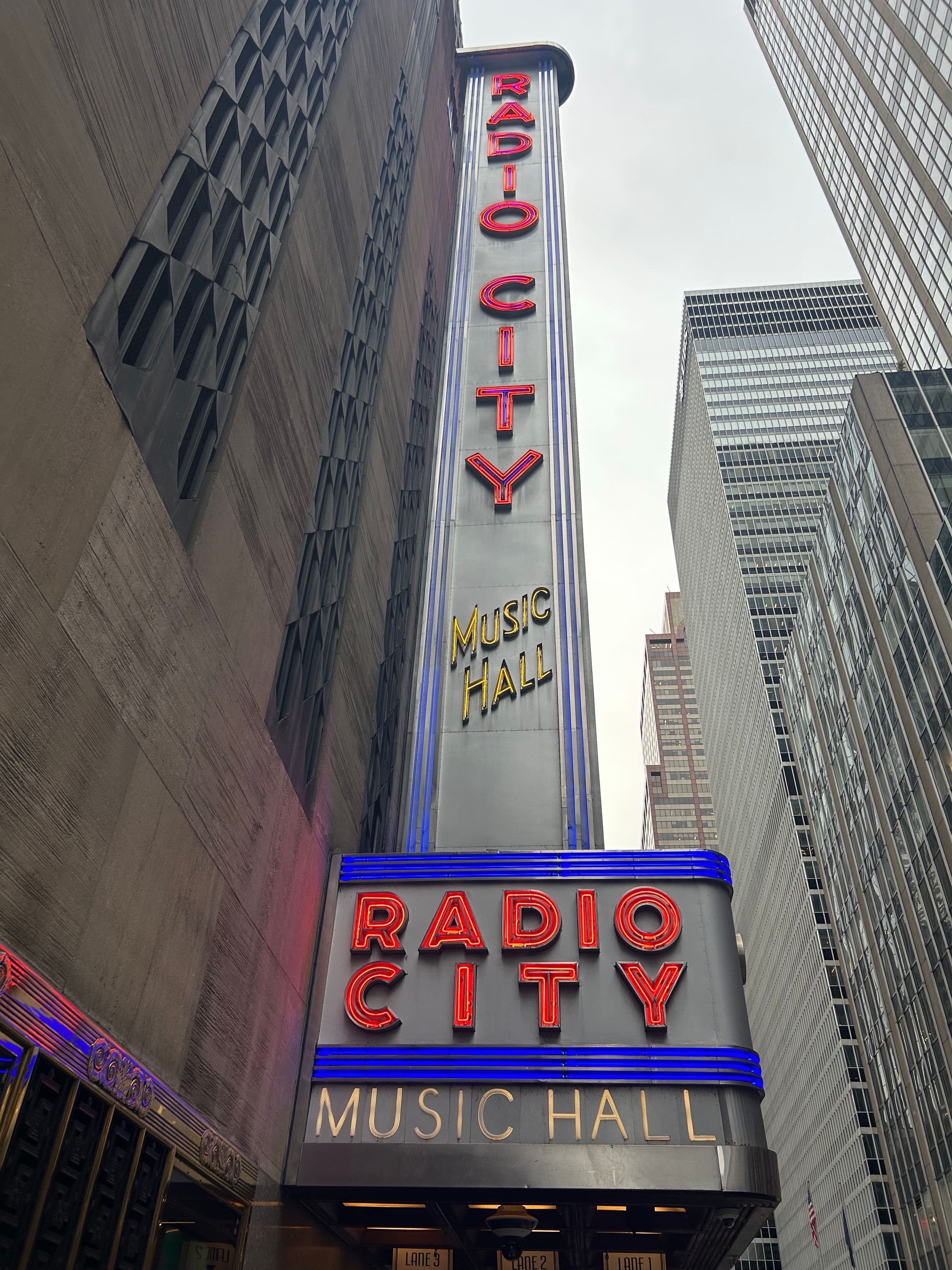
By the time the 79th Tony Awards finished on Sunday, June 7, the night had settled into a sharper argument than the usual winners list. Broadway did not spend the evening rejecting familiarity. It rewarded productions that knew how to use familiarity as a delivery system for something more alive.
A review of the official Tony Awards winners page shows how the center of gravity formed. Schmigadoon! won best musical, best book and best original score, while Arthur Miller's Death of a Salesman dominated the play-revival side. Ragtime took the musical-revival prize and both leading musical acting awards, and Cats: The Jellicle Ball won for direction, choreography and costume design. Those outcomes do not describe a season running from risk. They describe a season that wants risk to prove it can fill a room.
That is why the night mattered beyond its trophies. The Tonys ended up endorsing a version of Broadway that is less interested in novelty for novelty's sake than in reinvention with commercial nerve. In other words, the industry still likes big swings. It just prefers them when the audience can recognize the silhouette before the lights go down.
Schmigadoon! won because adaptation alone was not the point
It would be easy to misread Schmigadoon!'s success as another case of television intellectual property cashing a Broadway check. The official winners ledger says something more interesting. Best musical, best book, best score and orchestrations is not a participation ribbon for name recognition. It is a signal that voters thought the material had been rebuilt, not merely transferred.
That distinction matters for a Broadway economy increasingly crowded with titles audiences already know from screens, catalogs and childhood memory. The problem is no longer getting attention. It is avoiding the dead feeling that comes when a stage adaptation behaves like a licensing exercise. The Tonys effectively rewarded a production that turned recognition into craft rather than complacency.
The result also cuts against a lazy assumption about commercial theatre: that originality only counts when it arrives wearing the label of pure novelty. Broadway has always been a hybrid business, borrowing, revising and re-staging its way forward. What matters is whether the borrowing creates fresh theatrical pleasure. On that standard, Schmigadoon! seems to have convinced voters that it did.
| Production | What the Tonys rewarded | What that suggests |
|---|---|---|
| Schmigadoon! | Best musical, book, score and orchestrations | Known IP can still win when it is musically and structurally reimagined |
| Arthur Miller's Death of a Salesman | Revival of a play plus major direction and design prizes | Classic work still wins when a revival feels interpretive, not museum-like |
| Ragtime | Revival of a musical and both leading musical acting trophies | Prestige revivals remain a safe vessel for emotional and vocal scale |
| Cats: The Jellicle Ball | Direction, choreography and costume design | Formal daring is welcome when it arrives with a strong visual and movement identity |
| Liberation | Best play | New writing still matters when it arrives with moral pressure and theatrical confidence |
The revival wins were not nostalgia prizes
According to the official Tony results, Arthur Miller's Death of a Salesman won best revival of a play, featured actress in a play for Laurie Metcalf, and multiple design and direction honors. Ragtime won best revival of a musical, while Joshua Henry and Caissie Levy took the leading musical performance trophies. The cleanest reading is not that Broadway retreated into old titles. It is that revival has become the place where Broadway negotiates permanence and relevance at the same time.
That has practical consequences. A revival gives producers a more legible marketing proposition than an unknown new work, but it also creates a higher interpretive burden. Nobody needs another respectful exhumation. If a classic returns, it has to argue with the present tense. That is what made the 2026 results more revealing than a simple count of how many old titles won.
The Associated Press' recap of the ceremony, published after the show, framed the evening as one in which winners mixed gratitude, theatrical camp and practical human thanks to voice teachers and babysitters. That detail fits the broader picture. Broadway's self-image remains glamorous on television, but the work it honored leaned toward discipline, re-interpretation and craft pressure rather than empty spectacle.
Cats and Liberation kept the night from becoming too tidy
If the ceremony had only crowned Schmigadoon!, Ragtime and Death of a Salesman, the story might have hardened into a reassuring one about Broadway rewarding prestige familiarity. But the other major wins complicated that. Cats: The Jellicle Ball taking direction, choreography and costume design suggested the industry still has an appetite for aesthetic swing, especially when movement and visual authorship are impossible to ignore. And Bess Wohl's Liberation winning best play mattered because it kept new writing in the center of the conversation rather than at its decorative edge.
That combination is the real message from the 2026 winners. Broadway is not refusing originality; it is distributing originality unevenly. It seems happiest when newness arrives through staging languages, reinterpretive revivals and formally alert adaptations. Brand-new plays can still break through, but they need force. Brand-new musicals, by contrast, still face the hardest climb unless they can promise both invention and legibility.
For the business side of the industry, that is not a trivial distinction. A season shaped this way tells investors and producers that audiences may still pay for experiment, but the packaging matters as much as the experiment itself. Familiar titles reduce the cost of explanation. The artistry has to supply the surprise.
What Broadway should learn from this ballot
The lesson from the 2026 Tony Awards is not to greenlight more imitation. It is to stop pretending there is a clean line between artistic courage and commercial strategy. The night's winners repeatedly lived in the overlap. They were recognizable enough to market, but particular enough to matter.
That should be encouraging, especially after a season when Broadway has continued to ask how much attention culture still grants to live performance. The answer, at least from this ballot, is that liveness still has leverage when it offers transformation rather than replication. A revival has to feel argued. An adaptation has to feel rewritten. A new play has to feel urgent enough to break through the noise of revival comfort.
The Tonys therefore landed on a smarter verdict than the caricature of Broadway as either fearless avant-garde or risk-averse nostalgia machine. What they endorsed was translation under pressure: take what people think they know, then make it theatrical enough that recognition becomes the beginning of the experience rather than the whole reason for buying a ticket.
That is a narrower path than artists might want, but it is more honest than the usual awards-night platitudes. And on a Broadway still balancing prestige, tourism, labor costs and attention scarcity, honesty may be the boldest signal the 2026 winners could send.
For readers who want the before picture as well as the verdict, PanoramaDigest's earlier Tony preview asked whether the telecast could sell Broadway without sanding it down. Sunday night's winners supplied the answer: it can, but only when the work onstage refuses to arrive pre-sanded in the first place.
Continue reading: The 2026 Tonys Have to Sell Broadway Without Sanding It Down.
Read Next
Related Stories

Netflix Cuts 2026 Ad Revenue Forecast to $2.7 Billion: The 10% Change Explained
Netflix lowered its annual ad outlook, not last year's sales. A calculation table separates the 10% revision, its revenue share and the company's quarterly results.
Vincent Pastore Dies at 80: The Sopranos Actor's Career Beyond Big Pussy
Vincent Pastore, who made friendship and betrayal inseparable as Big Pussy on The Sopranos, has died at 80. His manager confirmed the death to AP.

Ryan Gosling Will Play Ghost Rider in Marvel's 2028 Film Directed by Shawn Levy
Marvel confirmed Ryan Gosling as its new Ghost Rider at San Diego Comic-Con. Shawn Levy will direct the 2028 film, giving the MCU character his first standalone movie since the rights returned to Marvel.