WHO's PROTECT Package Puts Seven Policy Measures at the Center of Drowning Prevention
The WHO's new PROTECT package says drowning prevention depends on safer infrastructure, rescue capacity, education, child safeguards and flood preparedness rather than one isolated intervention.
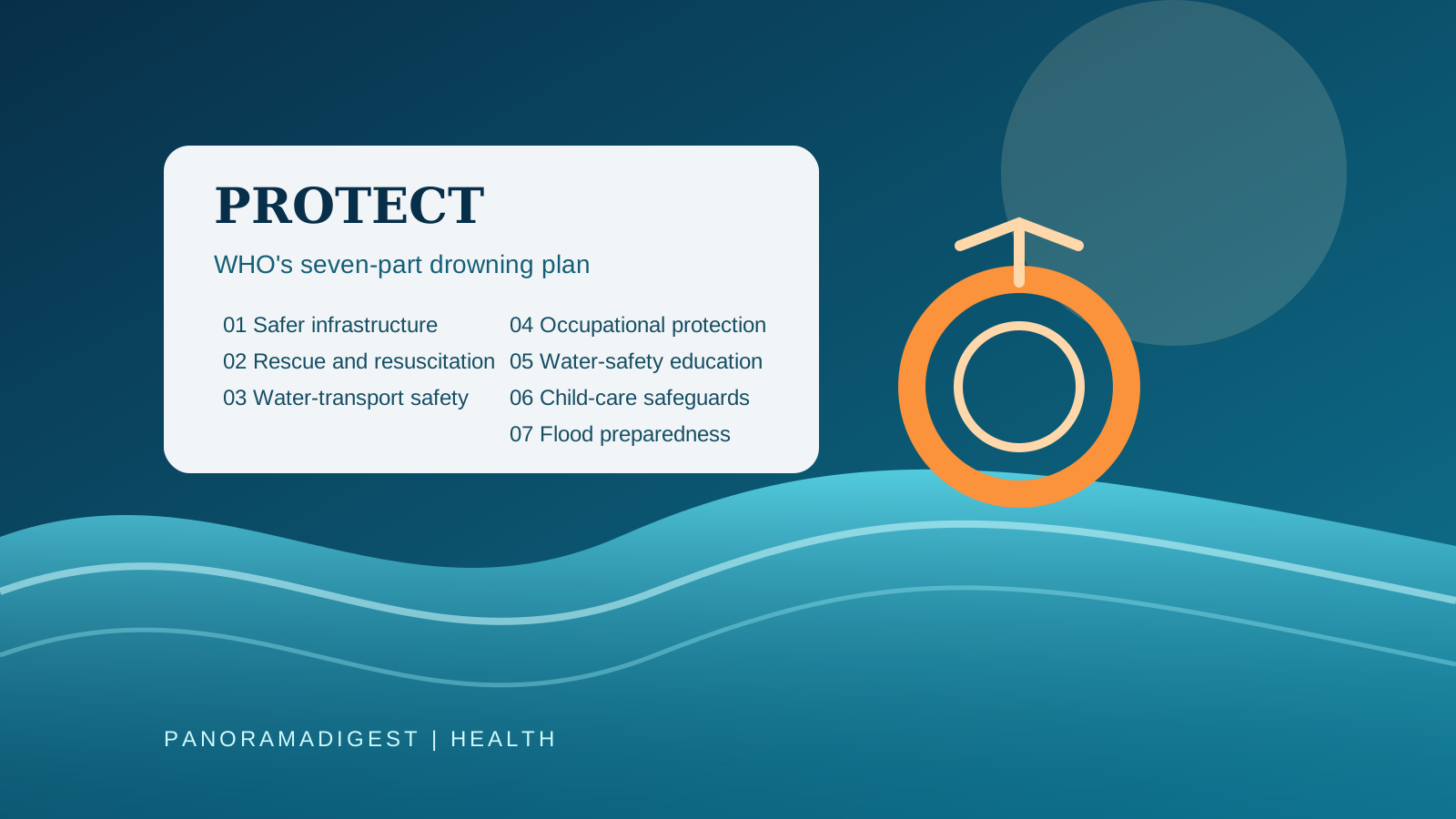
The World Health Organization published its PROTECT technical package for drowning prevention on July 23, 2026. The 88-page guide organizes prevention around seven measures: safer infrastructure, rescue and resuscitation, occupational safety, water-transport standards, water-safety education, child-care safeguards and preparedness for floods and other hazards.
U.S. Consumer Product Safety Commission — 5 Pool Safety Tips for Water Safety Month
Official CPSC water-safety context. If the player fails, use the direct YouTube link.
WHO says drowning kills more than 300,000 people each year and that most deaths are preventable. The new package is not a treatment guideline for an individual emergency. It is a policy and implementation framework for governments, municipalities, schools, employers, transport authorities and community organizations.
That distinction matters. Drowning risk is not confined to swimming pools. WHO points to the effects of climate change, urbanization, migration, informal employment and increased reliance on water transport. A prevention plan that focuses only on swimming lessons or pool fencing can miss rivers, wells, domestic water storage, workplaces, boats and floodwater.
PanoramaDigest recently examined the emergency-preparedness lessons from France's wildfire season and the UN's road-safety accountability agenda. The PROTECT package applies a similar systems principle to water: public safety improves when responsibility is designed into places, rules and institutions instead of left entirely to individual vigilance.
| Measure | Primary setting | What implementation should address |
|---|---|---|
| Safer infrastructure | Homes, communities and public water sites | Barriers, safer access, warnings and rescue equipment. |
| Rescue and resuscitation | Water access points and emergency systems | Early rescue, trained responders and rapid resuscitation. |
| Occupational safety | Fishing, construction, agriculture and informal work | Equipment, training and enforceable workplace rules. |
| Transport standards | Boats and other water travel | Safe vessels, life-saving equipment and operating procedures. |
| Education | Children, families and communities | Water competency, supervision and risk recognition. |
| Child-care safeguards | Homes and care settings | Active supervision and protection against unsupervised access. |
| Threat preparedness | Floods and multi-hazard emergencies | Warnings, evacuation planning and resilient response capacity. |
Why the package treats drowning as a systems problem
Individual behavior matters, but people make decisions inside environments they did not design. A child can reach an unfenced water source. A worker can face a dangerous job without reliable flotation equipment. A passenger can board a vessel without clear safety standards. A flood can turn a familiar road into fast-moving water before a community receives a warning.
WHO's approach therefore distributes prevention across public agencies and everyday settings. The package asks policymakers to combine laws, infrastructure, education, rescue services and data rather than choosing a single campaign and treating it as a complete solution.
The framework also recognizes that exposure differs by place and livelihood. Rivers, lakes, wells, water-storage containers, swimming pools and coastal waters create different hazards. The right intervention for a supervised pool is not the same as the right intervention for a fishing community, a flood-prone settlement or a workplace near open water.
The seven measures in plain language
1. Safer infrastructure. Physical design can reduce exposure before an emergency begins. Barriers, safer access points, signs, lighting, rescue equipment and changes to dangerous sites can make the safer choice easier and the accidental entry harder.
2. Rescue and resuscitation. Prevention includes what happens when a person enters danger. Communities need trained responders, clear emergency communications, equipment and systems that reduce the time between an incident, rescue and effective resuscitation.
3. Occupational safety. People who work around water may face repeated exposure, not occasional recreation. Employers and regulators need to address equipment, training, supervision and the conditions of informal work where enforcement can be limited.
4. Water-transport standards. Boats and other water transport require rules that cover vessel safety, passenger protection, operating conditions and life-saving equipment. The package places transport within drowning prevention instead of treating it as a separate subject.
5. Water-safety education. Education should help people recognize hazards, build appropriate water competency and understand that swimming ability does not remove all risk. Guidance needs to fit local water environments and the age and ability of the people using them.
6. Child-care safeguards. Young children need active protection because they can reach water quickly and may not understand danger. The relevant question is not whether a child is usually careful, but whether the care setting prevents unsupervised access and provides continuous, capable supervision.
7. Flood and multi-hazard preparedness. Climate-related and other emergencies change the risk quickly. Warning systems, evacuation routes, public communication, shelters and response plans need to include drowning hazards rather than focusing only on wind, fire or structural damage.
What governments can measure next
The value of a technical package depends on what happens after publication. Governments can use the framework to create measurable plans: the number of high-risk sites made safer, the share of relevant workers trained and equipped, the availability of rescue and resuscitation services, the reach of water-safety education and the speed and coverage of flood warnings.
They should also identify who owns each measure. A checklist without an accountable agency can create the appearance of action without changing exposure. Municipal authorities may control infrastructure, health agencies may lead training, transport regulators may set vessel standards and schools or child-care providers may manage supervision. The package is most useful when those responsibilities are explicit and funded.
Data quality is another constraint. A country cannot target prevention well if deaths and non-fatal incidents are not recorded consistently or if the setting and circumstances are unknown. Better data can reveal whether risk is concentrated around transport, work, children, seasonal floods or particular communities, but collecting it must not delay interventions that are already clearly needed.
How the July 23 launch fits the wider prevention calendar
WHO's launch comes two days before World Drowning Prevention Day on July 25, 2026, whose theme is “Unite to Turn the Tide.” That timing can help move the package from a technical document into public campaigns, but it also creates a test: awareness must lead to changes in supervision, infrastructure, emergency response and rules.
The package is best understood as a reusable planning tool. It does not promise that one law, one campaign or one piece of equipment will eliminate drowning. It gives governments a way to examine the full chain from exposure to rescue and recovery, then decide which gaps can be closed first.
Watch related context: the official U.S. Consumer Product Safety Commission water-safety video demonstrates the public-education side of drowning prevention. If the player does not load, use the direct YouTube link.
Primary document: WHO drowning-prevention technical package.
Read Next
Related Stories
2026-27 Flu Vaccine Match: Why Lab Results Are Not an Effectiveness Rate
Early CDC testing finds encouraging recognition of sampled flu viruses. The denominators explain why those results cannot tell you a vaccine's real-world protection rate.
WHO Pregnancy-Hypertension Roadmap: Priorities Through 2035
WHO’s October 8 roadmap connects pregnancy-hypertension research, clinical standards and access to care. Here is what its figures and five priorities actually measure.

UK Sugar Rationing Study Links the First 1,000 Days to Lower Dementia Risk
A UK Biobank natural experiment linked sugar rationing during the first 1,000 days to lower later-life risks of dementia, Alzheimer's disease, depression and anxiety, but it does not prove causation.