ECB Holds Rates at 2.25% as Energy Shock Keeps September Hike in Play
The ECB left its three key rates unchanged on July 23, but its warning about volatile energy prices keeps the possibility of another increase on the euro-area policy agenda.
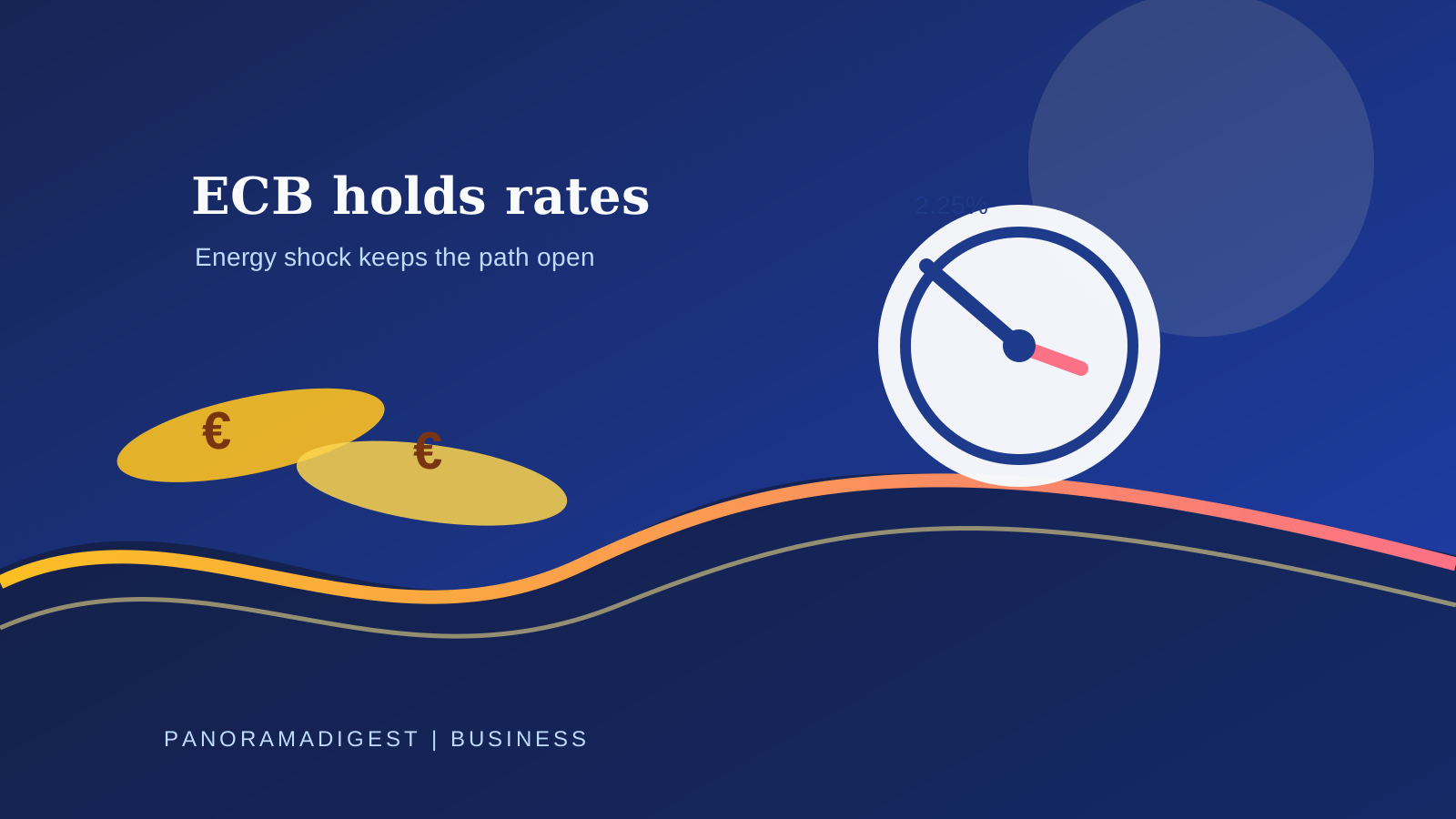
The European Central Bank left its three key interest rates unchanged on July 23, 2026, keeping the deposit facility at 2.25%, the main refinancing rate at 2.40% and the marginal lending facility at 2.65%. The decision was a pause, not a promise that rates have peaked: the ECB said energy prices remain highly volatile and that it is not pre-committing to a particular rate path.
European Central Bank — Live - ECB Governing Council Press Conference - 23 July 2026
Official ECB press conference explaining the July 23 rate decision. If the player fails, use the direct YouTube link.
The immediate message for households and businesses is stability in borrowing benchmarks. The larger message for markets is conditionality. The Governing Council wants inflation to settle at its 2% medium-term target, but it is still assessing how an energy shock could feed into prices, wages, services and expectations.
That combination makes the September meeting important without making a September hike certain. The ECB did not announce a future increase. It said decisions will be made meeting by meeting using incoming inflation, economic and financial data and the strength of monetary-policy transmission.
PanoramaDigest has covered the EU's new marketplace-accountability rules and the EU's banking-competitiveness agenda. The rate decision belongs to the same European business context, but it affects the price of credit across the economy rather than a single sector.
| Instrument | Rate after decision | Immediate meaning |
|---|---|---|
| Deposit facility | 2.25% | Rate paid on deposits held by banks at the Eurosystem. |
| Main refinancing operations | 2.40% | One-week rate for regular central-bank refinancing operations. |
| Marginal lending facility | 2.65% | Overnight lending rate for banks using the facility. |
Why the ECB paused
The ECB's statement says the outlook for energy prices is close to the baseline in the June Eurosystem staff projections but remains well above levels recorded before the conflict in the Middle East. That leaves policymakers balancing two risks: an energy shock can lift inflation, while higher rates used to contain that inflation can weaken demand and investment.
The Governing Council said it is monitoring the intensity and duration of the shock, as well as indirect and second-round effects. Direct effects include higher fuel and energy costs. Indirect effects can appear when transport, production and food costs rise. Second-round effects can emerge if wage negotiations, price-setting or inflation expectations begin to reflect a more persistent shock.
A central bank cannot produce more oil or repair a disrupted shipping route by raising rates. Its role is narrower: prevent a temporary supply shock from becoming embedded in broader inflation. The policy challenge is to judge whether price pressure is passing through or fading before changing the stance again.
What unchanged rates mean for borrowers
For borrowers, an unchanged policy rate does not mean every loan rate stays unchanged. Mortgage and business-loan pricing also depends on market funding costs, bank risk assessments, maturity and competition. The decision does mean the ECB did not add another official increase to the borrowing-cost baseline on July 23.
Existing variable-rate borrowers may see less immediate pressure than they would after another hike, while households refinancing or businesses seeking new credit still face rates shaped by the broader market. Fixed-rate borrowers are generally less exposed to the next policy meeting until their contract is repriced or renewed.
For companies, the pause may extend planning time, but it does not erase the investment problem created by expensive credit and uncertain energy costs. Energy-intensive manufacturers, transport firms and food producers can face both financing pressure and input-cost volatility at once.
Why September is being watched
The ECB's meeting-by-meeting language keeps September open. A future increase would require evidence that the energy shock is raising underlying inflation or expectations in a way that threatens the 2% target. A hold would be easier to justify if energy prices stabilize, wage and services pressure remains contained and incoming data show that earlier tightening is working.
That is why the next policy signal will not be a single oil-price move. Investors and companies will watch the path from energy costs into negotiated wages, service prices, inflation expectations, demand and credit conditions. The ECB's own wording emphasizes both the intensity and duration of the shock.
The absence of a pre-committed rate path also gives the Governing Council room to react. That flexibility can reduce the risk of promising a policy move that later becomes inappropriate, but it can make financial conditions more sensitive to each new data release and official comment.
What the ECB's 2% target means here
The ECB says it remains committed to stabilizing inflation at its 2% target over the medium term. The target is not a guarantee that every month will print at exactly 2%. It is the anchor around which the central bank evaluates temporary shocks, persistent pressure and the transmission of policy through the economy.
In this decision, the energy shock is the key uncertainty. If higher energy costs remain concentrated in a limited set of prices, the ECB may be able to look through part of the increase. If they spread into wages, services and expectations, the policy response could need to be tighter even if economic growth weakens.
The practical signal is therefore neither “rates are done” nor “a hike is certain.” It is that the ECB has paused while retaining the option to act if the inflation process changes.
What to watch before the next meeting
- Energy prices: whether the shock remains elevated, reverses or spreads into broader input costs.
- Underlying inflation: whether services and wage-sensitive prices continue to cool.
- Expectations: whether households, firms and markets continue to treat the shock as temporary.
- Credit transmission: whether earlier rate increases are slowing borrowing, spending and investment.
- ECB language: whether officials continue to emphasize patience or place more weight on second-round effects.
The July 23 decision buys the ECB time, but it does not settle the policy debate. For Europe, the next rate move will depend less on the headline price of energy than on whether the shock becomes part of the inflation process the central bank is mandated to control.
Watch related context: the official ECB Governing Council press conference from July 23, 2026 provides the central bank's own explanation. If the player does not load, use the direct YouTube link.
Read Next
Related Stories

China Q3 GDP Growth Rebounds to 4.5%: Retail and Investment Still Lag
China's Q3 GDP rose 4.5%, but September retail sales and nine-month investment show an uneven recovery. A guide to the figures, periods and price bases.
2027 Social Security COLA: The 3.6% Increase in Dollars and Payment Dates
The 2027 Social Security COLA is 3.6%. Our worked examples separate the gross increase from the bank deposit, with the official calculation and payment timing.

EU Greenwashing Rules Start September 27: How to Check Labels and Guarantees
A practical guide to the EU rules applying from September 27: environmental claims, certification labels, GARAN guarantees and the limits of old-stock flexibility.