Mexico Reached the Knockout Stage First. The Bigger Signal Is How Calm It Already Looks Under Home Pressure.
Mexico's 1-0 win over South Korea on June 18, 2026 put the co-hosts into the World Cup round of 32 before anyone else. The scoreline mattered, but the sharper read is that Javier Aguirre's team handled the emotional weight of a home tournament with more patience than panic.
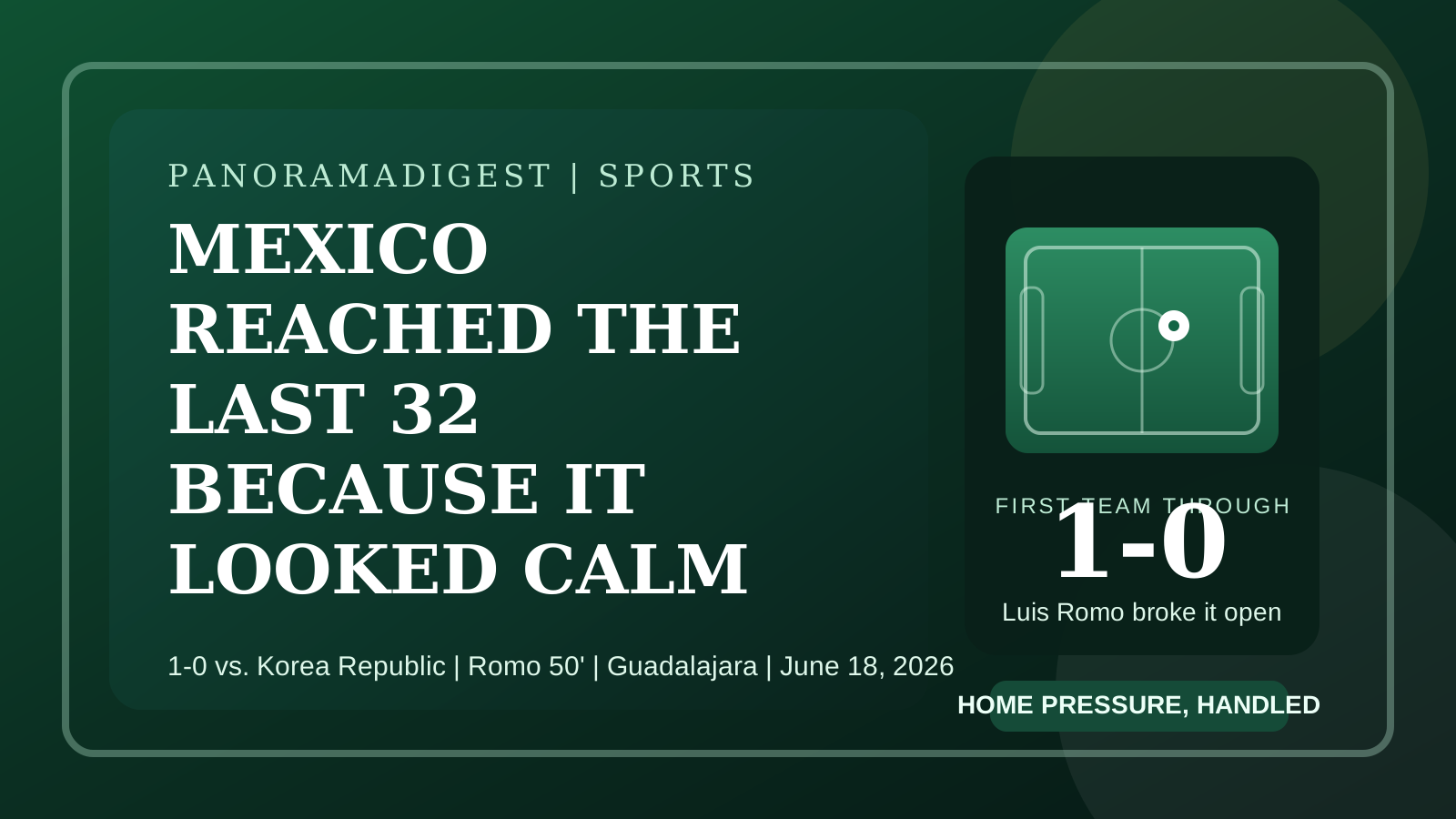
The official result is simple enough. Mexico beat South Korea 1-0 in Guadalajara on Thursday, June 18, 2026, and became the first team to clinch a place in the FIFA World Cup round of 32. AP reported that Luis Romo scored in the 50th minute after a collision between goalkeeper Kim Seung-gyu and defender Lee Gi-hyuk, while Raúl Rangel preserved the lead late. The official FIFA match report framed it as a decisive host-nation step into the knockout bracket. Both things are true. The more interesting truth is that Mexico did not reach the bracket by turning the night into a spectacle. It reached it by looking calmer than the occasion.
TSN / YouTube — Mexico vs. Korea Republic full highlights from the 2026 FIFA World Cup
TSN's same-day highlights package shows the Romo goal and Mexico's late defensive work. Use the direct YouTube link if the embedded player does not load in your browser.
That distinction matters because home tournaments can distort teams. Crowds demand momentum before a match has settled. Coaches start chasing emotion. Players begin confusing urgency with control. Mexico, for long stretches, did the opposite. It played a cagey first half, accepted that the evening would probably be decided by one error or one moment of composure, then took the gift when it arrived. The Guardian's match report treated the game as a tense, mistake-driven contest rather than a free-flowing performance, and that is exactly why the result carries weight. Mature host teams do not always dazzle first. Sometimes they simply refuse to melt.
This was a pressure-management win before it was a style statement
Mexico has played enough emotionally expensive football over the last decade to know what the public expects from a home World Cup. The crowd wants release. The television audience wants certainty. Every attack is treated like a national referendum on whether the host is ready to carry the stage. Against South Korea, Mexico chose a more useful route. It kept the game narrow, trusted its shape, and waited for the moment when the match would expose somebody's decision-making.
That moment arrived in the second half, but the important part is what came before it. Mexico never looked like a side trying to entertain its way out of tension. It looked like a side trying to survive the emotional tax of the night without losing its structure. That is a harder skill than it sounds. Home teams can get drunk on their own noise. Mexico stayed sober enough to let the match come to it.
| Match signal | What it revealed | Why it matters now |
|---|---|---|
| Goalless first half with few clean openings | Mexico accepted a low-chaos game instead of forcing one | Hosts that can live without instant catharsis tend to last longer in tournaments |
| Romo's 50th-minute goal from a Korean defensive mix-up | Mexico was close enough to punish the mistake immediately | Knockout football is often won by the team best prepared for one broken sequence |
| Rangel's late saves | The match was still alive and Mexico still had to defend it honestly | Advancing early means little if a team cannot protect a narrow lead under stress |
| Six points from two matches | Mexico can approach its final group game with leverage instead of desperation | The bracket path may now reward discipline more than group-stage panic |
The goal itself was ugly. The response to it was not.
No serious team should apologize for scoring the kind of goal that actually appears in tournament football. The decisive play was not a 20-pass sermon on beauty. It was a pressure moment, a miscommunication, and a player alert enough to finish before the defense could reorganize. That is not cheap. That is realism.
If anything, the more impressive sequence came after the goal. Mexico still had to absorb the temptation to either retreat too deep or over-celebrate too early. South Korea kept enough threat in the match to test whether the hosts would get sloppy with the lead. They did not. Rangel's late interventions mattered, but they mattered inside a larger picture of a team that looked emotionally proportionate to the scoreline. Mexico knew exactly how narrow the margin was, and it played like it.
PanoramaDigest has already tracked how the tournament is stressing host-city operations, including Houston's weather-disrupted fan festival. On the field, Mexico offered a different lesson: host credibility is not only about spectacle or turnout. It is also about whether the local favorite can carry public expectation without letting the game turn theatrical.
- First half: Mexico resisted the urge to force an early statement and instead kept the match tactically narrow.
- 50th minute: Romo punished a Korean defensive collision, giving the hosts the exact kind of opportunistic goal tournament teams must take.
- Closing phase: South Korea pushed, Rangel answered, and Mexico finished the night with its shape still intact.
- After the whistle: the first knockout berth in the tournament went to a team that looked more patient than flashy, which may be the most useful host trait of all.
Why this result says more about maturity than momentum
There is a lazy way to read any host-nation win: the crowd carried them, the emotion surged, the wave keeps building. Mexico's second victory of the tournament suggests something more durable. The hosts are not only riding atmosphere. They are learning how to manage it. That matters more than highlight volume.
The World Cup often flatters the teams that can keep their internal pulse lower than the public pulse around them. Mexico did that better than South Korea on Thursday. South Korea was dangerous enough to keep the result alive, but the critical lapse came from a team that blinked first in the most punishing part of the field. Mexico, by contrast, looked like it understood that home pressure does not need to be conquered all at once. It needs to be negotiated possession by possession.
That should worry future opponents more than the box score itself. A host that depends purely on adrenaline can be baited into bad decisions. A host that accepts ugly stretches, waits for openings and protects a one-goal edge is harder to rush out of itself. The romantic version of tournament football says the crowd lifts you. The colder version says composure keeps you alive long enough to hear the crowd at the end.
What comes next is less sentimental and more dangerous
Advancing first does not make Mexico the favorite to win the tournament. It does, however, change the way the rest of Group A and the emerging bracket must discuss the hosts. Mexico is no longer chasing emotional proof. It already has practical proof: two wins, six points, and a night when the game asked for calm more than charisma.
That is why this did not feel like a generic group-stage result. It felt like an argument about temperament. Earlier in the week, PanoramaDigest wrote that Argentina's opener still ran through Lionel Messi because tournament hierarchy reveals itself quickly. Mexico offered a different kind of hierarchy against South Korea. The hosts did not need one transcendent individual to bend the whole evening. They needed enough collective emotional discipline to keep the match from becoming bigger than the plan.
That is a serious skill, and by June 18 it was enough to make Mexico the first team through. The bracket spot is the headline. The calmer truth underneath it is more interesting: this World Cup has already asked Mexico to handle the pressure of being watched, needed and expected. So far, the hosts look comfortable answering that pressure in the least glamorous way possible, which is often how strong tournament teams quietly become dangerous.
Reader Sentiment & Impact Pulse
How do you evaluate the primary outcome of this development?
Select an option to cast your perspective. Responses are anonymous and aggregated in real time.
Key Context & Frequently Asked Questions
Mexico's 1-0 win over South Korea on June 18, 2026 put the co-hosts into the World Cup round of 32 before anyone else. The scoreline mattered, but the sharper read is that Javier Aguirre's team handled the emotional weight of a home tournament with more patience than panic. This analysis from PanoramaDigest examines primary documentation, operational implications, and broader institutional impacts across sports.
Read Next
Related Stories
FIFA Drops $20 Billion World Cup Equity Plan as UEFA Withdraws Confidence in Infantino
FIFA withdrew its $20 billion World Cup equity plan after opposition across three confederations. UEFA's no-confidence statement now shifts the dispute to Infantino's 2027 election.
Nirmal Purja Dies in Broad Peak Avalanche: His Verified Climbing Records
Elite Exped has confirmed that Nirmal Purja died after the Broad Peak avalanche. Here is the verified rescue timeline and the record evidence behind his climbing legacy.

FIFA Proposes $20 Billion Commercial Company to Raise $4.2 Billion for Member Funding
FIFA wants to place commercial rights and tournament operations in a new company valued initially at $20 billion, then sell minority stakes to finance expanded member-association funding.