Southern Lebanon Just Became the First Real Test of the U.S.-Iran Deal
By Friday, June 19, 2026, the diplomatic problem was no longer whether Washington and Tehran could keep talking. It was whether Israel's campaign in southern Lebanon would be allowed to keep rewriting the timetable.
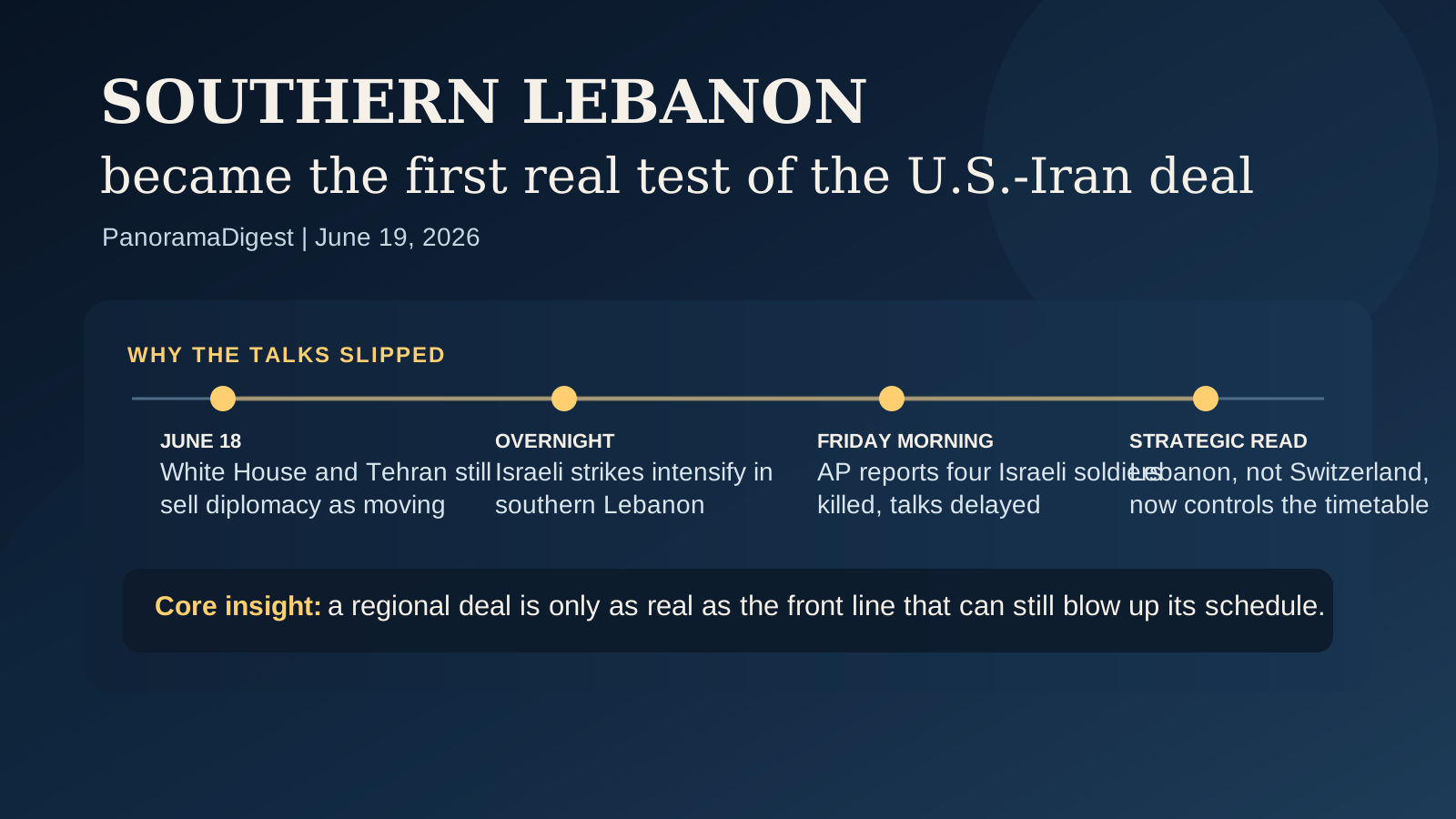
By Thursday night, June 18, the public story was still about diplomacy. Washington had spent the day defending its new U.S.-Iran peace framework, and the next round of technical talks in Switzerland was supposed to turn a headline into a process. By Friday morning, June 19, the useful geography had changed. The first real test of the deal was no longer the conference room. It was southern Lebanon.
Associated Press — Israeli strikes hit southern Lebanon amid fighting; US-Iran talks postponed
Associated Press' June 19 video recap follows the same southern Lebanon escalation and talks delay discussed in the article. Use the direct YouTube link in the story if the player is blocked.
The Associated Press reported that Israeli strikes continued overnight, Lebanon's state news agency said at least 18 people were killed in the airstrikes, and planned talks in Switzerland between Iran and the United States were delayed. AP also reported that Prime Minister Benjamin Netanyahu said Israel would stay in southern Lebanon, where Israeli forces have occupied up to 10 kilometers from the border, and that the deaths of four Israeli soldiers sharpened the pressure on the already fragile timetable. The Guardian's account of the cancellation and Al Jazeera's same-day report both pointed to the same structural problem: Tehran was not eager to continue technical talks while the Lebanon front kept moving against the spirit of the deal.
Watch the AP video recap here: Israeli strikes hit southern Lebanon amid fighting; U.S.-Iran talks postponed. The embedded player below should render on the article page, but the direct YouTube link is there if your browser or region blocks it.
What changed in less than 24 hours
The gap between Thursday's rhetoric and Friday's reality is what makes this story bigger than another Middle East ceasefire wobble. The White House's official live page still showed Vice President JD Vance's June 18 media briefing as the administration's public frame for the deal on the eve of the talks. That was the language of managed momentum. Friday's language was different. AP's reporting turned the key question into a blunt one: can Washington and Tehran keep selling a diplomatic sequence if one of the region's active fronts still behaves as though military facts outrank negotiated timing?
This is why PanoramaDigest's earlier analysis of the Hormuz and implementation problem still matters, and why its follow-up on the Beirut fragility inside the deal now looks even more central. The agreement never needed only signatures. It needed the region's hardest theaters to stop generating fresh reasons to delay, reinterpret or hollow it out. Lebanon has become the cleanest example of how that can fail.
- Thursday, June 18: the White House still framed the U.S.-Iran understanding as active diplomacy, with Vance publicly defending the peace plan.
- Overnight into Friday: Israeli strikes intensified in southern Lebanon, keeping the military pressure on the very front that had already complicated the wider agreement.
- Friday, June 19: AP reported that talks in Switzerland were delayed while the fighting continued and that four Israeli soldiers had been killed.
- Strategic consequence: the first serious measure of the deal shifted from the Swiss schedule to whether Lebanon could stop overriding it.
Why Lebanon matters more than the Swiss venue
Diplomatic venues can be rescheduled. Front lines cannot be wished into procedural order. That is the real asymmetry here. A delayed meeting in Switzerland is an inconvenience. A southern Lebanon theater that keeps generating new fatalities, political retaliation and clashing expectations about territorial control is a structural challenge. AP's report made that plain by tying the delay directly to the Lebanon fighting and to Israel's insistence that it must keep acting there.
That is also why this is not just another story about whether a U.S.-Iran channel can survive internal skeptics. It is a story about whether the wider deal architecture was ever strong enough to discipline allied or proxy-linked behavior on the ground. If Lebanon can still derail the timetable after a framework has already been sold to the world, then the agreement's weakest point is not language. It is enforcement.
| Question | What Friday's reporting showed | Why it matters |
|---|---|---|
| Can the U.S.-Iran track keep moving on schedule? | Planned Switzerland talks were delayed as the Lebanon fighting intensified. | Diplomacy now depends on calming a battlefield, not just preserving a negotiating channel. |
| Is Lebanon only a side theater? | AP, The Guardian and Al Jazeera each treated it as central to the delay, not incidental background. | The deal is regional in ambition, so its most unstable front can still dictate the pace. |
| What is Israel signaling? | AP reported Netanyahu saying Israel would remain in occupied parts of southern Lebanon. | That makes Lebanon a continuing sovereignty and security dispute, not a solved implementation detail. |
| What should readers watch next? | Whether talks are quickly reset and whether the Lebanon front cools rather than worsens. | If the military map keeps moving first, the deal will keep looking more fragile than advertised. |
The deal now has a credibility problem, not only a logistics problem
This is where the story becomes larger than one postponed meeting. A serious regional arrangement needs three different clocks to stay roughly aligned: the diplomatic clock, the battlefield clock and the political clock inside allied capitals. On June 19, those clocks were plainly out of sync. Tehran had reason to question whether talks could proceed as normal while southern Lebanon was still absorbing strikes. Israel had reason to emphasize the deaths of its soldiers and the security logic behind its posture. Washington had reason to keep the peace architecture alive even as its sequence started slipping in public.
None of that contradiction is surprising. It is what regional deals look like when their cleanest language meets their messiest theater. The point is not that the U.S.-Iran framework was fake. The point is that Friday showed exactly how limited any framework remains until the battlefield most likely to sabotage it is either restrained or politically absorbed into the same settlement.
What to watch after June 19
The next signals worth trusting are practical ones. Do Washington and Tehran quickly set a new talks date? Does southern Lebanon quiet down enough that the timetable begins to look owned again rather than improvised? And does Israel's declared intention to keep operating there harden into a lasting obstacle to implementation, or get contained inside a narrower security formula?
Those are harder questions than whether another meeting can be put back on the calendar. But they are the right questions now. On Friday, June 19, 2026, southern Lebanon stopped being side context for the U.S.-Iran deal. It became the place where the deal first had to prove it could survive reality.
Reader Sentiment & Impact Pulse
How do you evaluate the primary outcome of this development?
Select an option to cast your perspective. Responses are anonymous and aggregated in real time.
Key Context & Frequently Asked Questions
By Friday, June 19, 2026, the diplomatic problem was no longer whether Washington and Tehran could keep talking. It was whether Israel's campaign in southern Lebanon would be allowed to keep rewriting the timetable. This analysis from PanoramaDigest examines primary documentation, operational implications, and broader institutional impacts across world.
Read Next
Related Stories

Japan Surpasses 100,000 Centenarians for the First Time, Highlighting Global Demographic Pressures
Japan's centenarian population has officially breached the 100,000 threshold for the first time, signaling an unprecedented demographic milestone with profound implications for labor markets, social security, and global aging policy.

Houthi Advances Expand Iranian Leverage Over US and Saudi Arabia Amid Rising Domestic Discontent
Strategic military gains by the Houthi movement have bolstered Tehran's position in regional negotiations with Washington and Riyadh, even as severe economic strain threatens the group's domestic legitimacy within Yemen.
Saudi Arabia Alleges Houthi Drone Attack Targeting Mecca, Escalating Regional Tensions
Riyadh has accused the Iran-backed Houthi movement of launching an aerial drone targeting the holy city of Mecca, a charge the militant group has vehemently denied. The incident threatens to derail fragile diplomatic efforts across the Middle East.