Danone's Chobani Lawsuit Shows the Protein Boom Has Become a Labeling War
Danone's lawsuit against Chobani over 20-gram protein claims is nominally about yogurt tubs. The sharper business story is that the American protein boom has become so competitive that serving-size math now functions like shelf-space strategy.
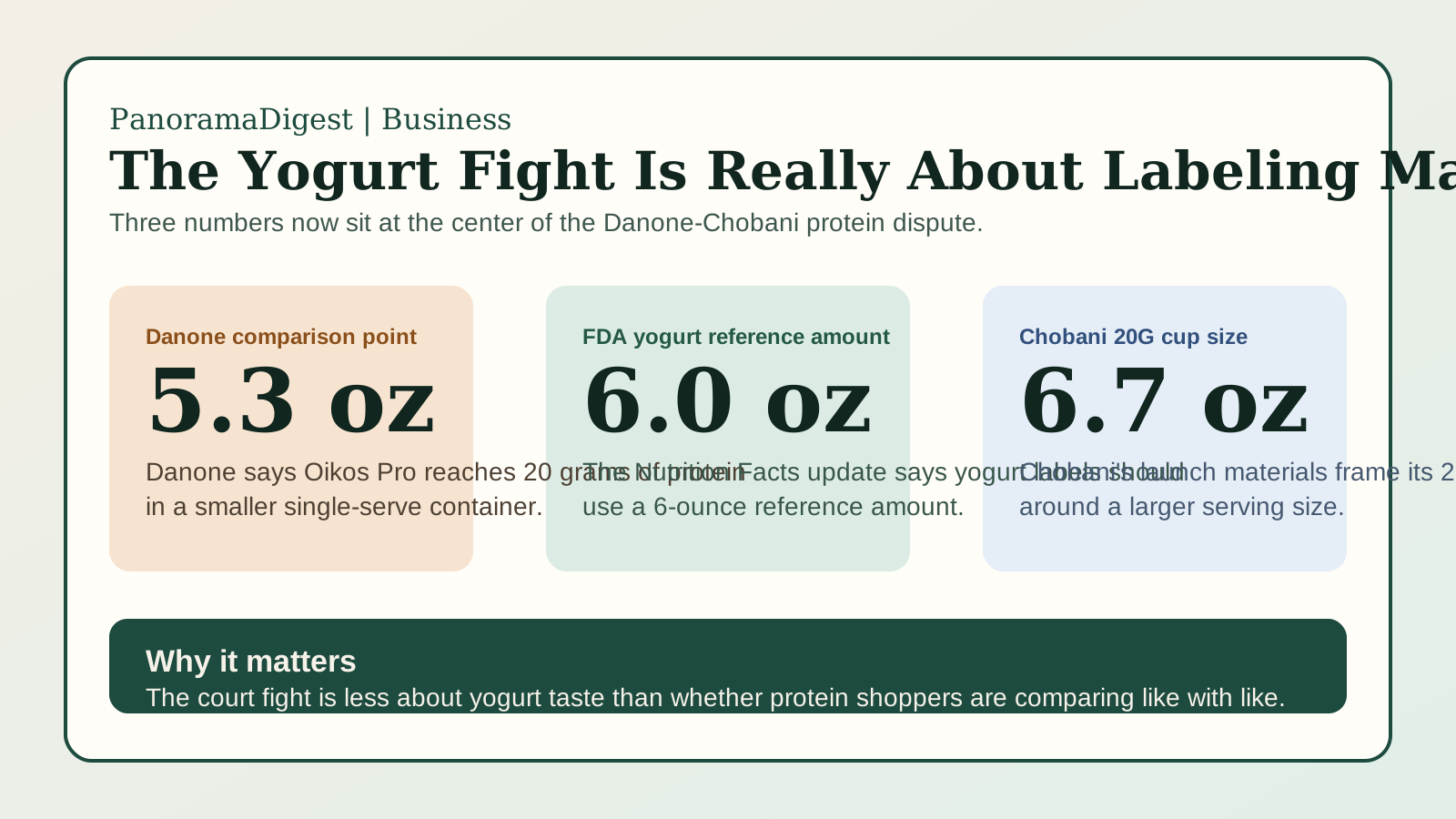
Danone's lawsuit against Chobani is not really a fight over whether Americans want more protein. That question is already settled. The real fight is over who gets to own the cleanest number on the front of the cup. As Food Dive reported on Tuesday, June 16, 2026, Danone sued Chobani in the Southern District of New York on June 15, arguing that its rival's 32-ounce Chobani 20G Protein tubs make a 20-gram claim by carrying over a larger 6.7-ounce serving size from single-serve cups. That matters because Danone says shoppers read the big protein number first and the serving math second, if they read it at all.
The legal question will be for the court. The business question is already visible on the shelf. Greek yogurt used to sell itself on texture, fat level or flavor. Now it increasingly sells itself as a portable macro calculation. That is why this case matters beyond dairy. When a food category starts behaving like a supplement aisle, labeling stops being back-office compliance and turns into front-line competition.
| Reference point | Number in dispute | Why it matters |
|---|---|---|
| Danone's comparison claim | 20 grams in a 5.3-ounce Oikos Pro serving, as described in the lawsuit coverage | Danone says this is the benchmark shoppers have in mind when they compare ultra-high-protein yogurt. |
| FDA yogurt reference amount | 6 ounces | FDA's Nutrition Facts update says yogurt labels now use a 6-ounce reference amount because that better reflects customary consumption. |
| Chobani 20G product framing | 6.7-ounce single-serve cups | Chobani's official launch materials for the 20G line framed the product around a larger cup size, which sits near the center of Danone's complaint. |
| Danone's core allegation about tubs | 18 grams if recalculated under the FDA rule | That is the claim Danone says turns a competitive label into a courtroom question. It is an allegation, not a court finding. |
The larger market signal is that protein has become a scoreboard
The reason this dispute looks bigger than a normal food-label skirmish is that protein now works as a shorthand for value, satiety and discipline. Consumers do not scan yogurt cups the way they once did. They are scanning for a quick answer to a broader question: how much nutritional performance am I buying per dollar, per breakfast, per post-workout snack? In that environment, the most visible number on the label does more than describe the product. It positions the product against rivals before a shopper ever reaches the ingredients panel.
That is why Danone's complaint, again as summarized by Food Dive, leans so heavily on comparability. The company is not arguing that protein no longer matters. It is arguing that comparability is the category. If one brand gets to advertise 20 grams using a serving size shoppers do not naturally compare against a rival's smaller cup, then the contest stops being about product density and starts becoming about who can stage the most flattering denominator.
Why the FDA's 6-ounce rule matters more than it sounds
The driest detail in the story is also the most important. On its updated Nutrition Facts guidance page, the FDA explains that yogurt's reference amount dropped from 8 ounces to 6 ounces so labeling would better reflect what people actually consume. That rule was not written for a yogurt marketing war. It was written to standardize comparison. But standardization becomes strategic the moment a category starts selling a nutrient headline as aggressively as yogurt now sells protein.
Seen that way, this is not a niche dairy case. It is a preview of where other food fights are heading. The more mainstream groceries borrow the language of fitness, the more investors, retailers and competitors will scrutinize whether labels are communicating actual product density or simply using package architecture to win attention. Consumers may say they want simplicity. Public companies know simplicity is expensive, because the brand that owns the easier number usually owns the faster sale.
- By 2025: Chobani had expanded its 20G protein line and was marketing the cups around a 6.7-ounce single-serve format.
- 2025 to 2026: high-protein yogurt became a hotter comparison set as brands pushed harder on front-of-pack grams.
- June 15, 2026: Danone filed suit in Manhattan federal court, arguing that the 32-ounce tubs should not inherit the same serving-size logic.
- June 21, 2026: the business takeaway is clear even before any ruling: protein labels are now important enough to shape strategy, not just packaging.
What matters next is whether the category keeps trust
Chobani may yet defend its approach successfully, and Danone's allegations remain just that until a court or settlement says otherwise. But the case already tells us something useful about consumer packaged goods in 2026. Growth is no longer coming only from inventing a better yogurt. It is coming from making nutritional claims feel instantly legible in a crowded aisle. That is a powerful sales tool right up until shoppers or competitors decide the math is doing too much of the persuading.
The broader risk for the category is not one injunction or one relabeled tub. It is the possibility that shoppers start to treat high-protein claims the way they now treat airline fees: technically disclosed, widely compared and instinctively distrusted. When a premium category begins teaching buyers to double-check the denominator, every brand in the aisle pays for that skepticism. For investors and operators, that is the sharper lesson here. Protein remains a growth engine. But once the growth story reaches court, trust becomes part of the cost base.
Reader Sentiment & Impact Pulse
How do you evaluate the primary outcome of this development?
Select an option to cast your perspective. Responses are anonymous and aggregated in real time.
Key Context & Frequently Asked Questions
Danone's lawsuit against Chobani over 20-gram protein claims is nominally about yogurt tubs. The sharper business story is that the American protein boom has become so competitive that serving-size math now functions like shelf-space strategy. This analysis from PanoramaDigest examines primary documentation, operational implications, and broader institutional impacts across business.
Read Next
Related Stories

Google Gemini Vulnerabilities Highlight Escalating Cybersecurity Risks in Autonomous AI Deployment
Security researchers demonstrate that Google's Gemini AI model can be manipulated into executing cross-system exploits, raising concerns over enterprise security risks. As corporate adoption of AI agents accelerates, unexpected vulnerabilities threaten operational stability and business margins.
Antitrust Lawsuit Accuses Major Tech Firms of Illegally Coordinating AI Development Pace
A landmark federal lawsuit alleges that leading artificial intelligence developers secretly colluded to slow deployment timelines and manage capital expenditures under the guise of safety alignment.
Stock Futures Rebound Following Sell-Off Triggered by Federal Reserve Rate Increase
U.S. stock index futures posted gains as Wall Street attempted to recover from a sharp sell-off prompted by the Federal Reserve's latest interest rate hike and hawkish monetary guidance.