SpaceX Raised $75 Billion. The Harder Question Is What Public Markets Are Really Buying.
SpaceX's Nasdaq debut turned a giant IPO into a referendum on how much investors will pay for scale, scarcity, and AI ambition before a company proves it can hold onto consistent profits in public view.
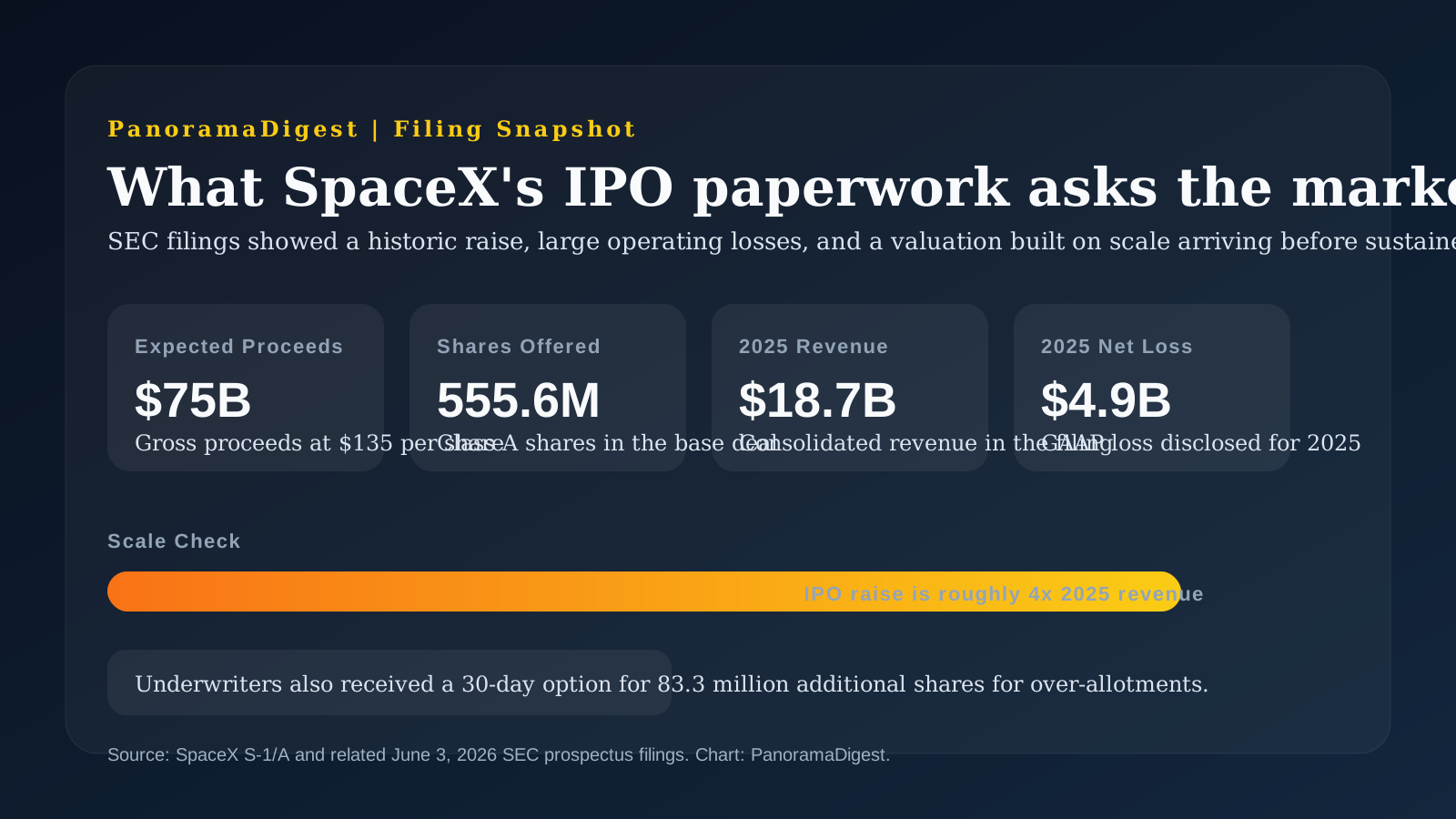
SpaceX's June 12, 2026 market debut did not become the biggest initial public offering in U.S. history because investors suddenly decided they understand rocket economics better than they did a year ago. It became that because the company's own amended Form S-1 filing and companion prospectus materials asked the market to do something rarer and riskier: pay a public-company price for a private-company story that is still built on speed, scarcity, and an enormous promise about what comes next.
Bloomberg Television — SpaceX Prices IPO Shares in Biggest Debut Ever
Bloomberg's pricing-day recap gives readers the immediate market framing behind the historic raise. Use the direct YouTube link if the embedded player is blocked.
The core terms were explicit. SpaceX said it expected to offer 555,555,555 Class A shares at $135 each and list them on Nasdaq under the symbol SPCX. In the same filing, the company showed 2025 revenue of $18.674 billion and a 2025 net loss of $4.937 billion. Those numbers do not read like a tidy maturity story. They read like a scale story still insisting that growth, strategic position and future operating leverage matter more than the fact that profits have not yet settled into durable shape.
The filing makes the bullish case easy to see
It would be unserious to pretend the company arrived at this moment without real operating force. SpaceX's prospectus and related June 3 free-writing prospectus materials present an integrated business that reaches across launch, satellite connectivity and AI infrastructure. The numbers inside the filing help explain why investors were willing to line up. Revenue is already large. Launch and Starlink give the company businesses that feel more concrete than a typical speculative growth listing. The deal structure also left room for an additional 83,333,333 shares through the underwriters' over-allotment option, a detail that matters because it shows how much demand the syndicate believed the market could absorb without immediately losing control of the offering.
That strength is the part of the story bulls prefer to emphasize. A company with nearly $18.7 billion in annual revenue, dominant launch capacity and a connectivity network that reaches far beyond a normal aerospace business is not selling the market an empty slogan. It is selling a rare asset with very real operating scale. That scarcity premium is a large part of the deal.
The harder reading is what the public market has to underwrite from here
But the public-market test is not whether SpaceX is impressive. It is whether investors are comfortable paying a price that assumes the next phase will look cleaner than the last one. The same filing that showed scale also showed strain. SpaceX reported a net loss of $4.276 billion for the three months ended March 31, 2026, and said its accumulated deficit stood at $41.311 billion as of that date. That is not fatal for a company still investing aggressively, but it does narrow the margin for romanticism. In private markets, backers can tell themselves time is abundant. In public markets, every quarter turns that patience into a scoreboard.
The issue is not that losses exist. The issue is what kind of story those losses belong to. If they are the cost of building durable launch, broadband and compute advantages that later throw off enormous cash, investors who bought in early will say the valuation was bold but rational. If they become evidence that the company's ambitions require permanent financial indulgence, then the listing starts to look less like an industrial triumph and more like a market willing itself to believe that scale alone can outrun discipline.
| What the filing says | Why bulls care | Why skeptics hesitate |
|---|---|---|
| 555.6 million Class A shares at an expected $135 per share. | The market is being offered meaningful size in a company that private investors could rarely access. | A deal this large leaves little room to claim scarcity forever if public performance disappoints. |
| 2025 revenue of $18.674 billion. | The business is already operating at a scale most IPOs can only promise. | Revenue scale alone does not settle valuation if margins remain unsettled. |
| 2025 net loss of $4.937 billion and a March 2026 accumulated deficit above $41 billion. | Growth investors will argue the spending reflects expansion, not deterioration. | Public shareholders now have to judge how long that argument stays persuasive. |
| Use of proceeds includes AI compute infrastructure, launch infrastructure and satellite expansion. | The company is financing capacity for several future businesses at once. | That breadth can also mean investors are underwriting several execution risks at once. |
This is really a market-taste story disguised as a space story
The real business lens here is not whether rockets are exciting. It is whether Wall Street still wants giant ambition more than tidy predictability. SpaceX arrived as an aerospace company, but the filing language pushes readers toward a broader identity: launch systems, broadband infrastructure, and AI-related capacity. That mix matters because it lets investors treat the deal as part industrial platform, part connectivity utility, and part long-duration technology bet. In calmer markets, that breadth might read as diversification. In hotter markets, it reads as a reason to suspend ordinary valuation discomfort.
That is why this IPO matters beyond Elon Musk fandom or day-one price action. If a company can raise roughly four times its most recent annual revenue in a single offering while still reporting multibillion-dollar losses, then investors are not simply buying current operations. They are buying access to a strategic position they believe public markets will keep rewarding later. That belief may prove correct. It is still a belief.
What readers should watch after the first day
The first question is whether public trading settles into ordinary institutional support or remains driven by scarcity and spectacle. The second is whether the next few quarters show losses narrowing as the company scales, or whether the public float becomes a new source of pressure on management to explain why so much revenue still travels beside so much red ink. The third is whether the AI language in the prospectus turns into measurable economics rather than narrative lift.
Bloomberg Television's pricing-day segment is worth watching for readers who want the fast market framing: SpaceX Prices IPO Shares in Biggest Debut Ever. If the embedded player on this page does not load, the direct YouTube link remains available.
SpaceX did not ask the public market for sympathy. It asked for scale pricing. On June 12, 2026, investors said yes. The more durable verdict will not come from the headline number on listing day. It will come when the company has to prove that extraordinary reach across rockets, satellites and AI can eventually look as financially durable as it looks strategically unavoidable.
Continue reading: SpaceX's Starfall Debut Is Really a Bet on Return Cargo, Not Launch Theater.
Read Next
Related Stories
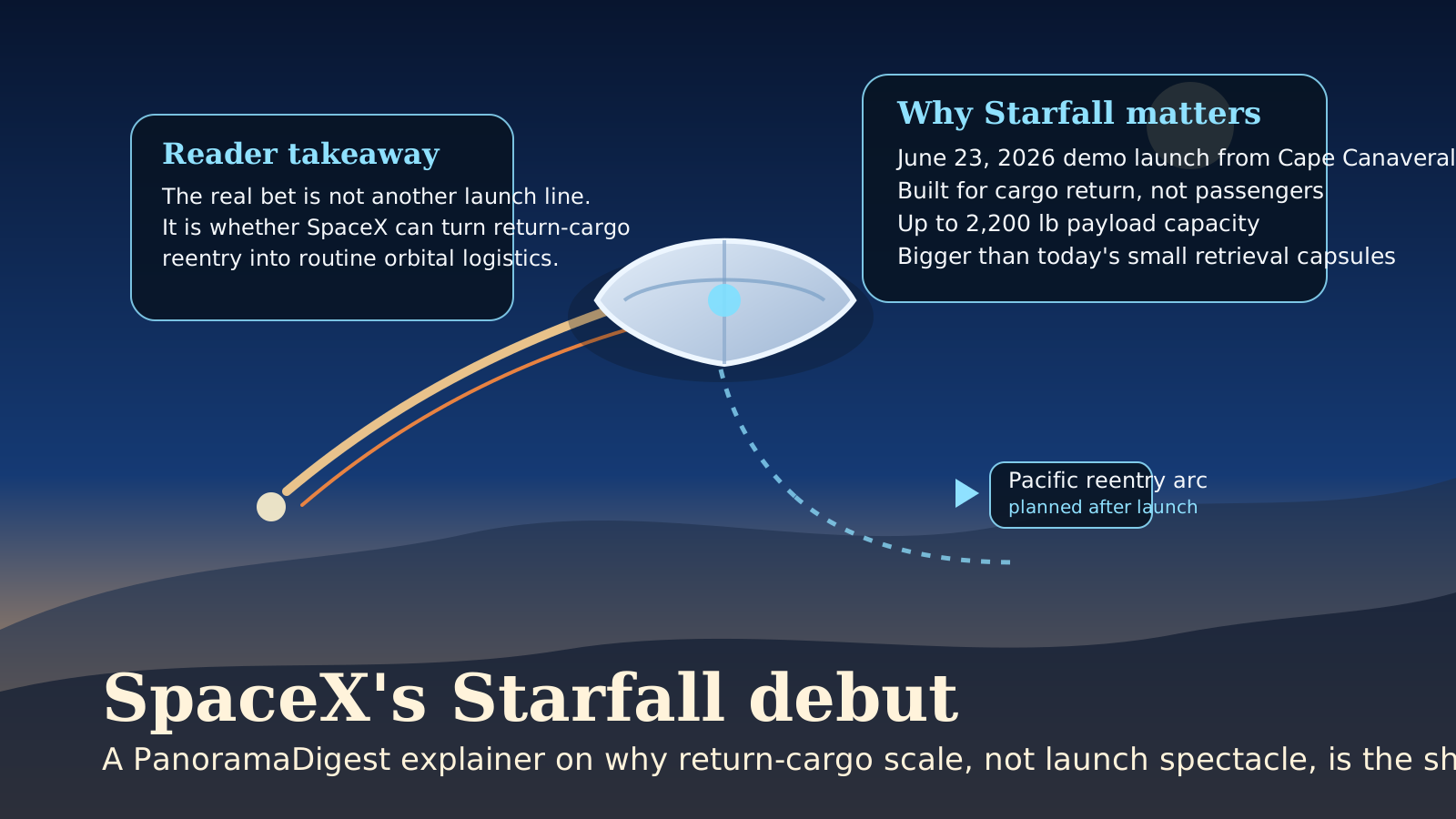
SpaceX's Starfall Debut Is Really a Bet on Return Cargo, Not Launch Theater
SpaceX launched its first Starfall demo mission on June 23, 2026. The sharper story is not the sunrise liftoff itself, but whether a much larger return capsule can make orbital manufacturing, research retrieval and reentry logistics feel routine instead of exotic.

Microsoft Azure Revenue Passes $100 Billion as Cloud Sales Rise 27%
Microsoft said Azure passed $100 billion in annual revenue for the first time, while quarterly Microsoft Cloud sales reached $59.3 billion.
Oracle Beat on Revenue. Wall Street Still Heard a Warning About the AI Build-Out
Oracle's June 10 earnings release delivered strong cloud growth and a massive backlog. The harder message for investors was how much cash, financing, and execution risk the next AI build-out phase will demand.