CDC Atlanta Study Finds 45% 90-Day Mortality in Invasive Mold Disease
CDC surveillance identified 449 invasive mold disease cases at four Atlanta hospitals, with 45% 90-day all-cause mortality in the evaluable group.

A five-year CDC surveillance study identified 449 invasive mold disease cases at four Atlanta hospitals and found 45% 90-day all-cause mortality among the 349 patients with complete follow-up through 2023. The result does not mean ordinary household mold kills 45% of people exposed to it. It measures severe, tissue-invasive infections in a hospital population that included many immunocompromised and critically ill patients.
The CDC report, published July 30, 2026, is the first active U.S. surveillance estimate of its kind. Researchers reviewed laboratory and clinical records from four Atlanta hospitals and affiliated outpatient clinics from 2020 through 2024. Of 968 patients flagged as potential cases, 449 met the study's proven, probable or surveillance definitions for invasive mold disease.
- Confirmed study cases
- 449 of 968 potential cases
- Most common infection site
- Lungs, in 68% of cases
- Most common mold group
- Aspergillus species, in 71% of cases
- Required mechanical ventilation
- 50% of patients
- 90-day all-cause mortality
- 45%, or 157 of 349 evaluable patients through 2023
- Cases without a classic host risk factor
- 35%
The practical finding is not that mold exposure is generally dangerous. Mold is common indoors and outdoors, and the CDC says it usually does not cause severe infection in people with competent immune systems. The report concerns molds that invade tissue, most often after spores are inhaled, and can damage the lungs, sinuses, skin, central nervous system or multiple body sites.
The 45% figure measures a severe clinical population
The mortality statistic needs two qualifications. First, it is all-cause mortality, so the study did not assign every death directly to mold. Second, researchers excluded 2024 cases from the 90-day calculation because complete follow-up was not available, leaving 349 patients in that analysis.
Severity was visible in other measures. Forty-three percent of patients had been admitted to an intensive care unit during the two weeks before their diagnostic specimen was collected, and half required intubation and mechanical ventilation. Eighty-one percent received an antifungal treatment active against molds.
Current or recent COVID-19 infection marked an especially high-risk subgroup. The study identified 58 patients with that history. Among those with sufficient follow-up, 90-day all-cause mortality was 66%, compared with 41% among patients without current or recent COVID-19. ICU admission was also more frequent in the COVID-associated group, 66% versus 39%.
Those differences describe the observed Atlanta patients; they do not prove that COVID caused the worse outcomes. The paper is surveillance research, not a randomized trial, and the patients could differ in other ways that influence severity.
PanoramaDigest applied the same distinction between association and causation when reviewing a large study of cardiovascular outcomes in older adults. In both cases, the useful reading begins with the population, case definition and outcome window rather than the most dramatic percentage.
Why hospitals need a baseline before they can detect an outbreak
Invasive mold disease is not nationally notifiable in the United States. That means clinicians do not routinely report every case to a national system in the way they report certain other infections. Hospitals can therefore struggle to tell whether several diagnoses represent an unusual cluster or the background rate expected among medically vulnerable patients.
The Atlanta surveillance provides an initial benchmark. At the two academic hospitals with bed-count data, researchers found an average of 4.8 inpatient cases per year for every 100 beds. The community hospital averaged 2.8 cases per 100 beds. ICU rates were higher: 14.0 cases per 100 ICU beds at the academic hospitals and 10.2 at the community hospital.
The case-definition work matters as much as the rate. Positive mold cultures can reflect invasive disease, harmless colonization or laboratory contamination. Researchers therefore combined laboratory evidence with imaging, clinical findings, host risk factors, antifungal treatment and rapid death after specimen collection. Of the 449 classified cases, 89 were proven under established criteria, 142 were probable and 218 met the broader surveillance definition.
That broader definition captured patients who would be missed by a narrow risk checklist. Thirty-five percent had none of the classic host factors used in the established research criteria, such as prolonged neutropenia, blood cancer, transplantation or specified immunosuppressive treatment. The CDC's conclusion is not that everyone is equally vulnerable; it is that surveillance based only on familiar immunocompromising conditions can miss a substantial minority of severe cases.
The detection problem resembles the one described in PanoramaDigest's analysis of hidden cases during the Congo Ebola response: public-health systems need a credible baseline and a case definition before they can recognize when observed illness exceeds what routine detection would predict. The pathogens, transmission routes and risks are entirely different, but the surveillance principle is the same.
The study cannot be projected directly to the whole country. It covered four hospitals in one metropolitan area, larger academic centers saw more medically complex patients, and mold exposure varies by geography and setting. Readers following national surveillance and outbreak evidence can use PanoramaDigest's Public Health topic hub for the next studies that test whether Atlanta's benchmark holds elsewhere.
For now, the defensible conclusion is narrow and important: invasive mold disease was uncommon but extremely severe in this hospital network, and the United States still lacks the nationwide reporting needed to measure its full burden consistently.
Read Next
Related Stories

UK Sugar Rationing Study Links the First 1,000 Days to Lower Dementia Risk
A UK Biobank natural experiment linked sugar rationing during the first 1,000 days to lower later-life risks of dementia, Alzheimer's disease, depression and anxiety, but it does not prove causation.

Uganda Declares Itself Ebola-Free Before WHO's 42-Day Countdown Ends
Uganda says its 2026 Ebola outbreak is over, but WHO's public timeline starts the formal 42-day countdown later and runs into late August.
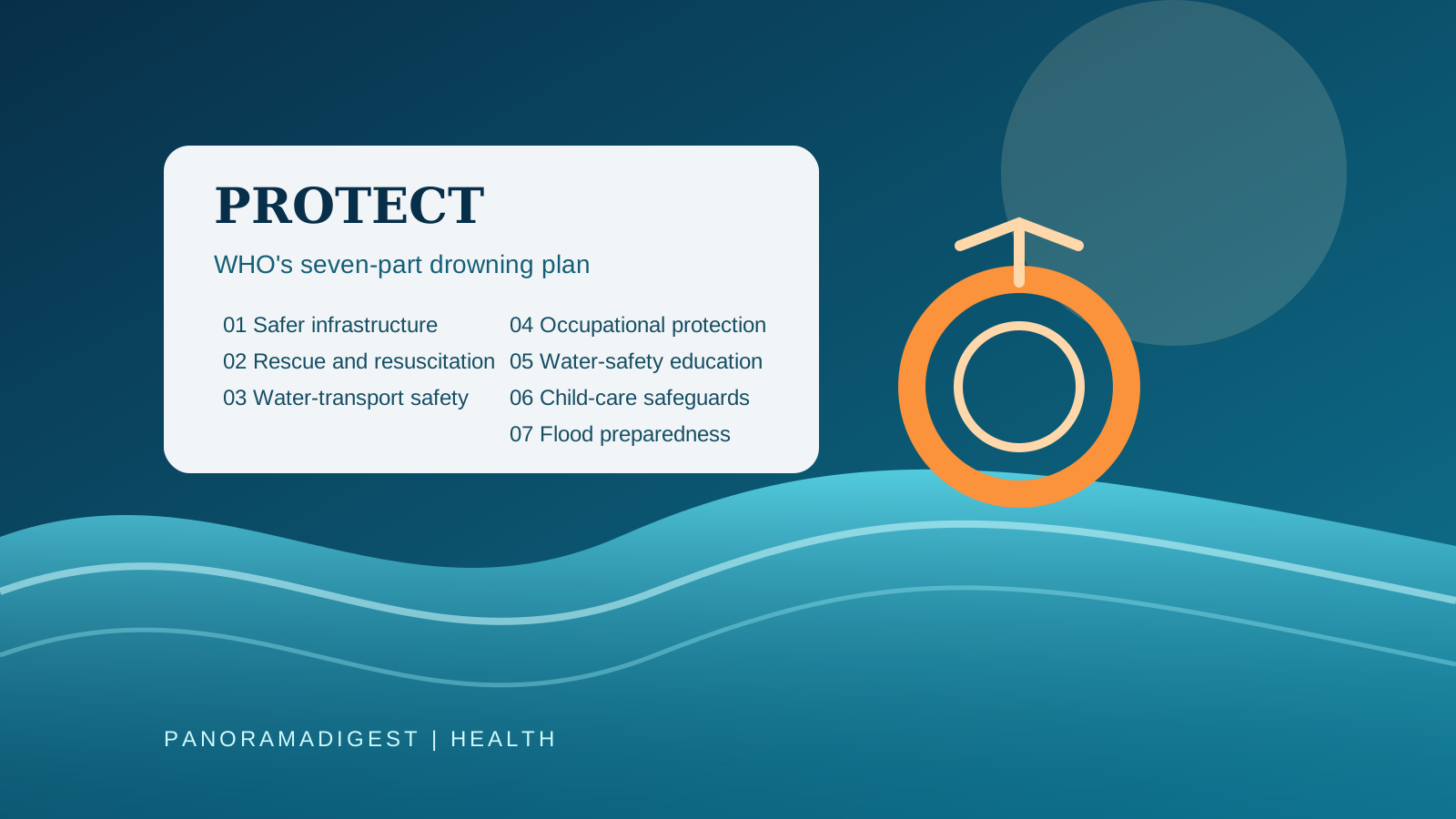
WHO's PROTECT Package Puts Seven Policy Measures at the Center of Drowning Prevention
The WHO's new PROTECT package says drowning prevention depends on safer infrastructure, rescue capacity, education, child safeguards and flood preparedness rather than one isolated intervention.