The Dulles Measles Alert Is Really a Test of How Fast the DMV Can Box In One Case.
Maryland's June 20 measles alert turned one internationally linked case into a three-jurisdiction contact-tracing problem across Dulles and Washington. The reassuring headline is that risk remains low for vaccinated people; the harder question is whether the region can move faster than a virus that exploits every missed immunity check.
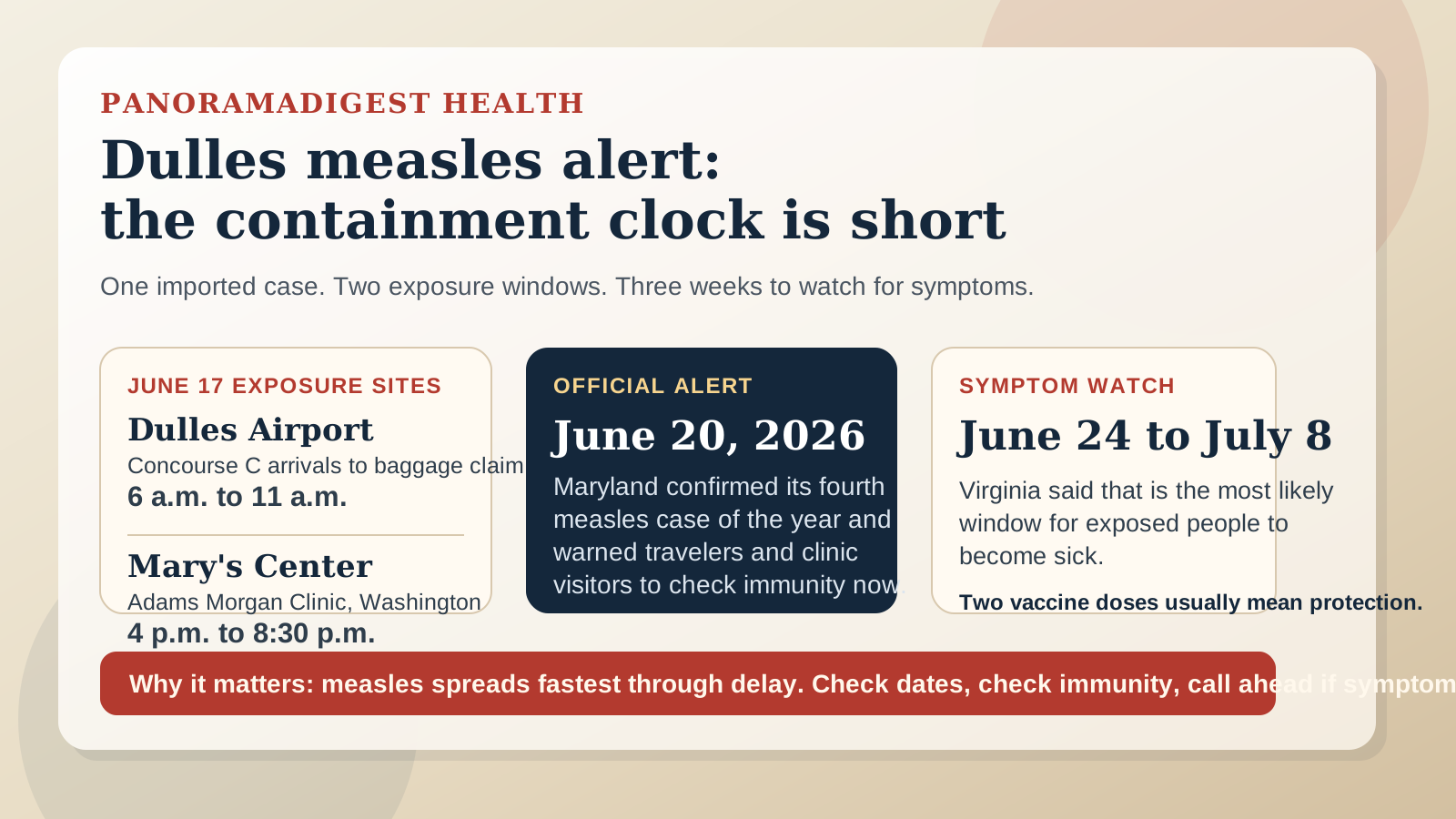
Maryland's measles alert on Friday, June 20, 2026, did not describe a mystery outbreak sweeping the Washington region. It described something narrower and, in a way, more revealing: one Maryland resident with recent international travel, one morning exposure window at Washington Dulles International Airport on Wednesday, June 17, and one evening exposure window at Mary’s Center Adams Morgan Clinic in Washington. The easy reading is that this is only the region’s latest public-health bulletin. The more useful reading is that the DMV has been handed a clean stress test. Can Maryland, Virginia and local providers close ranks around one imported case before routine travel, waiting rooms and summer movement make the contact trail harder to hold?
The Maryland Department of Health said the person may have exposed others in Dulles International Airport’s Concourse C international-arrivals corridor, the transportation path to the International Arrivals Building and the baggage-claim area between 6 a.m. and 11 a.m. on June 17, then later at Mary’s Center in Adams Morgan between 4 p.m. and 8:30 p.m. the same day. Officials also said this is Maryland’s fourth measles case of 2026. Virginia’s health department added that it is contacting potentially exposed passengers on specific flights and told people in the Dulles exposure window to watch for symptoms between June 24 and July 8.
Why Dulles matters more than the case count
Airports are not dangerous because they are dramatic. They are dangerous because they compress strangers, schedules and uncertain vaccination histories into one moving corridor. Maryland’s release stressed that measles can remain in the air for up to two hours after an infected person leaves an area. That is what turns Dulles into the heart of this story. The airport exposure is not just a location detail. It is the place where an ordinary travel day can become a tracing puzzle that crosses state lines before most people know there was ever a problem.
Virginia’s notice offers the sharper reassurance and the sharper warning at once. Officials there said the risk to the general public is low because most people have immunity through vaccination. They also said people who are not fully vaccinated or otherwise immune should contact a healthcare provider promptly, because the window for post-exposure protection is short. Those two truths belong together. Public-health systems look calm when enough people are already protected. They look fragile when a case arrives in the wrong pocket of under-vaccination, or when exposed people do not realize that waiting too long can cost them the most effective response options.
The official advice is simple because the virus is not
The most practical guidance in both official notices is almost stubbornly old-fashioned. Check whether you have had two doses of a measles-containing vaccine or were born before 1957. If you are not fully vaccinated or otherwise immune, call a clinician or local health department quickly. If symptoms appear, do not walk into a waiting room unannounced. Call ahead. Stay home. Give the facility a chance to protect other patients.
| Verified point | What officials said | Why it matters |
|---|---|---|
| Dulles exposure window | June 17 from 6 a.m. to 11 a.m. in Concourse C arrivals, transport to the arrivals building and baggage claim. | The airport leg is the highest-volume part of the tracing effort and the main reason Virginia joined the response publicly. |
| Washington exposure window | Mary’s Center Adams Morgan Clinic on June 17 from 4 p.m. to 8:30 p.m. | Healthcare settings can widen exposure if symptomatic people arrive without warning. |
| Protection standard | Two doses of measles vaccine or birth before 1957 generally counts as protection. | This is the fastest way for most readers to judge whether the alert changes anything for them. |
| Symptom-watch period | Virginia said the most likely window to become sick is June 24 through July 8. | The story does not end when the headline fades; the relevant clock runs for three more weeks. |
| National backdrop | CDC data showed 2,104 confirmed U.S. cases as of June 18, 2026, with 93% tied to outbreaks. | The region is dealing with one case inside a national year that has already proved how quickly measles can compound. |
That national context is what keeps a seemingly contained alert from feeling trivial. CDC’s latest page also shows Virginia with one of the country’s more active 2026 totals, while the Virginia Department of Health said 129 cases have been reported there this year, 106 of them linked to the ongoing Buckingham County outbreak. The Dulles case is not the same thing as that outbreak, but it lands in a year when the United States has already lost the luxury of treating measles as an occasional imported oddity that never finds local slack.
What readers should actually do with this alert
A useful public-health article should leave readers with fewer vague fears and one clear checklist. First, if you were at Dulles or Mary’s Center during the listed windows, verify your immunization status now, not when symptoms make the question emotionally harder. Second, if you are not fully vaccinated or are unsure, contact a provider or health department promptly to ask about next steps. Third, if you were nowhere near those sites, resist the temptation to turn one alert into generic panic. The point of early notices is precision.
- Check the date: the potential exposures were on Wednesday, June 17, 2026.
- Check the clock: Dulles from 6 a.m. to 11 a.m.; Mary’s Center from 4 p.m. to 8:30 p.m.
- Check your immunity: two documented doses or prior measles infection generally means you are protected.
- Check symptoms through July 8: fever, cough, runny nose, red watery eyes, then rash.
That is also why PanoramaDigest’s recent look at Utah’s year-long measles problem belongs beside this narrower DMV alert. The Utah story shows what measles looks like when immunity gaps become durable enough to sustain transmission. The Dulles alert shows the earlier stage, when the only defensible goal is to keep one travel-linked case from finding that kind of opening.
The most encouraging fact in this story is still the simplest one: officials are not describing uncontrolled spread. The most important fact is nearly as simple: measles does not care how reassuring that sentence sounds if exposed people ignore the dates, the phone calls or the vaccine check. The region does not need panic. It needs speed, memory and enough discipline to make one case stay one case.
Reader Sentiment & Impact Pulse
How do you evaluate the primary outcome of this development?
Select an option to cast your perspective. Responses are anonymous and aggregated in real time.
Key Context & Frequently Asked Questions
Maryland's June 20 measles alert turned one internationally linked case into a three-jurisdiction contact-tracing problem across Dulles and Washington. The reassuring headline is that risk remains low for vaccinated people; the harder question is whether the region can move faster than a virus that exploits every missed immunity check. This analysis from PanoramaDigest examines primary documentation, operational implications, and broader institutional impacts across health.
Read Next
Related Stories

Understanding Adult-Onset Allergies: Why the Immune System Can Malfunction Later in Life
New immunological research highlights a growing surge in adult-onset allergies, revealing how environmental shifts and cellular misfires cause mature immune systems to suddenly treat familiar substances as dangerous threats.

Tampa Resident Becomes Florida's First Recorded Dengue Fever Fatality
Health officials have confirmed the first-ever recorded death from locally acquired dengue fever in Florida, prompting renewed concerns over expanding vector-borne diseases in the United States.
Pennsylvania Governor Shapiro Condemns RFK Jr. and Trump Over Measles Response as 'Incompetence'
Pennsylvania Governor Josh Shapiro launched a sharp critique against Donald Trump and Robert F. Kennedy Jr., labeling their public health commentary on measles as dangerous incompetence amid rising vaccine skepticism.