TikTok Is Not Full of Anti-Sunscreen Videos. The Harder Problem Is Which Ones People Share.
A new June 18, 2026 PLOS Digital Health study found that most sunscreen TikToks still promote protection. The problem is that the smaller contrarian slice punches above its weight in likes, shares and comments.
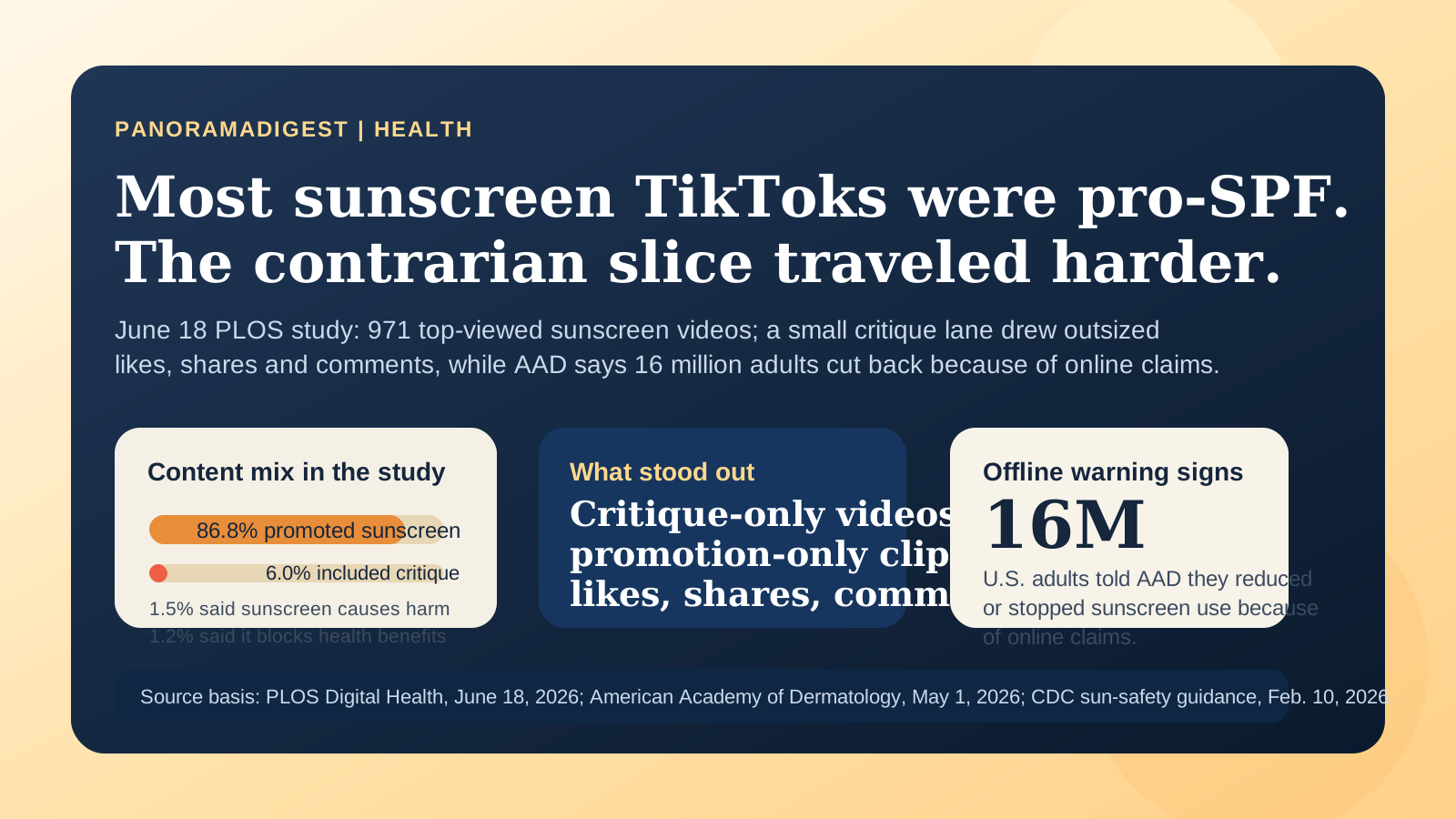
TikTok does not appear to be drowning in anti-sunscreen propaganda. That is the reassuring part of a new PLOS Digital Health study published on June 18, 2026. The more troubling part is what happened once researchers stopped counting videos and started looking at what audiences rewarded. In an analysis of 971 of the most-viewed sunscreen TikToks, most promoted sunscreen use. The smaller set of critique-heavy posts, however, drew disproportionately stronger engagement in likes, shares and comments. In health communication, that is how a minority argument can start to feel like a cultural mood.
Centers for Disease Control and Prevention — What You Need to Know about Sun Safety
The CDC's official sun-safety explainer is a cleaner baseline than influencer myth-trading. If the player does not load, use the direct YouTube link in the article.
That matters because the sunscreen debate is not just another skincare squabble. The American Academy of Dermatology said on May 1, 2026 that more than 16 million U.S. adults reported reducing or stopping sunscreen use because of online claims. The same release said 21% of Americans rely on Instagram or TikTok influencers for skincare advice, while 36% of Gen Z name influencers on those platforms as their primary source. When a platform's loudest contrarian posts outperform its larger evidence-based majority, that is not a branding problem. It is a prevention problem.
The study's warning is about engagement, not sheer volume
The researchers examined the five biggest sunscreen-related hashtags on TikTok and found that 86.8% of the most-viewed videos promoted sunscreen. Only 6.0% included sunscreen critique, with 1.5% claiming sunscreen causes harm and 1.2% arguing it blocks health benefits. Those numbers matter because they cut against a lazy panic narrative. TikTok was not shown to be mostly anti-sunscreen. But the same paper found that critique-only videos drew significantly higher engagement on likes, shares and comments than promotion-only clips, even though the overall differences in view counts were not statistically significant.
That distinction is more important than it sounds. Public belief does not move only through raw reach. It also moves through repetition, intimacy, and the social proof created when users see a claim earn thousands of approving comments or reposts. A video does not need to dominate the platform to dominate dinner-table memory. It just needs to sound rebellious, easy to repeat and personal enough to feel like inside knowledge rather than instruction.
| June 18 evidence point | What the sources showed | Why it matters |
|---|---|---|
| Volume of sunscreen content | The PLOS study found 86.8% of the 971 high-visibility videos promoted sunscreen use. | The platform's visible sunscreen conversation was still mostly pro-protection, not overwhelmingly anti-sunscreen. |
| Size of the critique lane | Only 6.0% of videos included critique, with 1.5% claiming sunscreen causes harm and 1.2% claiming it blocks health benefits. | The misinformation lane was small, but it was clear enough to measure rather than dismiss as anecdotal noise. |
| Audience response | Critique-only posts generated significantly stronger engagement in likes, shares and comments than promotion-only posts. | That is how minority misinformation can feel culturally bigger than it really is. |
| Offline behavior | The AAD said more than 16 million adults reported reducing or stopping sunscreen use because of online claims. | The argument is no longer confined to feeds. It is shaping everyday prevention choices. |
Why contrarian sunscreen content lands so easily
It lands because it borrows the language of independence. Anti-sunscreen or sunscreen-skeptical posts often do not present themselves as anti-health. They present themselves as anti-manipulation: anti-chemical, anti-corporate, anti-fear, anti-mainstream expertise. That is a more emotionally agile message than a physician or agency calmly repeating that ultraviolet exposure raises skin-cancer risk and that broad-spectrum sunscreen should be one part of a larger sun-safety routine.
The CDC's current sun-safety guidance is not glamorous, but it is specific: protect skin from UV exposure year-round, use broad-spectrum sunscreen with SPF 15 or higher, reapply after two hours and after swimming or sweating, and pair sunscreen with clothing, hats and shade rather than treating lotion as a magic shield. That kind of layered advice does not go viral as easily as someone whispering that the real danger has been hidden from you. The problem is that skin biology does not care which framing feels cooler on a phone.
PanoramaDigest's earlier coverage of how public-health trust can break when speed outpaces explanation offers a useful parallel here. The failure point is often not absence of information. It is the gap between technically correct guidance and emotionally sticky storytelling. TikTok fills that gap fast. Institutions still tend to answer it like a press release.
This is now a summer behavior story, not a niche internet story
The AAD's May survey release helps explain why the engagement pattern matters beyond the platform itself. The organization said one-third of Americans got sunburned in the past year, while nearly half scored a C or lower on its sun-safety quiz. Among Gen Z adults, one-third received a D or F despite high confidence in their own habits. In other words, the same demographic most exposed to influencer-driven skincare culture is not entering the season with a surplus of reliable understanding.
That helps explain why the strongest response to sunscreen misinformation cannot simply be more scolding. Readers do not need a sermon about logging off. They need a cleaner hierarchy of trust. The study suggests that most visible TikTok content is not misleading on sunscreen. The AAD survey suggests that many users still walk away from the broader ecosystem with worse habits anyway. The missing piece is not volume. It is friction. Good advice still needs to become harder to ignore than alluring nonsense.
- Use the CDC baseline, not influencer vibes: broad-spectrum SPF 15 or higher, plus shade, hats, sunglasses and covering clothing when practical.
- Treat “chemical” scare claims carefully: the June 18 paper measured popularity patterns, not proof that anti-sunscreen claims were medically correct.
- Watch for false confidence: high engagement and smooth delivery are social signals, not evidence standards.
Watch the official CDC explainer: if the video below does not load in your browser, use the direct link to CDC's “What You Need to Know about Sun Safety” on YouTube. Readers who want a fuller medical-risk overview should also keep the CDC sun-safety page and the AAD's 2026 survey release open beside the study.
The real lesson from June 18 is not that TikTok has become an anti-sunscreen machine. It is that health misinformation does not need majority status to produce majority confusion. It only needs a platform where doubt feels stylish, evidence sounds repetitive and summer arrives before the rebuttal does.
Reader Sentiment & Impact Pulse
How do you evaluate the primary outcome of this development?
Select an option to cast your perspective. Responses are anonymous and aggregated in real time.
Key Context & Frequently Asked Questions
A new June 18, 2026 PLOS Digital Health study found that most sunscreen TikToks still promote protection. The problem is that the smaller contrarian slice punches above its weight in likes, shares and comments. This analysis from PanoramaDigest examines primary documentation, operational implications, and broader institutional impacts across health.
Read Next
Related Stories

Understanding Adult-Onset Allergies: Why the Immune System Can Malfunction Later in Life
New immunological research highlights a growing surge in adult-onset allergies, revealing how environmental shifts and cellular misfires cause mature immune systems to suddenly treat familiar substances as dangerous threats.

Tampa Resident Becomes Florida's First Recorded Dengue Fever Fatality
Health officials have confirmed the first-ever recorded death from locally acquired dengue fever in Florida, prompting renewed concerns over expanding vector-borne diseases in the United States.
Pennsylvania Governor Shapiro Condemns RFK Jr. and Trump Over Measles Response as 'Incompetence'
Pennsylvania Governor Josh Shapiro launched a sharp critique against Donald Trump and Robert F. Kennedy Jr., labeling their public health commentary on measles as dangerous incompetence amid rising vaccine skepticism.