FDA's mRNA Flu Vote Is Really a Test of Whether Faster Vaccines Can Still Win Trust
Federal advisers unanimously backed Moderna's mFlusiva on June 18, 2026, but the larger health story is whether faster flu-vaccine manufacturing can matter before trust gaps and late-season mismatch do the talking for everyone else.
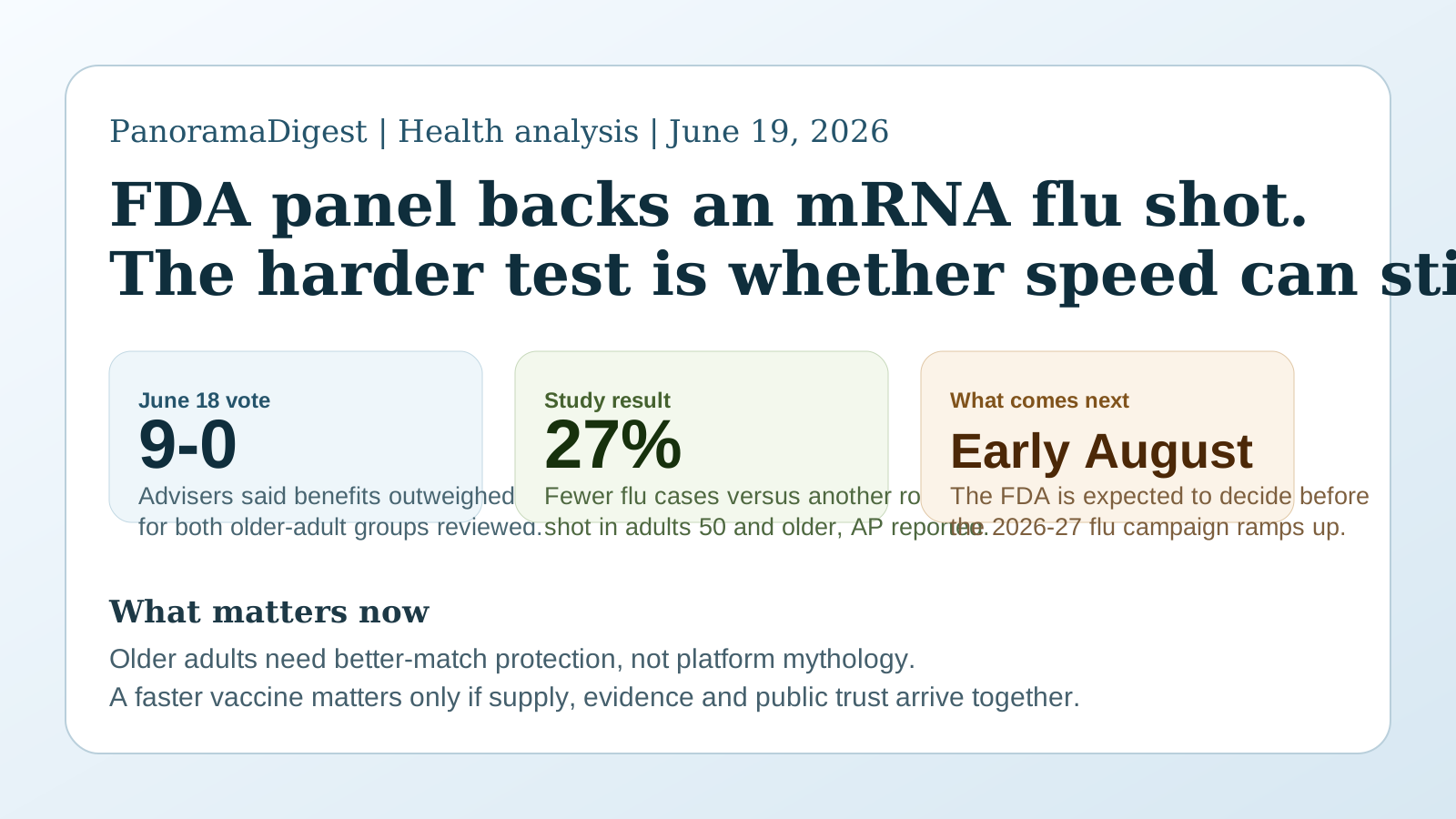
On Thursday, June 18, the Food and Drug Administration's outside vaccine advisers did something both straightforward and politically loaded: they unanimously said Moderna's experimental mRNA flu shot appears to clear the benefit-risk bar for adults 50 through 64 and for adults 65 and older. The FDA's meeting page framed the question narrowly around the safety and effectiveness of mFlusiva in people 50 and older. The bigger story is broader. America is now testing whether the same platform that made COVID vaccines fast can make seasonal flu protection more adaptable without reopening every exhausted argument about trust, proof and public patience.
U.S. Food and Drug Administration — 193rd Vaccines and Related Biological Products Advisory Committee Meeting
The FDA's June 18 meeting shows the full public advisory discussion around Moderna's mRNA flu shot. If the player does not load, use the direct YouTube link in the article.
Associated Press reported after the vote that Moderna's shot cut flu cases by about 27% compared with another routinely used vaccine in a study of roughly 40,000 adults 50 and older. AP also reported that, in a smaller study of adults 65 and older, the shot generated a strong immune response compared with a high-dose flu vaccine already used for seniors, while common side effects such as injection-site pain and fatigue looked familiar rather than novel. That is an encouraging file, not a magic one. The value is less that mRNA suddenly makes influenza easy than that it could give manufacturers a faster way to respond when the virus drifts after the season's recipe is set.
Why this matters beyond one company
Flu is not COVID, and pretending otherwise would only make readers distrustful for good reason. But influenza has its own annual problem: the virus changes, manufacturers work months ahead, and the final product does not always meet the season in the same shape the season arrives. That is why the FDA briefing materials for the June 18 committee meeting emphasized the current limits of licensed flu vaccines and the potential advantages of mRNA production speed. A faster platform cannot guarantee a perfect match, but it can reduce the amount of calendar lag built into the system. In a disease that kills tens of thousands of Americans in severe seasons, that is not a technical footnote. It is the whole strategic attraction.
| June 18 signal | What the sources showed | Why readers should care |
|---|---|---|
| Committee vote | The FDA's outside advisers voted unanimously that mFlusiva's benefits outweigh its risks for both reviewed older-adult groups. | The recommendation is nonbinding, but it is the clearest public endorsement the vaccine can get before the FDA's final decision. |
| Effectiveness evidence | AP reported Moderna's larger study found about a 27% reduction in flu cases versus another routinely used shot in adults 50 and older. | The early case is being made on real-world prevention, not on platform hype alone. |
| Senior-adult uncertainty | AP reported that Moderna still plans a much larger follow-up study in adults 65 and older. | The most vulnerable population may get earlier access, but it is also where regulators still want more evidence. |
| Manufacturing argument | FDA materials highlighted mRNA's faster production timeline compared with traditional flu-vaccine methods. | The real promise is speed in future mismatch years, when timing can change how much protection seniors actually feel. |
The harder public-health problem is trust, not novelty
That is where this story becomes more than a product review. Americans already know what mRNA is, but many know it through the bruises of the pandemic rather than through a calm explanation of what the technology can and cannot do. So the question facing public-health officials is not only whether mFlusiva works. It is whether they can explain a limited but meaningful advance without lapsing into boosterish language that makes skeptics feel manipulated and cautious patients feel talked down to.
PanoramaDigest's earlier reporting on how vaccine evidence is strongest when it stays specific about who benefits most offers the right frame here too. The smart case for this shot is not that every flu problem has been solved. It is that older adults keep paying the highest price in severe seasons, and a platform that can move faster may be especially valuable when the conventional calendar leaves the system stuck with a poorer match.
What still has to happen before this becomes a real winter tool
The FDA is expected to decide by early August, according to AP, and that timing matters because the practical use case is the 2026-27 flu season, not a theoretical future market. The agency also still has to weigh how comfortable it is with the evidence base in frailer seniors and immunocompromised adults, the very people who most need reliable protection. Faster manufacturing is useful only if the final recommendation lands in time, supply is dependable, and clinicians can explain why this option belongs beside rather than above the other senior flu shots already on the market.
That is the sober read on June 18. The vote moved a first-of-its-kind flu vaccine closer to Americans who could genuinely benefit from it. But the real test starts now: whether health officials can turn a technically promising platform into a credible public message, and whether they can do it before another winter reminds everyone that influenza is still most dangerous when the system confuses familiarity with preparedness.
Watch the official meeting: if the FDA webcast below does not load in your browser, use the direct link to the June 18 VRBPAC session on YouTube. Readers who want the formal scope of the review should also keep the FDA meeting announcement and materials page open alongside the coverage.
Reader Sentiment & Impact Pulse
How do you evaluate the primary outcome of this development?
Select an option to cast your perspective. Responses are anonymous and aggregated in real time.
Key Context & Frequently Asked Questions
Federal advisers unanimously backed Moderna's mFlusiva on June 18, 2026, but the larger health story is whether faster flu-vaccine manufacturing can matter before trust gaps and late-season mismatch do the talking for everyone else. This analysis from PanoramaDigest examines primary documentation, operational implications, and broader institutional impacts across health.
Read Next
Related Stories

Surging Off-Label Testosterone Prescriptions for Women Face Growing Insurance Denials and Delays
A sharp rise in off-label testosterone prescriptions for perimenopausal and menopausal women is meeting heightened resistance from insurers and pharmacies. As clinical interest in female androgen therapy grows, regulatory gaps leave patients navigating administrative gridlock and steep out-of-pocket costs.
Pennsylvania Requests CDC Emergency Support as Measles Outbreak Expands
Pennsylvania state health authorities have requested emergency deployment assistance from the CDC as a localized measles cluster spreads across multiple counties. The rapid intervention highlights growing vulnerabilities in domestic immunization coverage and public health infrastructure.

Fiji Declares National Emergency as HIV Cases Surge Across the Pacific Nation
Fiji has declared a national public health emergency following an unprecedented spike in new HIV cases, prompting immediate resource reallocation and international health interventions.