Jay Clayton's DNI Nomination Is Really About How Trump Tried to Close a Political Leak
Trump's choice of Jay Clayton for director of national intelligence was less a clean personnel story than a rapid attempt to steady a surveillance and credibility problem of the White House's own making.

Jay Clayton's nomination to lead U.S. intelligence is not, at first glance, the kind of move that should produce instant political whiplash. He is a known establishment lawyer, a former Securities and Exchange Commission chair, and the current U.S. attorney for the Southern District of New York.
But timing turned the announcement into something more revealing. On Thursday, June 11, 2026, President Donald Trump said he would nominate Clayton as director of national intelligence only hours after the House rejected a short-term extension of Section 702 surveillance powers and after days of backlash over Trump's plan to install Bill Pulte as acting DNI.
The cleanest way to read the move is not as a routine personnel decision. It is as a pressure release. A White House that had created an avoidable credibility problem around one of the government's most sensitive national-security jobs suddenly reached for a nominee whose resume looked steadier than the political mess around him.
The nomination itself was announced on Trump's Truth Social account, in a post summarized by the Guardian's live U.S. politics coverage. The same day, the House failed to advance the temporary Section 702 extension that had become entangled with the Pulte controversy. That sequence matters more than any single biography line.
The point was not only who Clayton is, but what Trump needed him to interrupt
Clayton arrives with the kind of profile that can calm nervous Republicans and complicate a cleaner Democratic attack line. The Justice Department's biography page identifies him as the U.S. attorney for the Southern District of New York, where the office says it has focused on gun violence, trafficking, national-security threats, cyber-enabled fraud, securities cases, and money laundering. Before that, he served as SEC chair during Trump's first term.
Those credentials do not magically settle the real argument. The sharper question is why the White House needed a calming nomination so quickly. The answer is that the administration had allowed the intelligence post to become part of a broader test of discipline. Once the House's Section 702 fight started colliding with outrage over Pulte's interim role, the personnel issue was no longer isolated. It had become a symbol of whether the administration was treating intelligence management as a serious governing function or as one more arena for loyalty improvisation.
- June 10, 2026: The White House's Bill Pulte plan continued to draw bipartisan criticism as Section 702 neared expiration.
- June 11, 2026, afternoon: The House failed to pass a short-term Section 702 extension, keeping attention on the administration's handling of the intelligence post.
- June 11, 2026, evening: Trump announced Jay Clayton as his nominee for director of national intelligence.
- Next: The Senate now decides whether a credibility reset is enough to move the nomination quickly.
That is why the Clayton choice matters beyond the usual Washington staffing churn. It suggests the White House recognized that the easiest way to defend an unstable decision is often to replace it with a more legible one before the damage spreads.
The nomination solves one messaging problem, not the underlying governance problem
Clayton's background gives the administration a more defensible public case than Pulte did. It does not erase the fact that the administration first treated the office as if it could absorb a political placeholder without cost. Intelligence jobs are different from symbolic cabinet reshuffles because they sit at the intersection of surveillance powers, allied trust, covert authorities, and congressional oversight. Even when the public cannot see most of the work, lawmakers notice when the chain of command starts to look improvised.
That is where Thursday's events connect. The failed Section 702 push was already a reminder that surveillance powers are difficult to reauthorize even under stable political conditions. Tie that fight to a disputed acting appointment, and the administration hands critics a simple argument: if the White House wants Congress to trust its stewardship of sensitive tools, it has to stop making the top job look casual.
That does not mean Clayton is unqualified. It means qualification is only part of the story. The other part is institutional trust, and institutional trust is usually lost faster than it is rebuilt.
| Question | What the nomination answers | What it still does not answer |
|---|---|---|
| Is there now a conventional nominee? | Yes. Clayton has a recognizable legal and regulatory record. | No answer yet on whether senators view that as enough to move quickly. |
| Did the White House defuse the Pulte backlash? | Partly. The announcement changes the headline immediately. | It does not erase the judgment that produced the backlash in the first place. |
| Does this help the surveillance debate? | Potentially, by lowering the temperature around the personnel question. | Not automatically. Section 702 objections still extend beyond staffing. |
| Is intelligence policy now stable? | Not yet. A nomination is a reset attempt, not a confirmation vote. | The Senate process will test whether the reset actually holds. |
Why this matters outside Washington process talk
Readers who tune out personnel news are often right to do so. Many nominations are inside-baseball dramas that matter more to cable panels than to the public. This one is different because the office sits so close to the machinery of domestic political trust. Section 702 debates are not abstract. They touch surveillance, privacy, foreign threats, and the question of how much discretion Congress is willing to leave in executive hands.
When a White House appears loose with the intelligence hierarchy, it weakens its own case for deference. That is the practical consequence of the Pulte episode, and it is the reason Clayton's nomination carries more weight than a simple resume swap.
The Senate test will be about confidence, not biography
Clayton can probably explain his legal background and managerial experience well enough. The tougher challenge is whether senators decide the nomination restores confidence in the office or merely papers over a week of self-inflicted instability.
That distinction matters because the administration is asking lawmakers to separate two ideas that were fused together in real time: first, that Pulte was only temporary; second, that the White House still deserves the benefit of the doubt on intelligence stewardship. The Clayton announcement is an attempt to force that separation before the first idea permanently damages the second.
It may work. Conventional nominees often help Washington move on. But even if the nomination settles nerves, Thursday left behind a blunt lesson. The problem was never just finding someone with a stronger CV. The problem was showing, before the pressure built, that one of the government's most sensitive posts would be handled with more discipline than spectacle.
Continue reading: The House Failed to Extend Section 702. The Real Breakdown Was Political, Not Technical..
Read Next
Related Stories
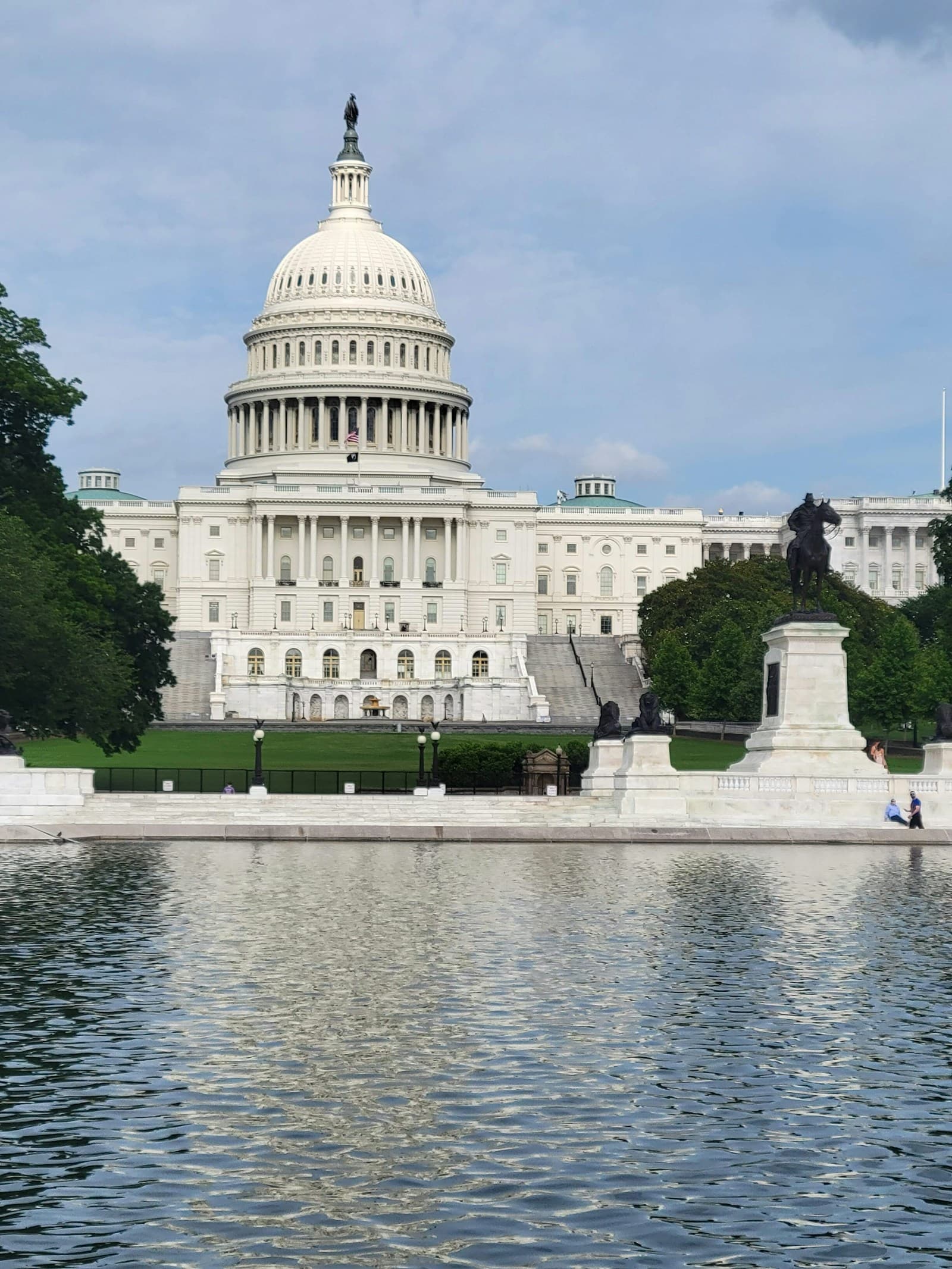
The House Failed to Extend Section 702. The Real Breakdown Was Political, Not Technical.
The House vote on June 11, 2026 did more than stall a surveillance extension. It showed how fast a national-security coalition can collapse when lawmakers no longer trust who will control the tool.

Old Trails Fire Damage Estimate Reaches 640 Structures in Spokane
Spokane County's preliminary estimate says the Old Trails fire destroyed 640 structures, while evacuation zones remain active across northwest Spokane.

USCIS Can Now Refer Asylum Cases to Immigration Court Without an Interview
A DHS rule effective July 28 lets USCIS send some affirmative asylum applications directly to immigration court. Referral is not a denial, but the interview is no longer guaranteed.