Romania Reports Second Drone Shootdown Near Ukraine Border in 24 Hours
Romania's Defence Ministry says two F-16s intercepted and neutralized a drone after a new unauthorized airspace entry near the Ukraine border on July 25.
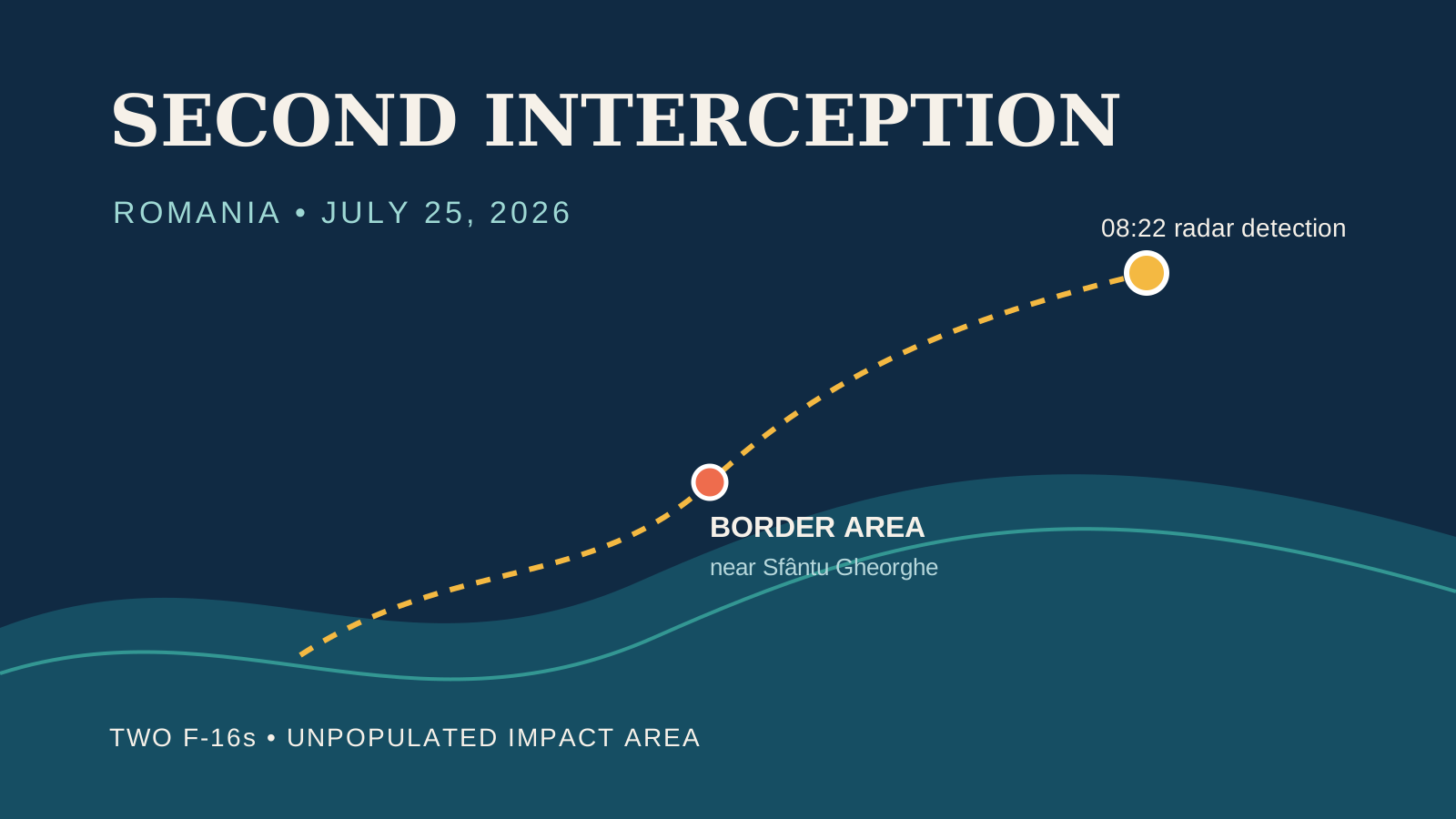
Romania's Defence Ministry reported a second drone shootdown near the Ukraine border in less than 24 hours. In a July 25 statement, the ministry said radar detected a new unauthorized entry at 08:22, two Romanian F-16 Fighting Falcon aircraft intercepted the target, and the drone was brought down safely in an unpopulated area near the border. Teams were due to inspect the impact site.
Euronews — Romania says F-16 shot down drone over the country's airspace
Related Euronews report on the preceding July 24 incident; the July 25 follow-up is sourced to Romania's Ministry of Defence.
The statement is the clearest official account of the second incident. It confirms the radar detection time, the use of two aircraft and the safe location of the shootdown. It does not yet identify the drone's model, launch point, route, operator or the exact impact coordinates. Those gaps matter: the event is confirmed, but its wider attribution remains open.
The new report follows Romania's first acknowledged aerial shootdown, over Buzău, covered in PanoramaDigest's earlier account of the Buzău incident. The two events should not be collapsed into one story. The Ministry of National Defence issued a separate statement for the July 25 entry, and the second statement describes a different border-area operation.
What the Ministry confirms
| Question | Confirmed on July 25 | Not yet disclosed |
|---|---|---|
| When was the entry detected? | 08:22, according to the MApN statement. | The precise time of the engagement is not given in that statement. |
| How was it handled? | Two F-16s intercepted the target and carried out standard identification and neutralization procedures. | The weapons system and firing sequence are not described. |
| Where did it come down? | Safely, in an unpopulated area near the border with Ukraine. | The statement does not provide exact coordinates or a confirmed debris assessment. |
| What happens next? | Ministry teams are to inspect the impact area, while officials remain in contact with allied structures. | Any later forensic or attribution finding remains pending. |
Why the 24-hour sequence matters
Two separate shootdown announcements in a short period change the practical question for Romania's air-policing system. The issue is no longer only whether a single aircraft can respond. It is whether radar detection, fighter interception, civilian alerts, debris-site inspection and allied communication can operate repeatedly without confusion or unsafe spillover.
That is a systems question, not proof by itself of who launched the drone or why it entered Romanian airspace. The public record released so far supports a narrower conclusion: Romanian authorities detected and neutralized a second unauthorized drone, and they say the impact occurred away from populated areas. Readers should resist turning the sequence into an attribution claim that officials have not made.
The location adds a civilian-protection layer
TVR reported the second incident as occurring about 10 kilometres west of Sfântu Gheorghe and said President Nicușor Dan announced the event publicly. The Ministry's own statement uses the broader description “near the border” and says the impact area was unpopulated. The difference illustrates why the official wording should remain the factual anchor until the inspection teams publish more detail.
For civilians, the immediate concern is not only the interception itself but what follows falling debris or an uncertain airspace track. Local authorities may issue alerts, residents may hear aircraft activity, and investigators must separate confirmed fragments from speculation. The safe-area description is therefore a material fact, not just a reassuring phrase.
What to watch for next
- Inspection findings: whether the MApN identifies the drone type or publishes a debris assessment.
- Attribution: whether Romanian or allied officials connect the drone to a specific launch route or armed conflict activity.
- Airspace notices: whether civilian alerts or temporary restrictions are issued around the border area.
- Allied coordination: whether Romania gives a further account of the contact with NATO or other partner structures.
The broader context is Romania's position beside the war in Ukraine and its responsibility to keep an unauthorized aircraft from creating danger inside national airspace. PanoramaDigest's earlier analysis of Ukraine's drone wave and regional air defence explains why the surrounding air picture has become a recurring security problem rather than a one-night anomaly.
For now, the defensible reading is precise: Romania's Ministry of Defence says a second drone entered national airspace near Ukraine at 08:22 on July 25 and was neutralized by Romanian F-16s in an unpopulated area. The next evidence will come from the inspection and any subsequent official attribution, not from assumptions about the aircraft's origin.
Sources: Romanian Ministry of National Defence statement, July 25, 2026; TVR report on the announcement and location; Euronews video report on the preceding incident.
Watch on YouTube: Euronews report on Romania's July 24 drone shootdown.
Read Next
Related Stories
Old Trails Fire Damage Estimate Reaches 640 Structures in Spokane
Spokane County's preliminary estimate says the Old Trails fire destroyed 640 structures, while evacuation zones remain active across northwest Spokane.

USCIS Can Now Refer Asylum Cases to Immigration Court Without an Interview
A DHS rule effective July 28 lets USCIS send some affirmative asylum applications directly to immigration court. Referral is not a denial, but the interview is no longer guaranteed.

Seattle Center Shooting Kills Three and Injures Four at Bite of Seattle Festival
Seattle police say a shooting at the Bite of Seattle festival killed three people and injured four others, including a 2-year-old boy. One suspect was arrested and police continued searching for another.