Justice Department Subpoenas New York Times Reporters Over Air Force One Story
The Justice Department has subpoenaed four New York Times reporters over Air Force One security reporting. The more useful question now is what the department's own media-subpoena rules require before prosecutors can force journalists to testify.
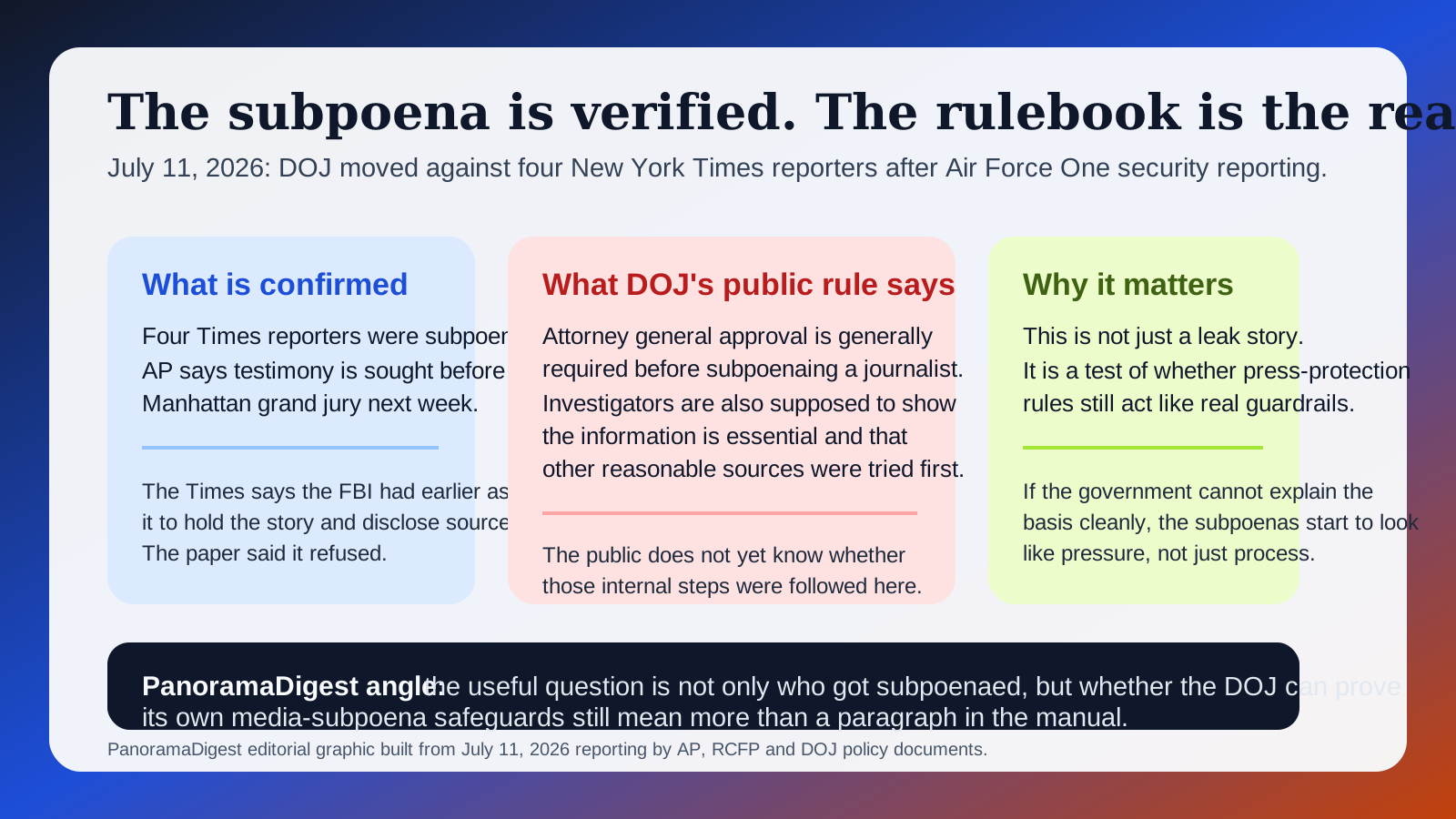
The immediate search answer is straightforward. The Justice Department has subpoenaed four New York Times reporters after their reporting on security concerns involving President Donald Trump's newly retrofitted, Qatari-gifted Air Force One jet. AP reported on Saturday, July 11, 2026 that the subpoenas seek testimony before a federal grand jury in Manhattan next week and that some were delivered to the journalists' homes by federal agents. The larger public-interest question is not only whether the subpoenas exist. It is whether the department is following the rules it says are supposed to make compelled testimony from reporters a last resort.
That is why this is a more durable follow-up to PanoramaDigest's earlier June 20 analysis of Trump's interim Air Force One rollout, not merely another White House-versus-media shouting match. The June 20 story was about the bridge-plane workaround, Boeing delays and the politics of using a foreign-gifted aircraft as a presidential symbol. This new turn asks a narrower and more consequential question: once journalists report on the security consequences of that decision, how far is the government prepared to go to force them to explain how they learned it?
| What is verified now | What the public still does not know | Why it matters |
|---|---|---|
| Four Times reporters received subpoenas tied to Air Force One reporting. | Whether the attorney general personally approved the subpoenas under DOJ policy. | The department's own rules generally require that approval before journalists can be subpoenaed. |
| The Times says testimony is sought before a Manhattan grand jury next week. | What other investigative steps prosecutors exhausted first. | DOJ policy says reporters should not be the first stop when officials can use alternative sources. |
| The FBI previously asked the paper to hold the story and disclose its sources, which the Times said it refused. | What exact information investigators believe is essential enough to compel testimony. | The narrower the public explanation, the harder it is to judge whether the move fits the department's own standards. |
What happened on July 11
AP's report gives the clearest public baseline. The outlet said the journalists subpoenaed were Julian E. Barnes, Eric Lipton, Tyler Pager and Eric Schmitt. It also said the Times reported that a senior FBI official had previously asked the paper to hold its initial Air Force One story, citing national-security concerns, and to identify its sources. The paper said it declined. According to AP, the White House did not answer requests for comment about the subpoenas.
The most useful outside reaction so far came from the Reporters Committee for Freedom of the Press. In its July 11 statement, the organization said the subpoenas broke with the Justice Department's longstanding approach of treating compelled reporter testimony as a last-resort step. That criticism matters because it does not come from a partisan campaign office or a generic media-solidarity slogan. It comes from a group that spends much of its time tracking the actual legal rules around subpoenas, source protection and newsgathering rights.
Readers looking for the underlying subject of the dispute should also keep the Air Force One file itself in view. PanoramaDigest's existing Department of Justice coverage traces how the aircraft story moved from a design-and-delivery problem into a broader argument about optics, security and presidential decision-making. The subpoenas do not replace that story. They raise the cost of reporting it.
What DOJ's current news-media policy says
The department's public rules are not mysterious. In the current Justice Manual section on obtaining evidence from members of the news media, the government says the attorney general's authorization is generally required before prosecutors issue a subpoena to a journalist. The same section says investigators must explain why the information is essential, describe efforts to obtain it voluntarily or from other sources, and draw the subpoena as narrowly as possible. It also says negotiations with the affected news organization are supposed to happen unless the attorney general determines that doing so would threaten the investigation, cause grave national-security harm or create an imminent risk of death or serious bodily harm.
That framework is important partly because it changed recently. In a May 2, 2025 Federal Register rule, the department said it was rolling back the more restrictive 2022 policy and restoring a modified version of older practice. In plain English, the government decided it needed more room than the 2022 rule allowed to use subpoenas and other legal tools in leak and classified-information cases. That does not mean every subpoena is illegitimate. It does mean the present system asks the public to trust internal safeguards and senior-level authorization rather than an outright near-ban.
| DOJ rule the public can read | What it requires on paper | What remains unknown here |
|---|---|---|
| Attorney General authorization | Subpoenas to journalists generally require attorney general approval. | No public filing reviewed in this run shows whether that approval was granted in this case. |
| Essential information standard | Prosecutors are supposed to show the information is essential, not peripheral. | The department has not publicly explained why reporter testimony is essential here rather than merely useful. |
| Alternative-source exhaustion | Investigators should make reasonable attempts to obtain the information elsewhere first. | The public record does not yet show what non-media investigative steps were tried before the subpoenas were served. |
| Narrow tailoring and negotiation | The subpoena should be as limited as possible, and negotiations are expected absent specific exceptions. | The Times says it refused an FBI request to disclose sources, but the full negotiation history is not public. |
Why this is bigger than one leak dispute
It is bigger because the administration is not arguing with a columnist over tone. It is using criminal process against reporters who described a live national-security problem involving the president's aircraft. That is not a routine political complaint, even in a climate where Donald Trump coverage regularly turns institutional fights into public loyalty tests. Once federal agents appear at journalists' homes with grand-jury subpoenas, the story stops being only about whether the underlying article embarrassed the White House. It becomes a test of whether the public can still believe that press-protection rules are real constraints rather than decorative language.
The broader institutional context matters too. The same Air Force One decision chain already carried unusually high scrutiny because it touched classified-security concerns, foreign-gift optics and the administration's willingness to normalize an interim presidential aircraft with a politically loaded backstory. That is what made the earlier PanoramaDigest article useful in the first place. Now the follow-up question runs straight into the department's own guardrails. Readers following the larger accountability trail can also use PanoramaDigest's Department of Justice topic hub to compare this case with other recent federal power fights.
What to watch before the grand-jury date
Three developments matter more than cable-theater outrage. First, whether the department or the U.S. attorney's office in Manhattan says anything concrete about the legal basis for subpoenaing these reporters and whether attorney-general authorization was obtained. Second, whether the Times moves to quash the subpoenas and forces the argument into a public court filing rather than a background briefing war. Third, whether the administration can explain why the public should trust its use of press-directed legal process after the same government had already tried to stop the article before publication.
The core point is narrower than the rhetoric but more important than the personalities. A leak investigation can be legitimate. A subpoena to a reporter can be lawful. The public's confidence depends on whether the government can show that it used those powers under the rules it wrote for itself, and only after weaker tools failed. Until that showing exists, the subpoenas land less like a clean law-enforcement step than like a warning shot at the boundary between state secrecy and independent reporting.
Read Next
Related Stories
Old Trails Fire Damage Estimate Reaches 640 Structures in Spokane
Spokane County's preliminary estimate says the Old Trails fire destroyed 640 structures, while evacuation zones remain active across northwest Spokane.

USCIS Can Now Refer Asylum Cases to Immigration Court Without an Interview
A DHS rule effective July 28 lets USCIS send some affirmative asylum applications directly to immigration court. Referral is not a denial, but the interview is no longer guaranteed.

Seattle Center Shooting Kills Three and Injures Four at Bite of Seattle Festival
Seattle police say a shooting at the Bite of Seattle festival killed three people and injured four others, including a 2-year-old boy. One suspect was arrested and police continued searching for another.