Gordie Howe International Bridge Will Open July 27. What Changes for Trade, Trucks and Border Traffic.
Canada, Michigan and the U.S. government now back a July 27 opening for the Gordie Howe International Bridge. The practical question is no longer whether the span is built. It is how quickly the Detroit-Windsor corridor turns a delayed megaproject into real truck flow, toll governance and supply-chain redundancy.
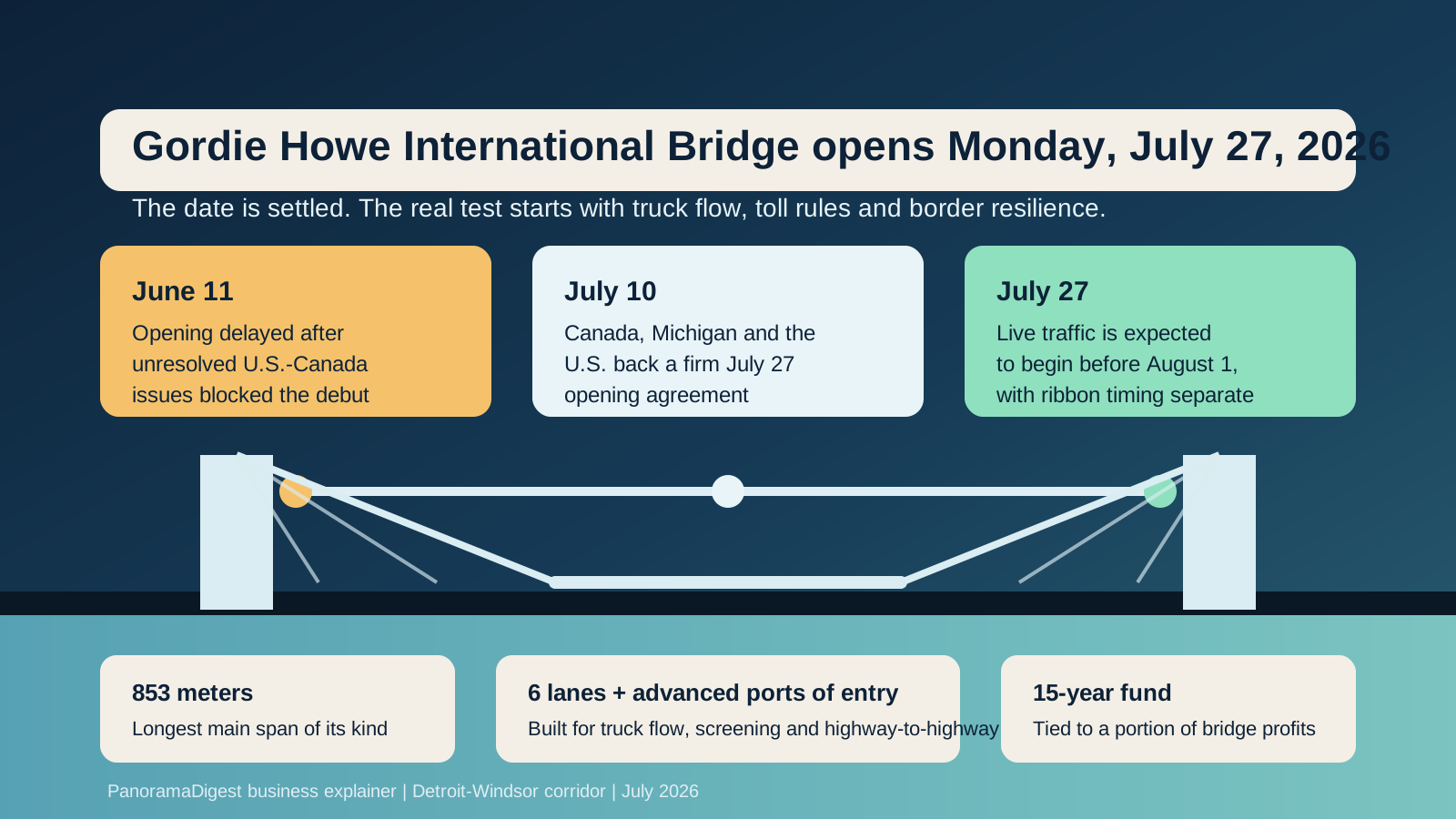
The Gordie Howe International Bridge is scheduled to open on Monday, July 27, 2026, after Canada, Michigan and the U.S. government backed a late-stage deal that ended the dispute which killed the June 12 debut. For readers searching the opening date, that is the answer. The bigger business story is that the Detroit-Windsor corridor is finally moving from construction politics to operating questions: how much freight shifts, how toll governance works, and whether the new crossing really gives North American supply chains more resilience than the Ambassador Bridge and tunnel could provide on their own.
Global News — Global National: July 11, 2026 | Gordie Howe International Bridge to open July 27
Global News' July 11 segment is the clearest current video explainer of the bridge-opening agreement. If the player does not load, use the direct YouTube link in the story.
Canada's July 10 release and the same-day Windsor-Detroit Bridge Authority announcement are unusually clear on the headline facts. The countries and Michigan now say the bridge will open July 27, that the crossing will strengthen supply chains and manufacturing, and that the agreement includes cooperative measures on toll governance, transparency and a 15-year regional economic development fund tied to a portion of bridge profits. In plain terms, the project has moved from when will it open? to what exactly did the two governments have to settle before they could stop delaying it?
What changed after the June 12 failure
PanoramaDigest's earlier bridge-delay analysis on June 11 treated the original slip as a freight-timing problem disguised as ceremonial drama. That read still holds. AP reported on July 11 that commercial traffic is now expected before August 1 after officials resolved the dispute that had blocked the June opening. The official Canadian and WDBA releases do not spell out every negotiating detail, but they do identify the broad settlement areas: toll governance, transparency, certain toll-rate adjustments that require U.S. concurrence, and the regional fund that is supposed to spread some of the bridge's gains on both sides of the river.
That matters because late-stage bridge disputes are rarely about steel or concrete. They are about who controls the economics after the structure is ready. Canada says the six-lane crossing will improve the flow of people and goods and support essential manufacturing links. Michigan says the bridge will speed auto production, lower costs and ease traffic. Those are measurable claims, not patriotic slogans. Once the bridge opens, the public can start testing whether they are true.
| Issue | What is now clear | What still needs proof after opening |
|---|---|---|
| Opening date | Canada, Michigan and the U.S. government now back Monday, July 27, 2026. | Whether traffic ramps smoothly enough for carriers and commuters to trust the date as operational, not symbolic. |
| Governance | The official releases say toll governance, transparency and certain toll-rate adjustments are now part of the agreement. | How often those cross-border approvals slow down practical pricing or lane-management decisions later. |
| Regional upside | The deal includes a 15-year economic development fund tied to a portion of bridge profits. | Whether the money produces visible local benefit instead of becoming a vague political talking point. |
| Supply-chain value | The bridge adds a six-lane, highway-connected crossing with advanced screening at both ports of entry. | How much truck volume actually shifts and whether redundancy improves when the corridor is stressed. |
What changes for trucks, commuters and border planning
The official project material gives the physical case for why the opening matters. The bridge spans the Detroit River between Windsor and Detroit, carries six lanes, uses an 853-meter main span that Canada says is the longest cable-stayed bridge span of its kind in North America, and connects to modern ports of entry built around advanced screening and border-management systems. Those details are not trivia. They explain why this crossing is supposed to feel different from a patched-together relief valve. It is designed as a full corridor upgrade.
The project team had already started preparing users before the political fight was over. On March 31, the bridge authority opened Breakaway personal accounts for travelers planning to use the crossing. That is one reason the July 27 opening should be treated as an operational launch rather than a fresh construction milestone. The traveler and tolling mechanics were already being staged. The missing piece was intergovernmental permission to move from readiness to live service.
For business readers, the hardest question is not whether trucks can cross. It is whether the new route actually changes planning behavior in a corridor that moves hundreds of millions of dollars in trade each day. That is why the bridge story belongs beside PanoramaDigest's June 22 look at rare-earth export controls and supply-chain vulnerability. Both stories are really about how resilient North American production looks once chokepoints become political. The Gordie Howe opening will not erase those pressures. It does, however, give manufacturers, logistics planners and border operators one more piece of redundancy in a corridor that is too important to run on habit alone.
- March 31, 2026: the bridge authority opened Breakaway personal accounts for travelers, signaling that operational preparation was already underway.
- June 11, 2026: PanoramaDigest and AP documented the opening delay after officials said more time was needed to resolve outstanding issues.
- July 10, 2026: Canada and the WDBA publicly announced a July 27 opening with U.S. support and a new governance framework.
- July 27, 2026: the corridor is supposed to move from late-stage negotiation to live traffic and measurable performance.
Why the opening is bigger than one bridge
The real value test starts the moment the bridge is no longer a future tense project. If the new crossing meaningfully reduces congestion pressure, improves routing flexibility and helps move auto and industrial traffic with fewer bottlenecks, then the long fight over ownership, timing and political leverage will eventually look like noise around a durable asset. If the opening produces only marginal behavior change, then the project will remain a powerful symbol with a weaker operational payoff than supporters promised.
That is the standard to keep. July 27 matters because it gives the Detroit-Windsor corridor a new answer to a question that had been hanging over it for months: not will the bridge ever open? but what does a finished North American trade artery actually need before governments trust it to work? The official ceremony may still lag the freight reality. AP said a ribbon-cutting date was not yet locked even as commercial traffic approached. That is fine. The trucks are the story now, not the stagecraft.
Watch the latest coverage: Global News' July 11 segment on the Gordie Howe International Bridge opening is the clearest current video explainer surfaced in this run. If the embedded player below does not load in your browser or region, use that direct YouTube link instead.
Read Next
Related Stories
China Q3 GDP Growth Rebounds to 4.5%: Retail and Investment Still Lag
China's Q3 GDP rose 4.5%, but September retail sales and nine-month investment show an uneven recovery. A guide to the figures, periods and price bases.
2027 Social Security COLA: The 3.6% Increase in Dollars and Payment Dates
The 2027 Social Security COLA is 3.6%. Our worked examples separate the gross increase from the bank deposit, with the official calculation and payment timing.

EU Greenwashing Rules Start September 27: How to Check Labels and Guarantees
A practical guide to the EU rules applying from September 27: environmental claims, certification labels, GARAN guarantees and the limits of old-stock flexibility.