The Midwest Storms Killed One Man in Iowa. The Harder Story Is How Quickly Risk Became Outage.
A deadly tree strike in Des Moines and a Chicago-centered moderate-risk alert exposed the same weakness: summer severe-weather planning still breaks down first where people and power are most exposed.
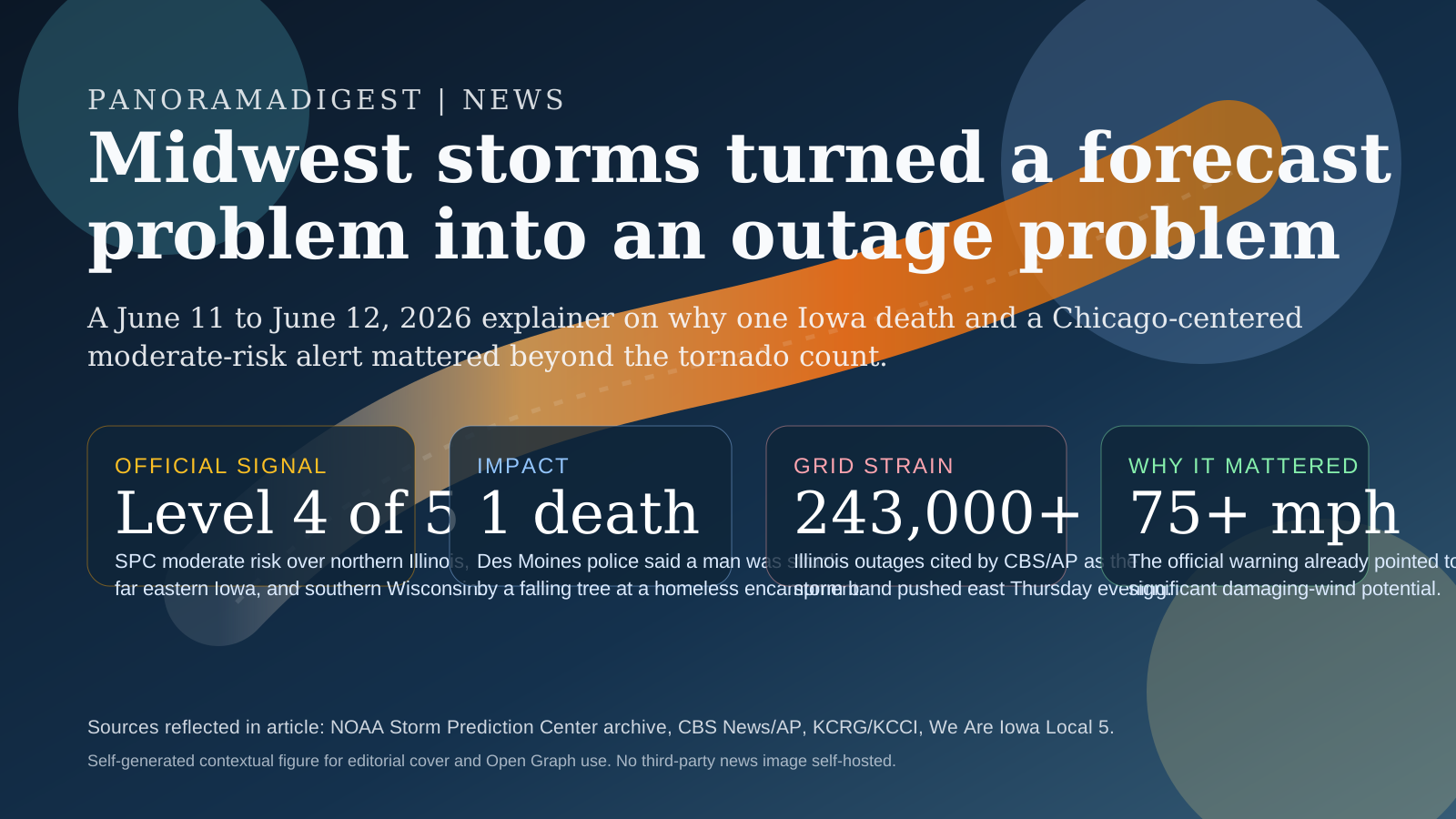
By the time the storm line finished marching through the Midwest late on Thursday, June 11, 2026, the headline facts already looked familiar: tornado reports, smashed roofs, canceled flights and another long outage count. What made this cluster harder to dismiss as routine June weather was the way the warning map and the human toll lined up so cleanly. The NOAA Storm Prediction Center's archived day-one outlook had already put northern Illinois, far eastern Iowa and southern Wisconsin in a moderate-risk zone and warned of damaging winds above 75 mph, large hail and several tornadoes, some potentially strong. A few hours later, CBS News, citing AP reporting and official statements, was tallying one death in Des Moines, major flight disruption and more than 243,000 customers without power in Illinois alone.
We Are Iowa Local 5 News — Des Moines man dead after tree fell on him during Thursday morning severe weather
Local Iowa coverage of the fatal tree strike that made the Midwest storm cluster more than a tornado-count story.
That sequence matters because it strips away the usual excuse that the damage was simply unknowable chaos. The atmosphere was volatile, the geography of risk was broadly visible, and the public consequences still landed first on the same weak points they usually do: outdoor workers and unhoused residents, exposed power infrastructure, airports that turn one storm line into a regional delay machine, and local governments left to explain why a weather event people were warned about still feels socially unplanned.
One death in Des Moines changed the scale of the story
The most sobering fact in the cluster came from Iowa, not Illinois. KCRG's local report, attributed to KCCI and Des Moines police, said a 54-year-old man died after a tree fell on him during Thursday morning's storm. CBS later described the victim as being at a homeless encampment when the tree broke apart in high wind. That detail should change how readers interpret the rest of the storm ledger. Once a weather story produces a death in an encampment, it stops being only a meteorology story and becomes a planning story about who had the least margin for error when the wind arrived.
It also clarifies why this was more than a photo-driven tornado roundup. Strong storms do not distribute risk evenly. People with hardened shelter, backup power and flexible workdays experience them as disruption. People outside, precariously housed or dependent on a fragile patch of urban tree cover experience them as direct physical danger.
- Thursday morning, June 11: Des Moines police responded after a tree strike during severe weather, a case later reported as fatal by local outlets.
- Thursday afternoon: NOAA's archived outlook kept a moderate-risk corridor over northern Illinois, far eastern Iowa and southern Wisconsin, with explicit 75-plus-mph wind potential.
- Thursday evening: AP and CBS reported tornadoes near Chicago, structural damage in multiple communities and more than 243,000 Illinois outages.
- Friday morning, June 12: The cluster remained a regional infrastructure story, not just an isolated tornado story, because delays, cleanup and grid restoration were still shaping the aftermath.
The forecast signal was loud enough to matter
There is a difference between hindsight and ignored signal. The SPC outlook did not promise a single precise point of failure, but it did describe the operating environment with unusual bluntness: widespread severe thunderstorms, the possibility of several tornadoes, and significant damaging wind. That matters because damaging wind is the bridge between dramatic weather and mundane system failure. Tornado video gets the attention; tree loss, feeder damage and airport delays are what most people actually live through.
Readers should also notice that the official warning language was broader than the final social-media narrative. The storm threat was not sold as a one-city spectacle. It ran across a Midwest and Great Lakes corridor that included Iowa, northern Missouri, northern and central Illinois, southern Wisconsin, northern Indiana and Lower Michigan. When the most visible conversation shrinks that map to whatever trended hardest near Chicago, it becomes easier for everyone else to underread the risk until the outages, shelter problems and public-safety failures are already here.
| Signal | What the record showed | Why readers should care |
|---|---|---|
| Official forecast | NOAA's archived June 11 outlook warned of widespread severe storms and damaging winds above 75 mph. | This was not a surprise cell that appeared without warning. |
| Human impact | Local Iowa reporting tied one death in Des Moines to a falling tree during the storm. | Storm exposure is also a housing and vulnerability problem. |
| Grid impact | CBS/AP said Illinois outages surpassed 243,000 customers Thursday evening. | Wind damage, not just tornado touchdowns, drove the broader disruption. |
| Mobility impact | CBS/AP also described major flight delays and cancellations in Chicago and beyond. | A regional storm corridor can turn into a multi-state transport problem within hours. |
What to watch after the winds move on
The next question is not whether forecasters got the atmosphere roughly right. They did. The harder question is whether cities, utilities and local emergency systems are learning to treat high-wind days as compound-risk days. Thursday's cluster showed what happens when wind, unstable shelter, aging trees, exposed distribution lines and hub-airport scheduling stack on top of each other. The first public instinct is to count tornadoes. The more useful instinct is to ask where the same map still looks fragile before the next moderate-risk day arrives.
That is why this story deserves to stay in the news even after the most dramatic footage ages out. The man who died in Des Moines was not killed by an abstract weather category. He was killed at the exact point where weather met exposure. That is the part of severe-storm coverage the region still understates, and it is the part worth fixing before the next outbreak gives the same lesson again.
For further reporting on this subject, see our severe weather coverage.
Read Next
Related Stories
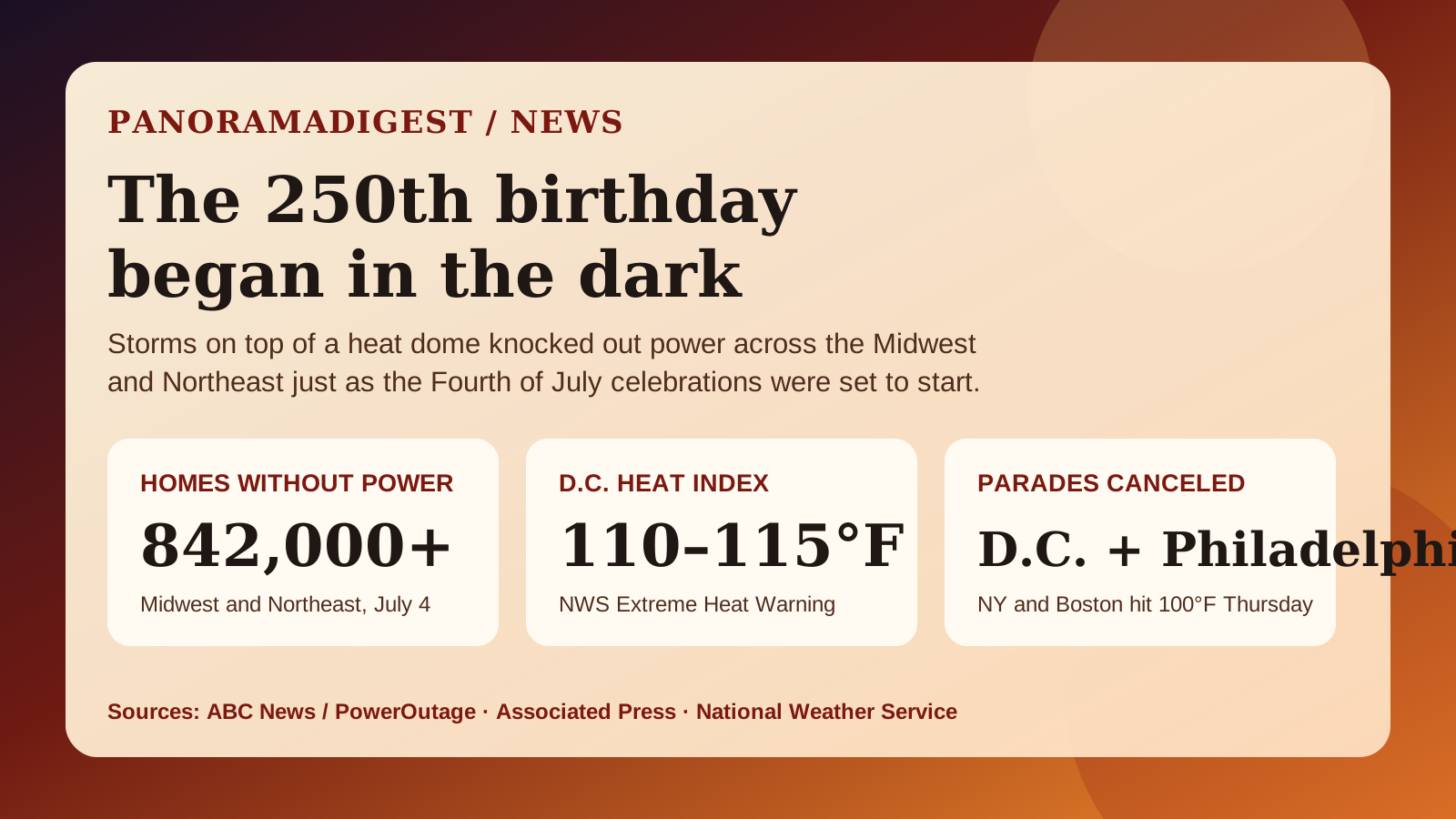
Heat Wave and Storms Leave 842,000 Homes Dark on America's 250th Birthday
America's 250th birthday opened with more than 842,000 homes dark across the Midwest and Northeast. The same heat that canceled parades from Washington to Philadelphia is stress-testing the power grid on exactly the days losing it hurts most.
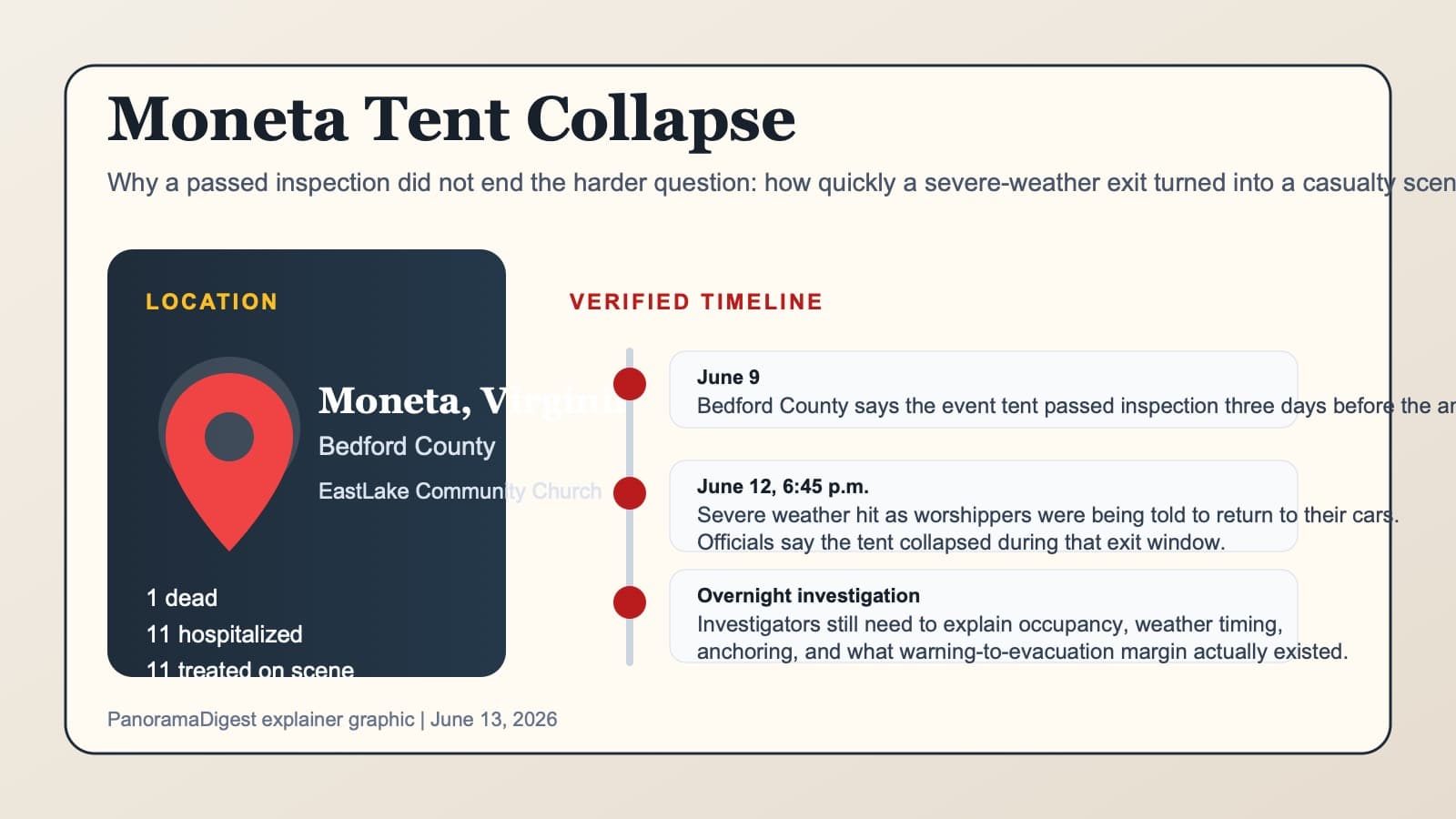
Virginia Church Tent Collapse: Casualties, Storm Conditions and Safety
The fatal tent collapse at EastLake Community Church in Moneta, Virginia, was not only a weather tragedy. It was a test of how fast a large outdoor gathering could move from warning to safe exit.

Typhoon Noul Weakens After Southern China Landfall as Hong Kong Reports 21 Injuries
Typhoon Noul weakened after moving inland over southern China, while Hong Kong reported 21 typhoon-related injuries, 331 fallen-tree reports and eight flooding reports after its No. 8 storm signal.