The Tracy Warehouse Fire Burned Through a Medical-Supply Hub. The Bigger Failure Started Before the Flames.
A massive blaze at Tracy's Medline warehouse became more than a dramatic plume once officials said the private fire-water and sprinkler system failed at the start of the response.
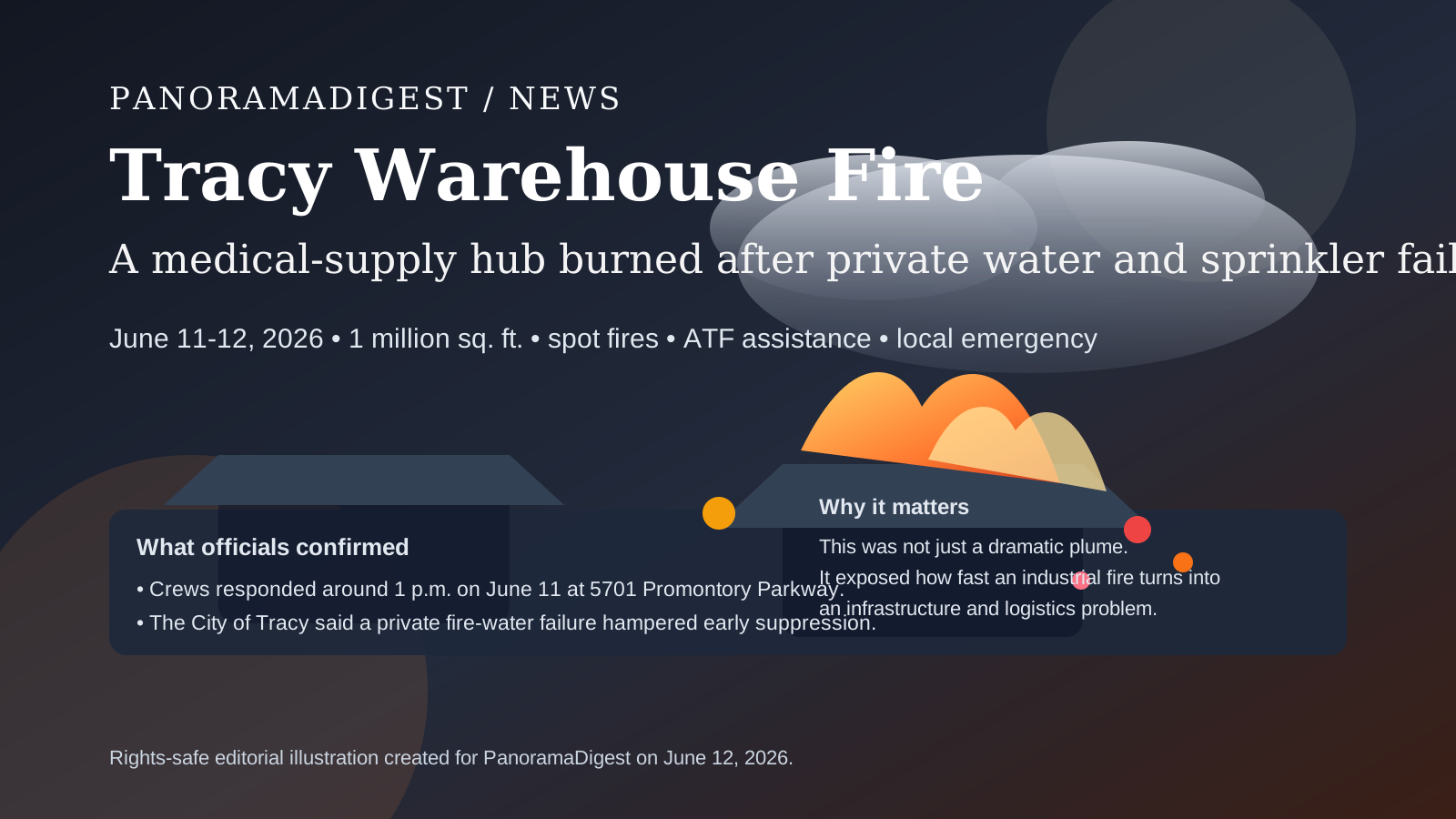
By the morning of Friday, June 12, 2026, the easiest way to describe the Tracy warehouse fire was visual: a giant plume, a collapsed roofline and a million-square-foot building still burning more than half a day after the first alarms. The more useful description is operational. The City of Tracy's incident update said crews were dispatched around 1 p.m. on Thursday, June 11, to the Medline facility at 5701 Promontory Parkway, where the structure's private fire-water and sprinkler system failed during the early response. Once that detail entered the record, this stopped being only a warehouse-fire story. It became a story about how quickly a private-system failure can turn an industrial emergency into a public one.
KCRA 3 — Crews continue battling massive warehouse fire in Tracy
KCRA's scene report shows the scale of the Tracy warehouse fire. If the embedded player is blocked in your browser, use the direct YouTube link in the article body.
That distinction matters because this was not a vacant shell on the edge of town. Medline is a medical-supply company, and the site sits inside a logistics corridor where one bad afternoon can spill into traffic control, mutual-aid strain, business continuity questions and days of cleanup. KCRA's local coverage reported that roughly 120 employees were evacuated and no injuries were immediately reported. CBS Sacramento's follow-up said the fire remained active on June 12, had triggered spot fires around the property and was expected to take days to extinguish completely.
The first failure was not the roof
The City of Tracy's update was careful but revealing. Officials said the building's private fire-water system was compromised, which caused the sprinkler network to fail. That does not answer every investigative question, but it changes the sequence that readers should understand. A warehouse this large can burn aggressively under any circumstances. It becomes much harder to contain when the interior suppression system that buys the first crucial minutes no longer does its job.
ABC7 Bay Area added another operational detail that sharpened the same point: firefighters were forced to rely on the public hydrant system while portions of the structure were already fully involved, and the station reported that automatic sprinklers did not hold the blaze in check. That is why the story looks less like a freak flare-up and more like an infrastructure stress test. The public sees flames; emergency managers see a chain of dependencies failing in sequence.
- Thursday, June 11, around 1 p.m.: Tracy fire crews were dispatched to the Medline warehouse on Promontory Parkway, according to the city's official incident update.
- Early response phase: The city later said the private fire-water and sprinkler system was compromised, limiting the building's built-in suppression capacity.
- Thursday night: Local television reporting described a still-active blaze, road closures and mutual-aid support as crews protected nearby properties and chased spot fires.
- Friday, June 12: CBS Sacramento reported that investigators, including ATF assistance, were working a scene expected to take days to fully extinguish.
Why one warehouse fire can become a wider logistics story
Readers should be cautious about claiming broad supply disruption before Medline or public officials say more. But it is still fair to recognize the category of risk. Medical-distribution warehouses do not hold decorative inventory. They sit inside supply chains that hospitals, clinics, nursing facilities and home-care systems depend on. A large fire at one of those facilities matters even before anyone publishes a shortage notice, because continuity planning starts the moment a building becomes unusable.
That is also why the neighboring-property reports matter. CBS Sacramento said firefighters were trying to protect a nearby FedEx building while embers and spot fires complicated the perimeter. In other words, this was not just an isolated structure fire with a neat boundary. It was the kind of industrial blaze that forces crews to think simultaneously about containment, exposure, road access, air conditions and whether adjacent businesses can keep operating.
| Signal | What the reporting showed | Why it matters |
|---|---|---|
| Private suppression failure | The City of Tracy said the facility's private fire-water and sprinkler system was compromised. | This suggests the most important early line of defense was weakened before the public response could fully scale up. |
| Large occupied facility | KCRA reported about 120 employees were evacuated and no injuries were immediately reported. | The evacuation outcome was better than the fire's scale, but the occupancy level shows how serious the exposure could have been. |
| Long-duration burn | CBS Sacramento reported the fire could take days to extinguish. | Long incidents tie up crews, prolong road closures and complicate business recovery and investigation. |
| Federal investigative help | Local coverage said ATF personnel were assisting at the scene. | A fire of this scale becomes a forensic as well as a tactical problem once immediate life safety is stabilized. |
What investigators still need to answer
The public record is stronger on consequences than cause. Officials have described the response, the suppression-system failure and the scale of the fire, but not yet a confirmed ignition source. That is the right place to stay careful. Large warehouse fires generate instant theories, and most of them age badly. Until investigators publish more, the honest framing is narrow: a major industrial fire broke out, the built-in water and sprinkler system did not perform as expected, and the result was a far harder and longer emergency.
That makes the next round of findings unusually important. Readers should watch for three things: whether Tracy releases more detail about the private-system failure, whether Medline outlines continuity steps for affected operations, and whether air-quality or hazardous-material concerns change as overhaul continues. For now, the Tracy fire is best understood as a response story with a serious infrastructure question at its center. A video update from local television is available via KCRA's report from the scene if the embedded player below does not load in your browser.
That is the part worth holding onto after the smoke clears. Buildings burn. The harder public question is why the systems designed to keep a bad fire from becoming a sprawling one did not hold long enough here. Tracy will not need a dramatic lesson in that difference twice.
For further reporting on this subject, see our Fire Response coverage.
Read Next
Related Stories
Old Trails Fire Damage Estimate Reaches 640 Structures in Spokane
Spokane County's preliminary estimate says the Old Trails fire destroyed 640 structures, while evacuation zones remain active across northwest Spokane.

USCIS Can Now Refer Asylum Cases to Immigration Court Without an Interview
A DHS rule effective July 28 lets USCIS send some affirmative asylum applications directly to immigration court. Referral is not a denial, but the interview is no longer guaranteed.

Seattle Center Shooting Kills Three and Injures Four at Bite of Seattle Festival
Seattle police say a shooting at the Bite of Seattle festival killed three people and injured four others, including a 2-year-old boy. One suspect was arrested and police continued searching for another.