Christian Pulisic Is Out. Now the U.S. Has to Prove Its World Cup Surge Was Never a One-Man Story.
Christian Pulisic's calf injury kept him out against Australia on June 19, 2026. The larger test for the United States was whether its World Cup momentum could survive without asking one star to carry the whole identity.
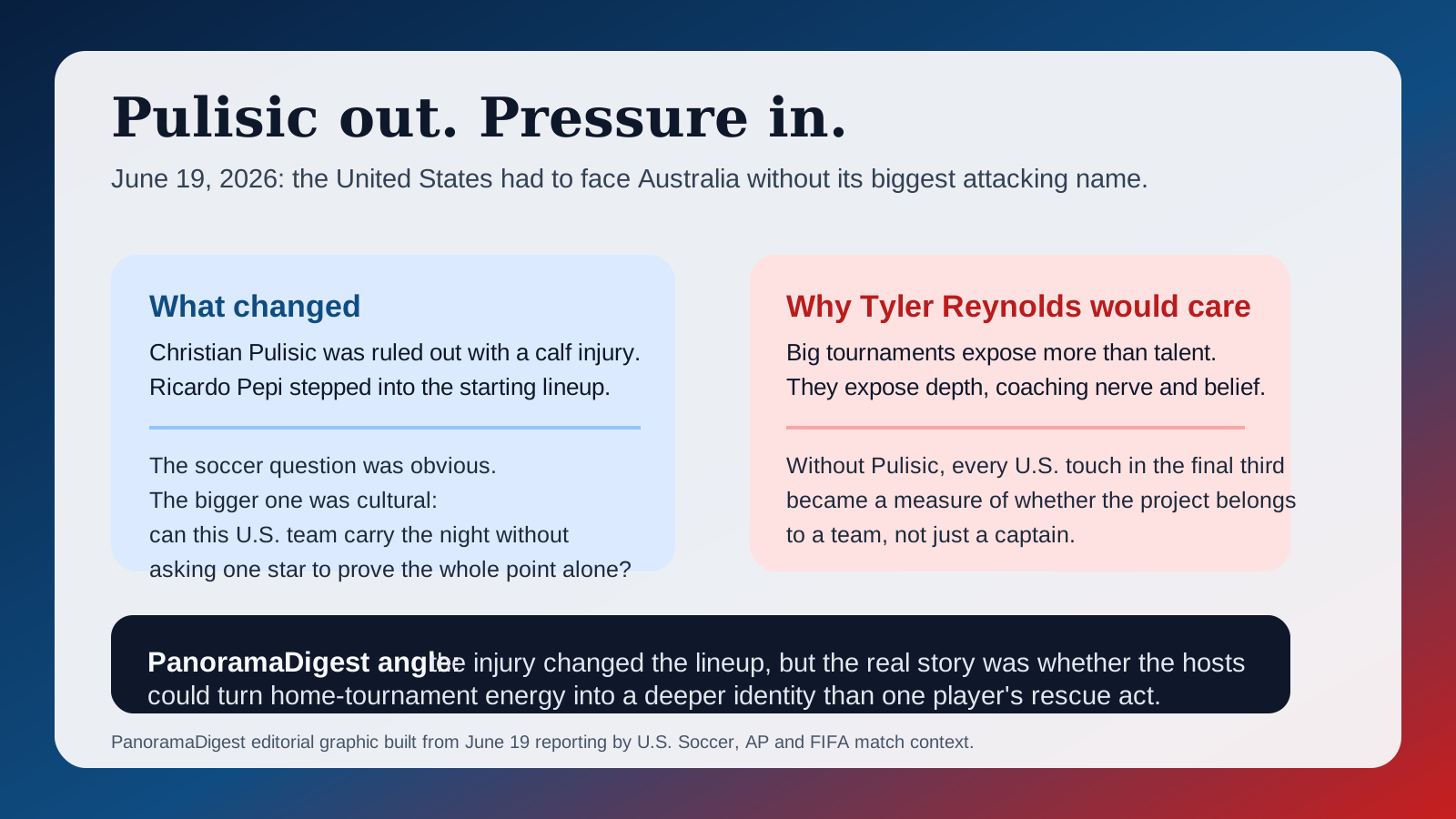
When the United States released its lineup for Australia on June 19, the immediate news was simple: Christian Pulisic was out with the calf issue that had lingered since the opener, and Ricardo Pepi moved into the starting group. The more interesting question was never just whether the Americans would miss their captain's finishing and tempo. It was whether a home World Cup team that looked expansive against Paraguay could still feel like a serious tournament side when the easiest bailout option disappeared.
USMNT — Official USMNT Starting XI vs Australia
U.S. Soccer's official lineup post for the Australia match. Fallback link is included in the article body.
U.S. Soccer's player-availability report had already framed Pulisic as day to day, and the Associated Press reported shortly before kickoff that Mauricio Pochettino confirmed he would not play. FIFA's match center then made the tactical consequence official: Pepi, not Pulisic, was part of the starting picture in Seattle.
| June 19 change | Verified detail | Why it matters |
|---|---|---|
| Pulisic's status | Ruled out because of a calf injury after training separately in the buildup. | The U.S. lost its most recognizable attacker and one of its main decision-makers between the lines. |
| Replacement | Pepi entered the lineup against Australia. | The shape could stay aggressive, but the threat profile changed from ball-dominant creation to penalty-box timing and direct finishing. |
| Tournament stakes | The match arrived with the U.S. trying to build on a 4-1 opening win over Paraguay. | This was a chance to prove the surge was structural, not just emotional. |
The injury changed the psychology as much as the tactics
Pulisic matters because he gives the United States two comforts at once. He can be the cleanest final-third player on the field, and he can calm a game that starts to tilt toward anxiety. Remove that, and every American attack becomes a referendum on whether the supporting cast can read pressure quickly enough. Against Australia, that mattered because the opponent was never going to offer a soft evening. Australia usually turns matches into contests of second balls, physical timing and emotional patience, which means a host nation without its star can drift from urgency into hurry in a matter of minutes.
That is why this story is bigger than a medical bulletin. Pochettino's project has spent months trying to make the U.S. look less dependent on one face and more convincing as a collective. A home World Cup is supposed to accelerate that transformation. If the Americans are real contenders to shape their own bracket, they have to show they can replace Pulisic's touches with shared conviction, smarter spacing and cleaner decisions from players who are not usually asked to own the whole spotlight.
Pepi's opportunity is also a pressure test for the rest of the attack
Pepi is the obvious name because he took the place in the lineup, but the responsibility spreads wider than that. The U.S. needed its midfield to move the ball into dangerous spots faster, its wide runners to attack without waiting for Pulisic to solve the puzzle, and its leaders to keep the home crowd connected to the match when the game inevitably tightened. That is what strong tournament teams do: they make an absence look like a stress test, not a personality crisis.
PanoramaDigest has already covered how elite stars can distort the shape of big matches, most recently in our analysis of Argentina's dependence on Lionel Messi. This U.S. moment was the inverse version of that problem. The Americans did not need another reminder that Pulisic is important. They needed evidence that the rest of the roster could keep the performance coherent when the captain was unavailable.
What to watch after the lineup shock
The key measure from here is not simply whether Pulisic returns for the next match. It is whether the United States can leave June 19 with a clearer idea of who it becomes when the attack has to be distributed across more shoulders. That is the sort of discovery that changes a tournament. If the Americans can create danger, manage emotion and keep their structure without their headline player, the result will matter beyond one group-stage evening. If they cannot, the injury story will linger longer than the calf.
For readers following the team sheet in real time, U.S. Soccer's official starting XI post is also available on Instagram here, which matches the lineup shift reflected in FIFA's live match materials.
Reader Sentiment & Impact Pulse
How do you evaluate the primary outcome of this development?
Select an option to cast your perspective. Responses are anonymous and aggregated in real time.
Key Context & Frequently Asked Questions
Christian Pulisic's calf injury kept him out against Australia on June 19, 2026. The larger test for the United States was whether its World Cup momentum could survive without asking one star to carry the whole identity. This analysis from PanoramaDigest examines primary documentation, operational implications, and broader institutional impacts across sports.
Read Next
Related Stories
FIFA Drops $20 Billion World Cup Equity Plan as UEFA Withdraws Confidence in Infantino
FIFA withdrew its $20 billion World Cup equity plan after opposition across three confederations. UEFA's no-confidence statement now shifts the dispute to Infantino's 2027 election.

Nirmal Purja Dies in Broad Peak Avalanche: His Verified Climbing Records
Elite Exped has confirmed that Nirmal Purja died after the Broad Peak avalanche. Here is the verified rescue timeline and the record evidence behind his climbing legacy.

FIFA Proposes $20 Billion Commercial Company to Raise $4.2 Billion for Member Funding
FIFA wants to place commercial rights and tournament operations in a new company valued initially at $20 billion, then sell minority stakes to finance expanded member-association funding.