NSF Saved the Ocean Sensors. The Harder Test Is Why Public Science Needed a Political Rescue.
The National Science Foundation reversed course on the Ocean Observatories Initiative on June 18, 2026. The immediate win matters, but the sharper question is what it means when core scientific infrastructure survives only after a bipartisan emergency intervention.
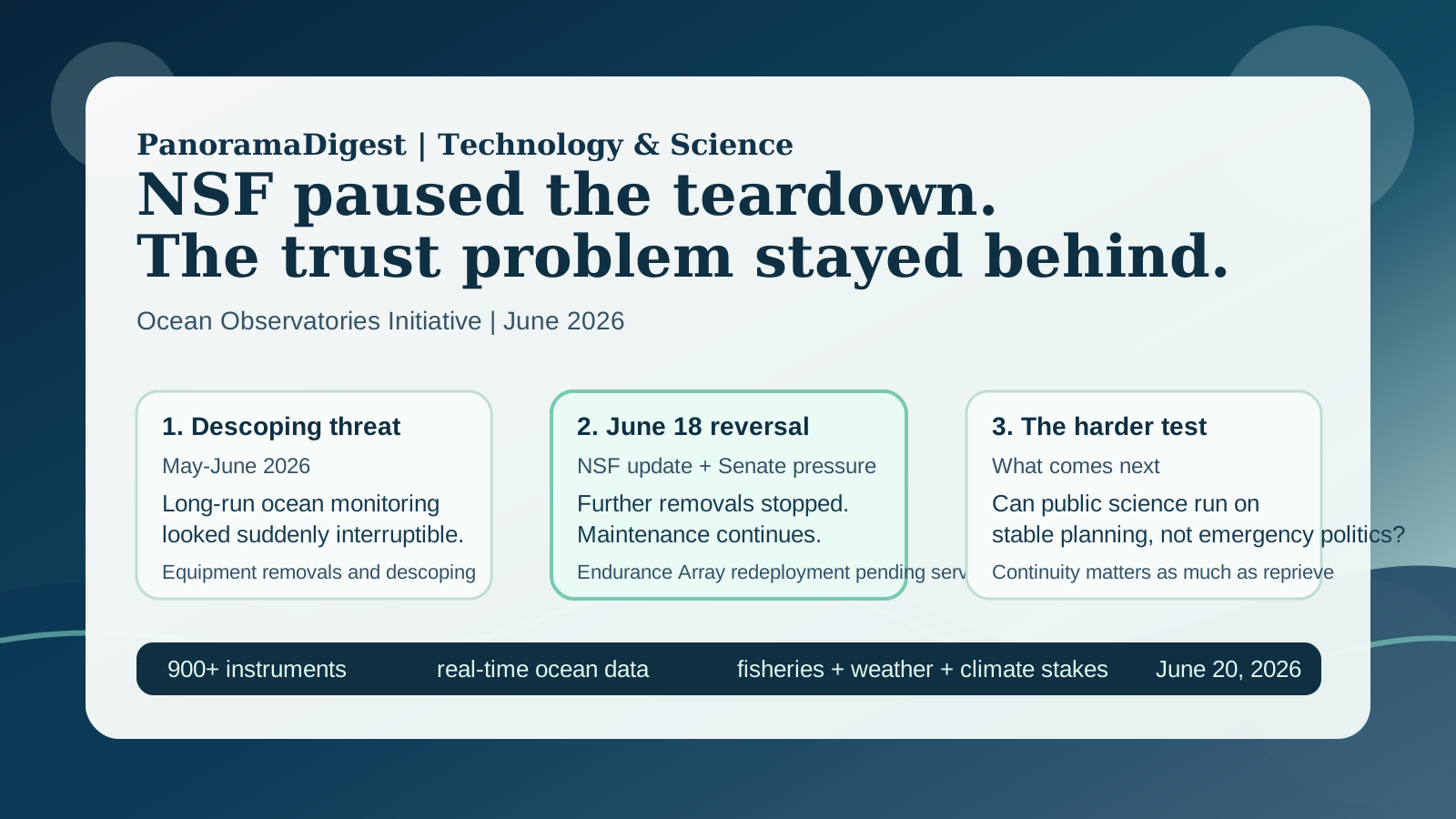
The National Science Foundation's June 18 reversal on the Ocean Observatories Initiative was easy to celebrate and harder to trust. NSF said it will stop removing or descoping equipment from the remaining arrays and continue operations, including planned maintenance. The Ocean Observatories Initiative itself describes the system as a real-time network of more than 900 instruments. AP reported that the network had been headed toward dismantling before scientists and lawmakers pushed back. That is the immediate headline. The more useful one is that a piece of public scientific infrastructure this basic and this expensive now appears to need a rescue campaign just to avoid being half-disassembled before Washington finishes arguing with itself.
Forbes Breaking News — Lisa Murkowski, Jeff Merkley Introduce Legislation To Maintain Ocean Observatories Initiative
The Senate-floor clip shows the bipartisan argument that helped force the OOI reversal. Use the direct YouTube link in the article if the embedded player does not load.
This is not just a climate or oceanography story. It is a public-systems story. The sensors sit far from most voters' daily sightlines, but the data runs straight into forecasts, fisheries management, marine research and the broader way the United States understands changing coastal conditions. Sen. Jeff Merkley said the bipartisan Senate effort was about preserving data that helps manage fisheries, forecast weather and track climate change. When a system doing all three can be put on the chopping block and then restored only after a political alarm bell, the institutional lesson is bigger than one reversal. It says continuity is no longer something the scientific side of government can quietly assume.
Why the reversal matters beyond the scientists who use the data every day
The easiest mistake here is to treat the OOI as a niche research luxury. The official OOI overview says the system supplies real-time data from more than 900 instruments across multiple arrays. AP's account of the reversal added the public-stakes translation: the network helps track ocean circulation, marine ecosystems, climate change and extreme weather. That is not ornamental science. It is the kind of observational backbone governments and industries rely on long before the average reader knows the acronym.
NSF's own wording is revealing. The agency said it appreciated concerns from stakeholders who rely on the OOI and that, effective immediately, it would halt further removal from the remaining arrays. It also said the Endurance Array had already been taken out of the water and would need servicing before redeployment. That means the story is not a simple reset to yesterday's status quo. A reversal arrived, but only after the system had already absorbed disruption. Once public infrastructure moves into that kind of start-stop cycle, the damage is not only technical. Trust begins to erode as researchers, communities and operating partners learn that continuity may depend less on planning than on whether someone can generate enough outrage in time.
| What the network watches | Why it matters outside labs |
|---|---|
| Ocean circulation and temperature patterns | Those signals shape weather interpretation, climate modeling and coastal risk planning. |
| Marine ecosystems and fisheries conditions | Commercial and recreational fishing economies depend on stable, credible environmental data. |
| Storm and extreme-weather indicators | Public agencies and researchers use long-running observations to understand how hazards are changing over time. |
| Seafloor and water-column changes across multiple arrays | The value is cumulative: long records become more useful the longer they remain uninterrupted. |
The bigger problem is that public science now looks interruptible by design
That is why this episode deserves a stronger reading than simple relief. The bipartisan Senate push mattered because it exposed how politically naked the system had become. Merkley and Sen. Lisa Murkowski did not spend their time defending a vague scientific aspiration; they moved to protect an already operating public asset. Their intervention worked. But a victory that depends on emergency political intervention is not the same thing as durable institutional health. It is closer to proof that the guardrails were weaker than they looked.
The public can miss how damaging that uncertainty is because observational science rarely produces one dramatic consumer-facing moment. It produces continuity. Long baselines. Comparable measurements. A stream of reliable monitoring that becomes more valuable because it did not break in the middle. That is also why abrupt descoping is so corrosive. It interrupts not just equipment but confidence in whether the country still treats environmental observation as core capacity rather than discretionary overhead.
What June 18 fixed, and what it did not fix
NSF did make one important commitment in public: it said operations and planned maintenance will continue, and it said equipment already removed from the Endurance Array is expected to be redeployed after servicing. That narrows the immediate operational damage. But it does not fully repair the strategic problem. Scientists and coastal stakeholders now know the network can be destabilized first and defended second. Once that precedent exists, every future budget fight or ideological campaign lands differently.
There is also a practical asymmetry here. Tearing down public systems can happen quickly. Rebuilding confidence in them usually cannot. Researchers can adapt, and agencies can issue updates, but the deeper institutional message lingers: if continuity depends on emergency intervention, then the next threat may arrive before the last repair is complete. For a science network designed to tell long stories about the ocean, that is the wrong kind of signal to send.
- May 2026: the OOI community posted a descoping update as dismantling fears spread around the network's future.
- June 15-18: lawmakers escalated the fight with letters and a bipartisan Senate bill aimed at stopping decommissioning.
- June 18: NSF said it would stop further removals, continue maintenance and plan to redeploy already removed Endurance Array equipment.
- Next test: whether the network gets a stable long-term operating path instead of another temporary reprieve.
What readers should watch next
Three things matter now. First, whether NSF's promised expert-panel and stakeholder process produces a durable operating plan rather than a holding statement. Second, whether Congress turns this bipartisan burst into a clearer protection for high-value scientific infrastructure. Third, whether the agencies involved can persuade researchers and coastal communities that the next funding or ideology fight will not again begin with removals already underway.
The reversal was real, and it was worth getting. But the most revealing part of the story may be what it says about the current state of public science in America. A network built to watch slow-moving ocean change was suddenly forced into a sprint for political survival. That is a workable drama for one news cycle. It is a poor operating model for infrastructure that is supposed to outlast all of them.
Source card: If the Senate-floor clip below does not load in your browser, use the direct YouTube video of the Merkley-Murkowski floor remarks. Readers who want the official agency language should also keep the NSF update and the OOI overview page open.
Reader Sentiment & Impact Pulse
How do you evaluate the primary outcome of this development?
Select an option to cast your perspective. Responses are anonymous and aggregated in real time.
Key Context & Frequently Asked Questions
The National Science Foundation reversed course on the Ocean Observatories Initiative on June 18, 2026. The immediate win matters, but the sharper question is what it means when core scientific infrastructure survives only after a bipartisan emergency intervention. This analysis from PanoramaDigest examines primary documentation, operational implications, and broader institutional impacts across technology & science.
Read Next
Related Stories
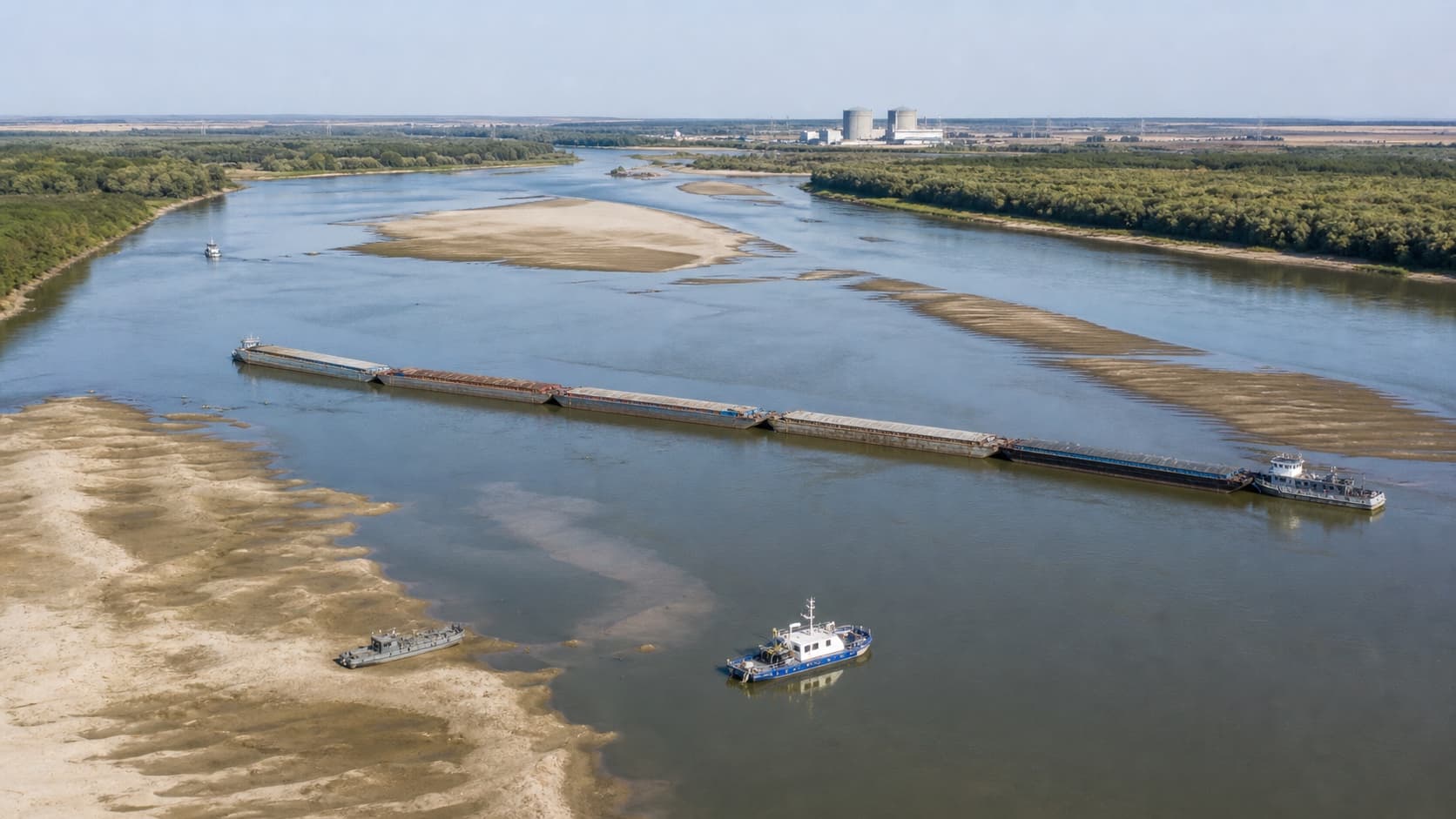
Romania Funds 7 Million Lei Danube Barge Plan to Keep Cernavoda Unit 2 Online
Romania approved a 7 million lei temporary barge intervention at the Bala-Dunarea Veche split to preserve the Danube flow needed by Cernavoda Unit 2.

Zoox Wins Federal Approval for Paid Robotaxis, but State Permits Still Control Launches
NHTSA cleared Zoox's steering-wheel-free robotaxi for a limited paid-service path, but state and local permits still determine where fares can begin.

Kenya Footprints Show Eight Large Hominins Moving Together 1.43 Million Years Ago
A PNAS study describes tracks from eight large hominins at Kenya's Koobi Fora, while leaving open whether they were Paranthropus boisei or Homo erectus.