Trump's Public Break With Netanyahu Shows How Fragile the Iran Deal Still Is
Donald Trump's anger over Israel's Beirut strike was not just another personality flare-up. It exposed the central weakness in the emerging U.S.-Iran deal: Washington is asking Tehran to trust a diplomatic landing while its closest regional ally keeps testing the edge of the bargain.
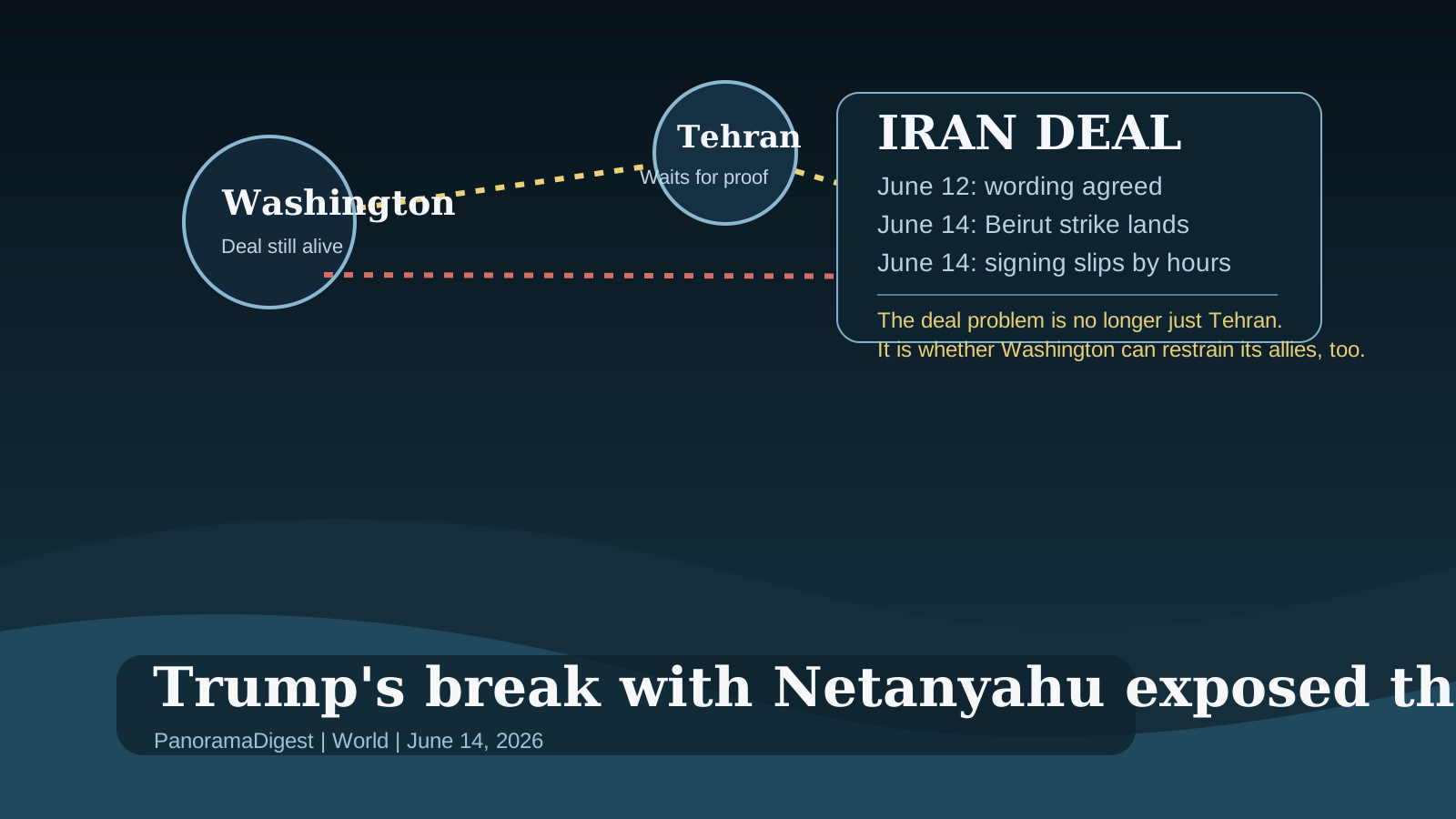
Donald Trump's anger over Israel's Beirut strike on Sunday, June 14, 2026, matters for more than its profanity. The outburst revealed something the emerging U.S.-Iran deal has tried to blur: the agreement may be close to signature, but the coalition supposed to live with it is not operating from one script. When Trump told Axios that the strike delayed the signing by several hours and openly questioned Benjamin Netanyahu's judgment, he turned a private allied dispute into the real headline of the day.
That is what makes this a world story, not just a personality clash. Axios reported that Trump still expected the deal to go forward after the Beirut strike, even as he said the attack upset the timing and forced a scramble to stabilize the diplomacy. Associated Press reported that Israel said it struck after Hezbollah fired projectiles into northern Israel, while Lebanon's health ministry said the Beirut attack killed three people and wounded 16. Those two facts can both be true and still leave Washington with a basic strategic problem: a deal advertised as a pathway to de-escalation looks less persuasive when Israel keeps signaling that its immediate security logic will not wait politely for negotiators.
The rupture is really about control
Trump's complaint was revealing because it was not framed as a disagreement over first principles. He did not suddenly become less suspicious of Iran. CBS's latest Mike Waltz interview underscored that point: the administration is still selling the diplomacy as coercive, monitored, and built around verification rather than trust. What changed on Sunday was the question of who gets to control escalation while that framework is being sold. If Washington is promising Tehran that the next stage can be managed, but Jerusalem keeps reserving the right to hit Hezbollah targets in Beirut at the worst possible diplomatic moment, then the real dispute is not only over Iran. It is over who sets the tempo of the region's war-to-truce transition.
That makes the Beirut strike more consequential than the tactical exchange that preceded it. AP reported that Qatari mediators traveled to Tehran on Sunday while Pakistani Prime Minister Shehbaz Sharif had already said a deal could be signed the same day. Iran's parliamentary speaker, Mohammad Bagher Qalibaf, separately warned on X that the path forward was not possible if the United States could not fulfill its commitments, according to AP's account. In other words, Tehran is treating Israeli action in Lebanon not as a side theater but as evidence about whether Washington can deliver on the broader bargain it is trying to close.
| Date | What moved | Why it mattered |
|---|---|---|
| June 12, 2026 | AP reported that U.S. and Iranian negotiators had agreed to the wording of a war-ending framework. | The diplomacy shifted from general optimism to a document with terms, timelines and political ownership. |
| June 14, 2026, earlier in the day | Israeli forces struck Hezbollah targets in Beirut after projectile fire from Lebanon, according to AP. | The strike tested whether the deal's de-escalation logic could survive action by actors outside the signing room. |
| June 14, 2026, later in the day | Trump told Axios the strike delayed the signing by a few hours but did not kill it. | The White House signaled urgency, but also admitted that the deal's timing remained vulnerable to allied defiance. |
The harder problem is not the signature
Even if the deal is eventually signed, Sunday's events made clear that a signature is only the beginning of the test. AP reported that the current framework leaves major issues unresolved, including Iran's nuclear program details and frozen funds, while opening a 60-day channel for technical talks. That means the administration is not trying to sell a clean peace. It is trying to sell a pause sturdy enough to hold together while the thorniest questions are deferred. That kind of arrangement depends on discipline from every armed actor near the negotiating perimeter, and discipline is exactly what Sunday's strike called into doubt.
This is also why the story is not a duplicate of PanoramaDigest's earlier Iran coverage. The site's June 12 and June 13 articles focused on whether a deal text existed and whether two capitals would own it. Sunday's development is different. It showed that the pressure point may sit one capital to the west. Readers who followed PanoramaDigest's June 13 analysis of the U.S.-Iran text now have a sharper follow-up question: can Washington persuade Tehran that it controls the coalition side of the bargain as firmly as it claims to control the paper?
What to watch over the next 48 hours
Three signals now matter more than the ceremonial question of whether a memorandum gets signed. First, whether Israeli operations in Lebanon pause long enough to give mediators a believable case that escalation can be contained. Second, whether Iranian officials move from public warning to a narrower retaliatory answer, or decide the safer move is to keep the diplomatic channel open. Third, whether the White House starts describing the agreement less as a breakthrough and more as a managed holding pattern.
If that rhetorical shift happens, it will tell readers something important. Sunday's blowup did not necessarily kill the deal. It may have clarified its true purpose. This is not yet a grand settlement remaking the region. It is an attempt to stop a widening war before the coalition politics around Israel, Iran, Lebanon and Washington make even a limited truce impossible.
Read Next
Related Stories

Denmark's 11-Month Military Service Starts With 1,600 Volunteers Across 14 Bases
Denmark's first full 11-month military-service cohort includes about 1,600 volunteers at 14 sites. Equal conscription applies if volunteers fall short.

Lula Wins PT Nomination for Brazil's 2026 Election With Alckmin as Running Mate
Brazil's Workers' Party formally selected Lula and Geraldo Alckmin for the 2026 presidential election. Candidate registration is due August 15.

Ceuta Migrant Crossing Death Toll Reaches 67 as Spain Adds a 500-Meter Barrier
Spain says 67 people died during the mass crossing into Ceuta and is adding a 500-meter sea-border barrier after most entrants returned to Morocco.