ACOG’s New Pregnancy Vaccine Schedule Shows How Much Trust the Federal Signal Has Lost
The new ACOG maternal immunization schedule is not just another clinical chart. It is a public sign that obstetric care groups no longer trust federal vaccine messaging to stay clear enough for pregnant patients and their clinicians.

The most important thing about the American College of Obstetricians and Gynecologists' new maternal immunization schedule is not the chart itself. It is what had to happen before the chart existed. On Wednesday, June 10, 2026, ACOG published a dedicated schedule for pregnant, postpartum, and lactating patients after months of federal vaccine confusion that had already pushed major medical groups into their own parallel guidance systems.
That makes this a health-trust story before it is a vaccine story. Pregnant patients do not experience immunization policy as an abstract Washington dispute. They experience it in exam rooms, pharmacy counters, prenatal visits, and family group chats where one changed recommendation can sound like proof that nobody really knows what is safe. ACOG's move reads as an attempt to restore a stable clinical signal before more trust leaks out of the system.
ACOG's schedule says four vaccines should be part of routine pregnancy care: inactivated or recombinant influenza vaccine, COVID-19 vaccine, Tdap, and Pfizer's maternal RSV vaccine in the eligible gestational window. That matters partly because the group is trying to simplify pregnancy counseling, and partly because it is drawing a bright line against the federal drift toward individualized COVID decision-making described in an October 6, 2025 HHS announcement.
The real split is not over every vaccine. It is over who owns the default.
On its face, ACOG is not reinventing maternal immunization from scratch. The organization says its schedule is evidence-based, adapted from its Committee Statement on maternal immunizations, and endorsed by 13 other medical and health organizations. The core recommendations are familiar to clinicians: flu vaccination in any trimester, Tdap during weeks 27 through 36 of each pregnancy, COVID vaccination in any trimester, and RSV vaccination between 32 weeks 0 days and 36 weeks 6 days during the seasonal window for a first eligible pregnancy.
But the political and practical importance sits in one line on the federal side. The current CDC pregnancy-vaccine page carries a notice that its content is being updated to align with revised ACIP recommendations, while pointing readers to the HHS policy change that shifted COVID vaccination toward shared clinical decision-making. When the government's own page is in transition and the specialty society is publishing a full replacement schedule, clinicians hear a message even if nobody says it aloud: the default is now contested.
| Question | ACOG schedule | Federal signal readers are seeing |
|---|---|---|
| COVID-19 in pregnancy | Recommended in any trimester, with emphasis on getting it as soon as possible. | HHS shifted CDC schedules toward shared clinical decision-making instead of a blanket routine recommendation for healthy pregnant women. |
| Tdap timing | Recommended in every pregnancy, preferably during weeks 27-36. | Still broadly familiar, but now delivered inside a wider climate of vaccine confusion. |
| RSV in pregnancy | Recommended in the first eligible pregnancy during the 32-36 week window and seasonal months. | Readers must navigate timing, infant monoclonal-antibody alternatives, and local seasonal guidance. |
| Clinical trust | A specialty society is offering a clean, pregnancy-specific roadmap. | CDC pregnancy content is being updated, which signals an unsettled federal communications environment. |
Pregnancy care is where mixed messaging does the most damage
Pregnancy is especially vulnerable to that noise because the standard for risk tolerance is understandably different. Patients are weighing their own health, fetal health, birth outcomes, timing, family pressure, misinformation, and the emotional cost of getting a recommendation that seems to change every few months.
That is why the details on ACOG's schedule matter beyond professional housekeeping. The organization says influenza vaccination can be given in any trimester. It says COVID vaccination can occur in any trimester, with the priority on receiving it promptly. It says Tdap should be administered during each pregnancy, preferably in the early part of the 27-to-36-week window. It says RSV vaccination with Abrysvo should be given only between 32 weeks 0 days and 36 weeks 6 days during September through January in most of the continental United States if the patient was not previously vaccinated in a prior pregnancy.
None of that is sensational. That is the point. Patients need routine language more than they need another policy fight. In medicine, clarity is not cosmetic. It changes uptake.
This is also a lesson in how professional authority gets rebuilt
Associated Press reporting on June 10 described ACOG's release as the first time the OB-GYN group has issued its own immunization schedule for pregnant, postpartum, and breastfeeding women. AP also reported that ACOG withdrew earlier this year from a CDC advisory committee on vaccines and that clinicians speaking at the launch said vaccine hesitancy is already showing up in patient visits. That sequence matters because it shows medical societies are no longer merely commenting on federal guidance. They are building backup infrastructure for it.
The broader health-system risk is fragmentation. If pediatrics groups, OB-GYN groups, specialty associations, insurers, state health departments, and federal agencies all publish different-looking vaccine frameworks, informed patients do not necessarily become better informed. They become more likely to hear whichever version confirms the fear they already have. ACOG's schedule is therefore both a repair job and a warning. It repairs the pregnancy-specific guidance problem for now. It also warns that national public-health authority is becoming harder to keep centralized.
What comes next for patients and clinicians
The near-term practical question is simple: whether prenatal clinicians now use the ACOG schedule as their working default for counseling, reminders, and office protocols. If they do, the chart may help restore a little consistency at the point of care. If they do not, pregnant patients may keep hearing the same answer delivered three different ways depending on whether they ask an obstetrician, a pediatrician, a pharmacist, or a federal website.
For readers, the useful takeaway is narrower than the politics and more durable than the headlines. If you are pregnant, postpartum, or planning pregnancy, this is not the moment to rely on social media summaries of vaccine disputes. It is the moment to ask for the exact schedule your clinician follows, which vaccines are routine in your case, and why. ACOG has now made that conversation easier to anchor in one place. The fact that it had to is the real news.
Health note: This article is not personal medical advice. Vaccine decisions during pregnancy should be made with a licensed clinician who can assess gestational timing, prior vaccination history, underlying conditions, and infant-protection options.
For further reporting on this subject, see our CDC coverage.
Read Next
Related Stories

2026-27 Flu Vaccine Match: Why Lab Results Are Not an Effectiveness Rate
Early CDC testing finds encouraging recognition of sampled flu viruses. The denominators explain why those results cannot tell you a vaccine's real-world protection rate.
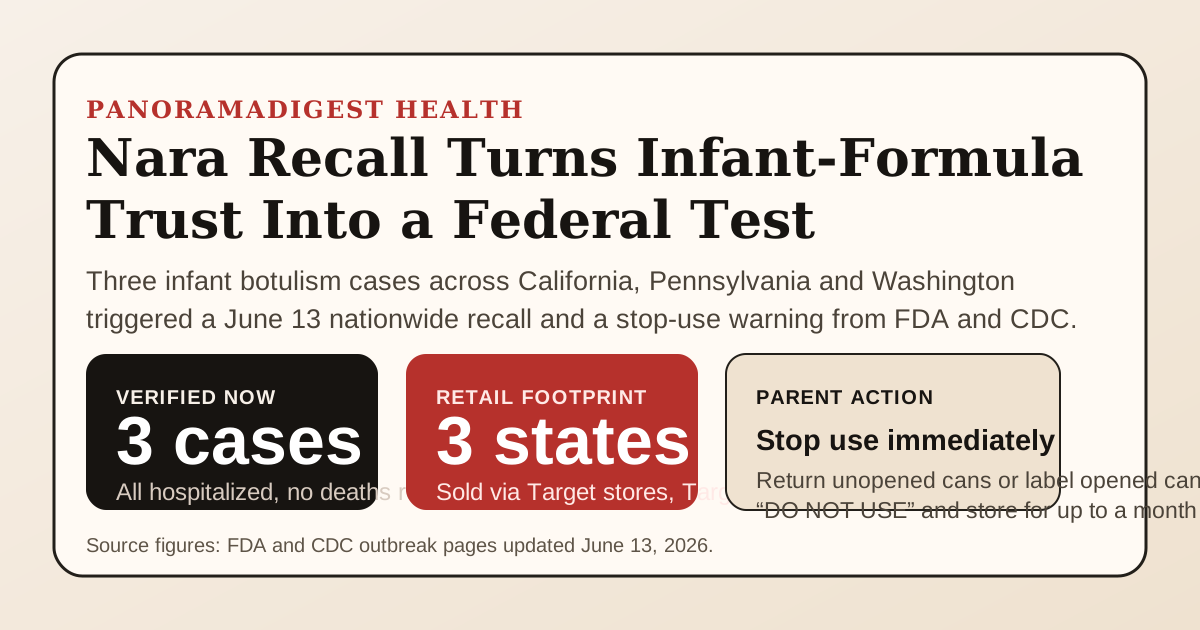
Nara Formula Recall: FDA Investigation and Infant-Safety Guidance
Nara Organics' nationwide recall after three infant botulism cases did not threaten U.S. formula supply, but it did show how quickly a premium trust story can collapse once CDC and FDA warnings replace marketing language.
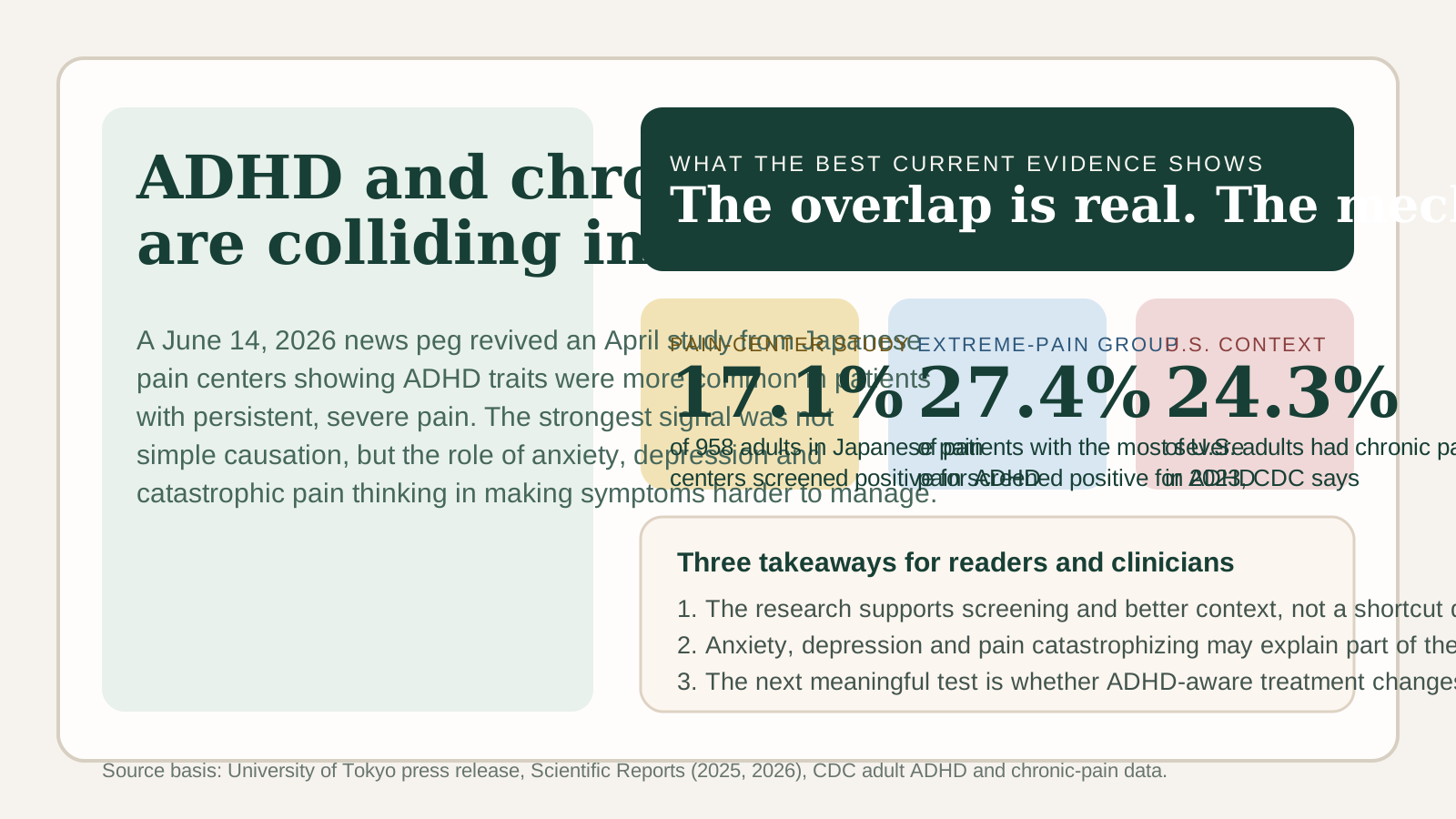
ADHD's Link to Chronic Pain Is Getting Harder for Clinicians to Ignore
A June 14, 2026 burst of fresh reporting pushed an old blind spot back into view: adults with ADHD traits keep showing up disproportionately in chronic-pain research, and the best new evidence suggests the overlap may run through anxiety, depression and catastrophic pain thinking as much as through pain itself.