John Healey's Resignation Turns Britain's Defence Debate Into a Timing Problem
John Healey's resignation on June 11, 2026 did more than embarrass Keir Starmer. It exposed a harder question for Britain and its allies: whether promises of higher defence spending later are enough when ministers think the dangerous years are now.
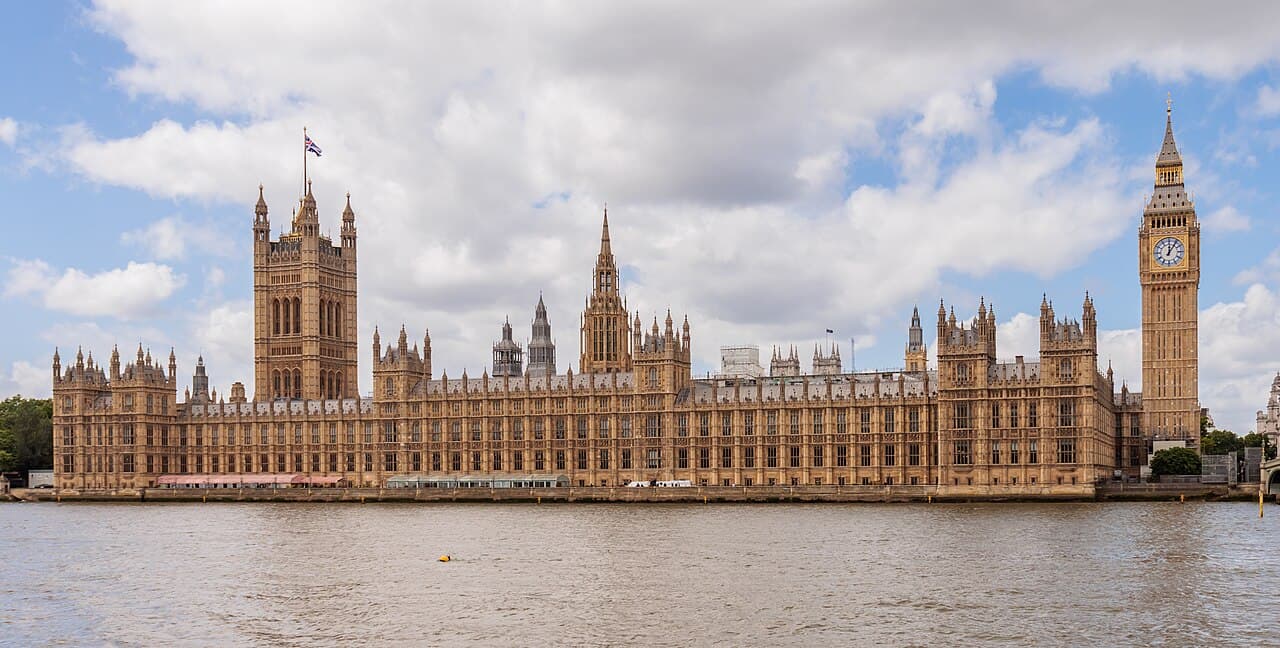
John Healey's resignation as Britain's defence secretary on Thursday, June 11, 2026 was not just another Westminster rupture. It was a blunt warning that the fight over military spending is no longer mainly about the destination. It is about the gap between the years ministers say they will spend more and the years their own defence chief believes matter most.
BBC Politics — John Healey resigns as defence secretary from Keir Starmer's government | BBC Politics Live
BBC Politics video on John Healey's resignation and the government's response. A direct watch link appears in the article body as a fallback.
Associated Press reported that Healey quit after concluding the government was not willing to spend enough on the military, while the Guardian reported that his resignation letter said the coming defence investment plan fell short at a time of rising threats. For readers who want the immediate political exchange in video form, BBC Politics has a direct clip on Healey's resignation and the government's response. The larger issue is that Britain now has a public argument over whether long-range budget pledges still count as deterrence when the near-term signal looks thin.
The number fight is really a calendar fight
The easiest version of this story is to frame it as a spending feud: one side demanding more, the Treasury resisting, the prime minister trying to hold the line. That is true, but incomplete. The sharper point in the available reporting is about timing.
AP said Prime Minister Keir Starmer has pledged to raise defence spending to 2.5% of gross domestic product by 2027 and 3% by 2034. The Guardian, citing Healey's letter and the delayed defence investment plan, reported that the path under discussion would reach only 2.68% by 2030. Those numbers do not describe a government abandoning defence. They describe a government trying to spread the political pain of rearmament over a longer horizon than its departing defence secretary was prepared to accept.
| Question | What the reporting says | Why readers should care |
|---|---|---|
| Did Healey resign over a personal scandal or policy dispute? | Reporting points to a defence spending dispute tied to the delayed investment plan. | This is a structural argument about state priorities, not a one-day personal collapse. |
| Was more defence spending already promised? | Yes. AP reported commitments to 2.5% of GDP by 2027 and 3% by 2034. | The argument is over speed and credibility, not whether spending rises at all. |
| Why was Healey unwilling to stay? | The Guardian reported he believed the near-term plan still fell well short. | That suggests the government's own defence leadership thought the risk window was immediate. |
| Why does this travel beyond UK politics? | Britain is a key NATO military and diplomatic actor. | Allies watch budget timing as a signal of readiness, not just a bookkeeping detail. |
Britain's allies will hear something different from Britain's Treasury
From the Treasury's perspective, the case for a phased approach is obvious. Debt costs remain high, domestic spending pressures are relentless, and every extra pound for defence competes with healthcare, welfare, schools, and infrastructure. Governments rarely choose rearmament in a vacuum. They choose it while trying to keep everything else politically survivable.
But defence ministries and allied capitals do not hear fiscal balance sheets the same way finance ministries do. They hear lag. They hear procurement delay. They hear a gap between rhetoric about a more dangerous world and the practical question of what can actually be bought, staffed, maintained, or deployed before the next crisis arrives. That is why Healey's exit matters more than an ordinary cabinet reshuffle. It turns an internal disagreement into a public credibility test.
The resignation lands in a crowded threat environment
The backdrop is not theoretical. Europe is still calibrating long-war support for Ukraine, NATO governments are debating readiness, and Middle East instability has re-opened the familiar question of how much military slack Western governments really have. In that setting, a dispute over whether the investment curve is steep enough becomes more than a domestic policy seminar.
The issue here is not simply hawks versus bean counters. It is whether a government can promise seriousness on defence while leaving its most important increases backloaded. If the answer becomes no, then Britain's problem is not only capability. It is message discipline with allies, markets, and adversaries all listening at once.
A short timeline of how the dispute became public
- January 2026: The Guardian reported Healey said work on the cost of further defence investment had already been completed.
- Before June 11, 2026: The defence investment plan was delayed amid internal argument over funding levels and timing.
- June 11, 2026: Healey resigned, with AP and the Guardian reporting that the dispute centered on whether the government was committing enough money, soon enough.
The condensed timeline matters because it shows this was not an impulsive walkout after one bad meeting. It appears to have been the end point of a longer fight over whether Britain's public security language matched the budgetary sequence behind it.
What to watch next
Three questions matter now. First, who replaces Healey, and whether that successor treats the defence investment plan as settled or still negotiable. Second, whether Downing Street changes the near-term spending path to prove the resignation did not expose a real weakness. Third, whether allies read the change as a domestic stumble or as evidence that Britain is still arguing with itself about how urgently it needs to rearm.
Ministers can survive a resignation. The harder thing to survive is a resignation that sharpens the exact doubt they were trying to quiet. Healey's exit did that. It told the public that the most important line in Britain's defence debate may no longer be how much the country plans to spend by the next decade. It may be how much it is willing to spend before the next emergency arrives.
For further reporting on this subject, see our Keir Starmer coverage.
Read Next
Related Stories
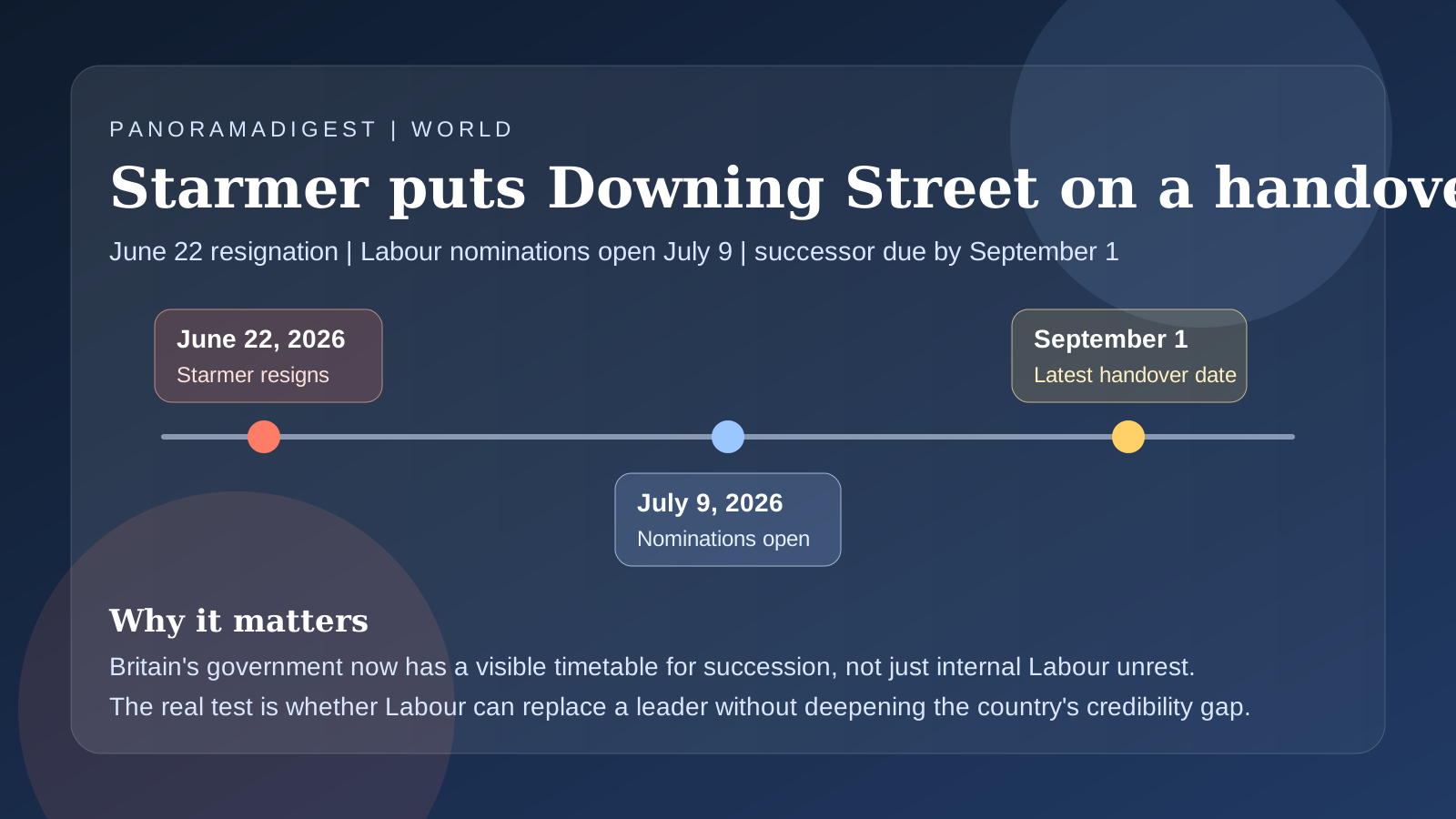
Keir Starmer Resignation: Labour Succession and the Transition Timetable
Keir Starmer's June 22, 2026 resignation does more than reopen a Labour leadership race. It puts the British state on a visible handover clock, with nominations due July 9 and a successor promised by September 1.
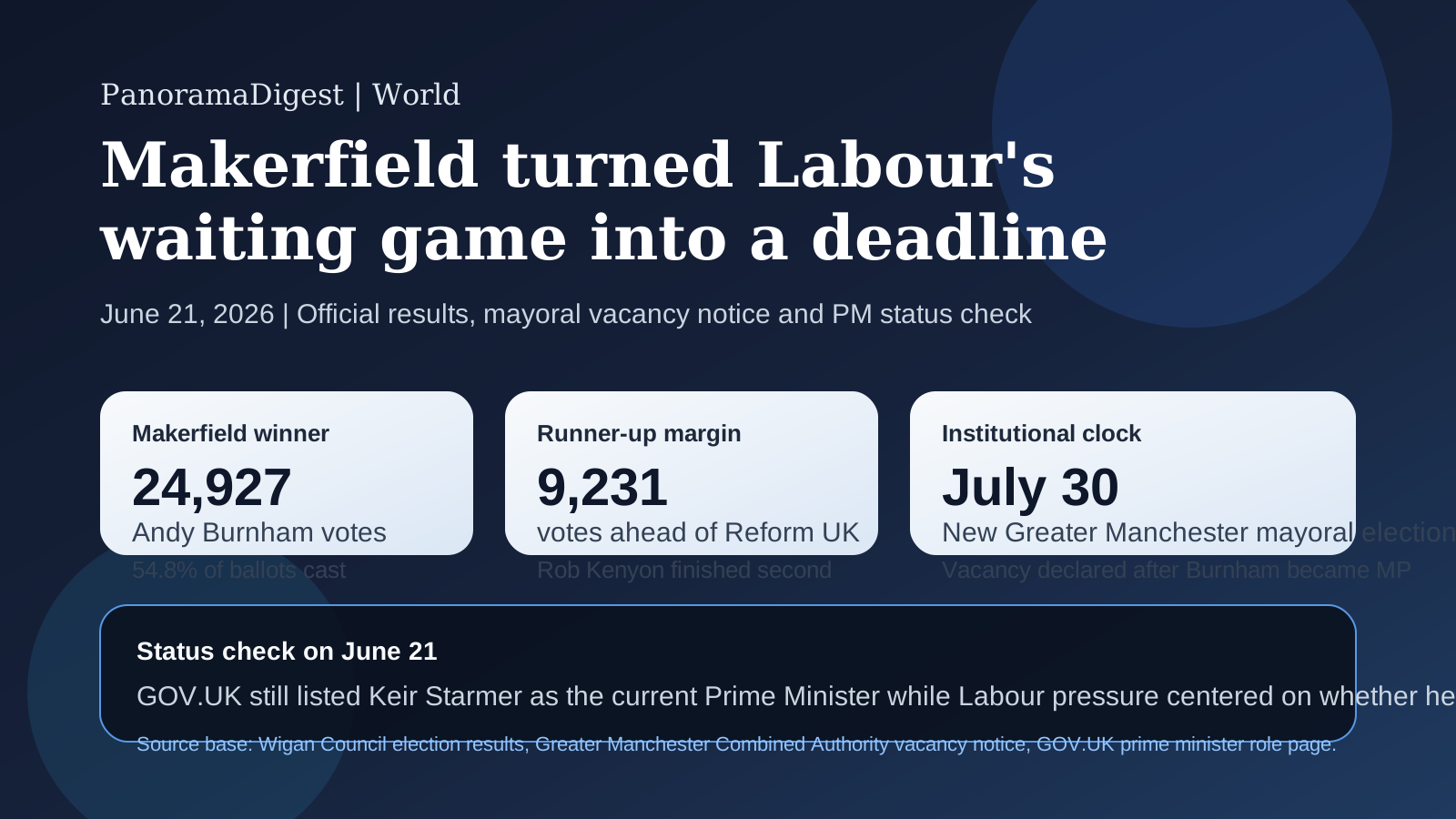
Keir Starmer Hasn't Quit. But Makerfield Turned Labour's Waiting Game Into a Deadline.
Keir Starmer was still the U.K.'s prime minister on June 21, 2026. But Andy Burnham's Makerfield win changed the question from whether Labour had a problem to how long the party can afford to stall.

UK Under-16 Social Media Ban: Covered Platforms and Enforcement Questions
Prime Minister Keir Starmer's new under-16 social media ban gives parents a clean political line, but the harder story is what comes next: forcing the largest platforms to prove, at scale, that they can distinguish a child from a customer without pretending the enforcement problem has disappeared.