FDA's Flavored-Vape Shift Changed the Parent Conversation, Not the Youth Risk
The FDA's adult-only authorization of four Glas vape pods did not erase the core family problem: youth vaping is down from its peak, but it remains common, overwhelmingly flavored and deeply tied to nicotine dependence. That is why the smarter response at home is a calm, specific conversation about nicotine, not a one-night panic speech.
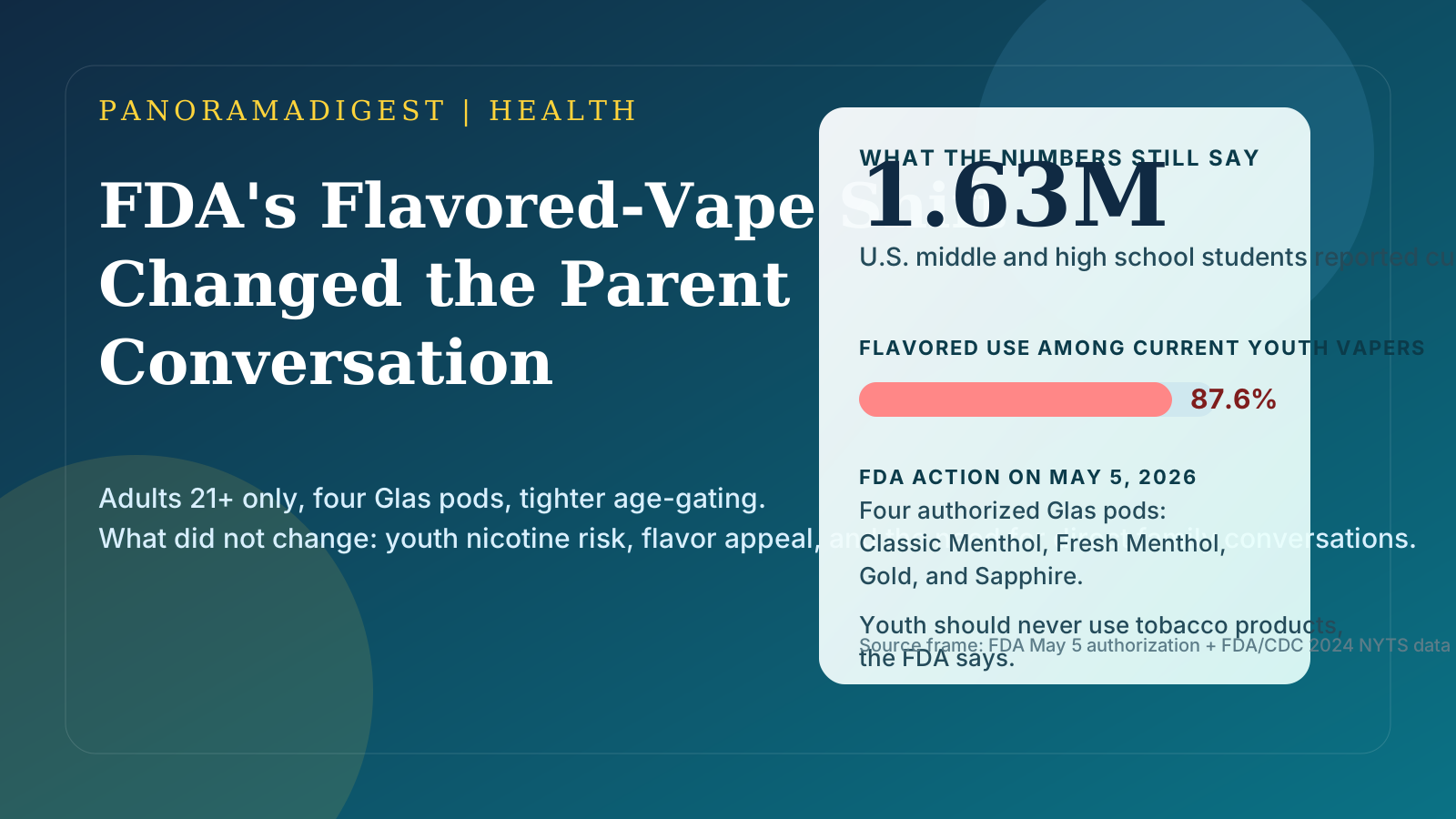
The Food and Drug Administration's May 5 decision to authorize four Glas vape pods for adults 21 and older changed American nicotine policy more than it changed adolescent biology. In the agency's official authorization announcement, the FDA said the products can be legally marketed only because Glas uses government-ID verification, smartphone pairing and random biometric check-ins that regulators believe can reduce youth access. But the family-level pressure point did not disappear with that approval. As the FDA and CDC's 2024 National Youth Tobacco Survey summary makes plain, 1.63 million U.S. middle and high school students still reported current e-cigarette use, and 87.6% of current youth users said they used flavored products.
CBS News — FDA authorizes fruit-flavored vapes for the first time
CBS News explains the FDA's first adult-only flavored-vape authorization. If the player fails, use the direct YouTube link.
That is why today's parent-oriented reporting from AP and ABC News matters more than it may look at first glance. This is not only a story about what the FDA cleared for adult smokers. It is also a story about what parents are now supposed to explain in a market where fruit-adjacent branding, social exposure and nicotine addiction still reach teenagers faster than federal nuance does. The new approval may be narrow. The cultural signal around flavored products is not.
| Question | Verified answer | Why it matters at home |
|---|---|---|
| What did the FDA authorize? | Four specific Glas pods: Classic Menthol, Fresh Menthol, Gold and Sapphire, each through the PMTA process for adults 21 and older. | This was not a broad opening of the flavored-vape market. It was a narrow approval tied to one company's age-gating setup. |
| Why did FDA say yes? | The agency said smartphone pairing, ID verification and biometric check-ins could materially limit youth access, alongside marketing restrictions. | Parents should understand the approval was built around access controls, not a finding that flavored vaping is harmless. |
| What remains true for teens? | The FDA says youth should never use tobacco products, and 2024 federal survey data still show e-cigarettes as the most commonly used tobacco product among youth. | The approval does not lower the health stakes for adolescents who experiment, vape socially or use nicotine daily. |
| How strong is the flavor issue? | Federal survey data say 87.6% of current youth e-cigarette users used flavored products, with fruit flavors the most popular. | That is the practical reason parents cannot treat flavor as a side issue. It is central to the appeal. |
The real pressure point is not approval. It is normalization.
Parents often get trapped in the wrong argument here. They hear that youth vaping has fallen from the previous year and assume the problem is receding on its own. The decline is real and worth noting. It is also incomplete. The same federal survey says more than one in four current youth e-cigarette users vape daily, and more than one in three used e-cigarettes on at least 20 of the previous 30 days. In other words, this is not just a curiosity problem. For a meaningful share of kids, it is already a habit problem.
That makes the current FDA moment awkward but important. The agency is trying to preserve a harm-reduction lane for adult smokers while still saying teenagers should stay out entirely. That regulatory distinction may make sense on paper. It is much messier at kitchen-table level, where children mostly notice the simpler message: flavored products still exist, adults are arguing about them again, and some of them now carry a federal authorization that sounds more reassuring than it really is.
What parents should not misunderstand
One common mistake is to read federal authorization as an all-clear. It is not. In the same authorization notice, the FDA said the orders apply only to those four Glas products and that the agency can suspend or withdraw them if youth use rises or the products no longer meet the public-health standard. Another mistake is to think the only risk conversation is long-term disease. For teenagers, nicotine's shorter-horizon consequences matter too: attention, mood, impulsivity, sports performance, sleep and the way dependence rewires routine.
The most useful parental tone is neither theatrical nor permissive. It is specific. Ask whether flavored vapes are easy to get. Ask whether your child thinks a product that requires age verification must therefore be safer. Ask whether anyone on a team, in a friend group or in a group chat treats vaping as low-stakes background behavior. Those questions get closer to the real social mechanics than another abstract warning about rules ever will.
What to watch next
The policy question now is whether the FDA's age-gating theory holds up in the real world. The parenting question is more immediate: whether adults can keep the conversation grounded in facts before marketing cues and peer culture do the work for them. The narrow approval does not settle that argument. It sharpens it.
Watch the report: If the CBS News player below does not load, use the direct link at youtube.com/watch?v=acDdEfcluJQ.
For further reporting on this subject, see our FDA coverage.
Read Next
Related Stories

2026-27 Flu Vaccine Match: Why Lab Results Are Not an Effectiveness Rate
Early CDC testing finds encouraging recognition of sampled flu viruses. The denominators explain why those results cannot tell you a vaccine's real-world protection rate.
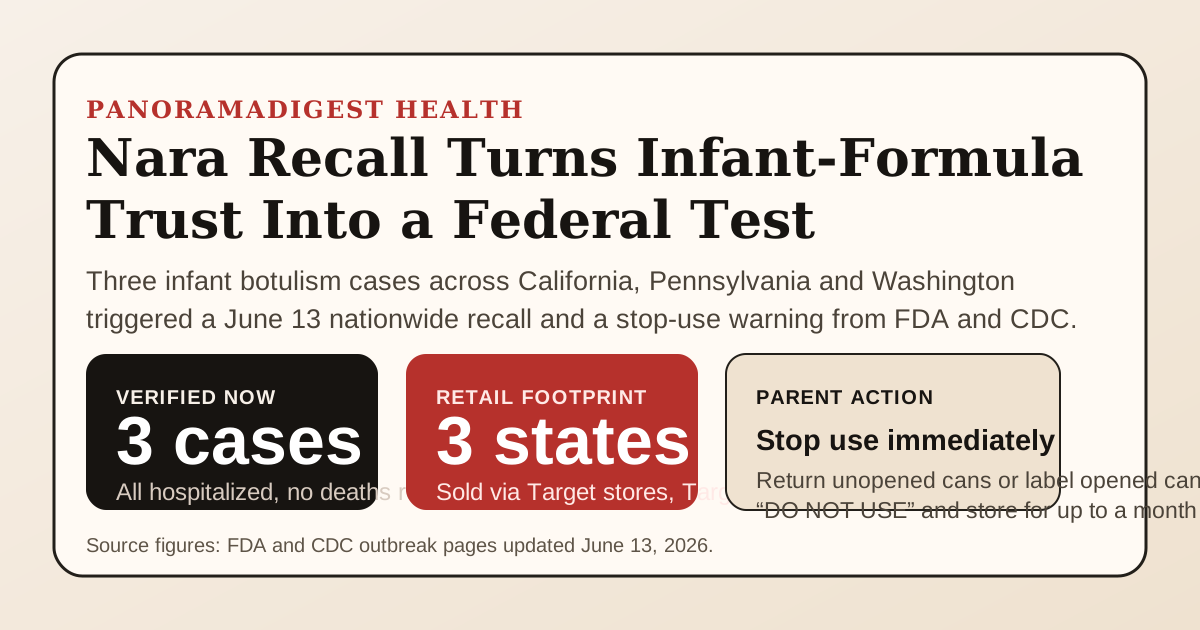
Nara Formula Recall: FDA Investigation and Infant-Safety Guidance
Nara Organics' nationwide recall after three infant botulism cases did not threaten U.S. formula supply, but it did show how quickly a premium trust story can collapse once CDC and FDA warnings replace marketing language.

America’s Measles Count Passed 2,000 Again. The Number Is Bad, but the Pattern Is Worse
U.S. measles cases surpassing 2,000 again is not just a count. It is a warning that immunity gaps are turning a preventable disease into a recurring outbreak pattern.