UNAIDS Says U.S. Aid Cuts Are Hollowing Out HIV Prevention First
The starkest warning in the latest UNAIDS alarm is not only that money vanished. It is that prevention, testing and community outreach are the first layers to thin out when funding collapses, which is exactly how a slower resurgence can start before death totals fully catch up.
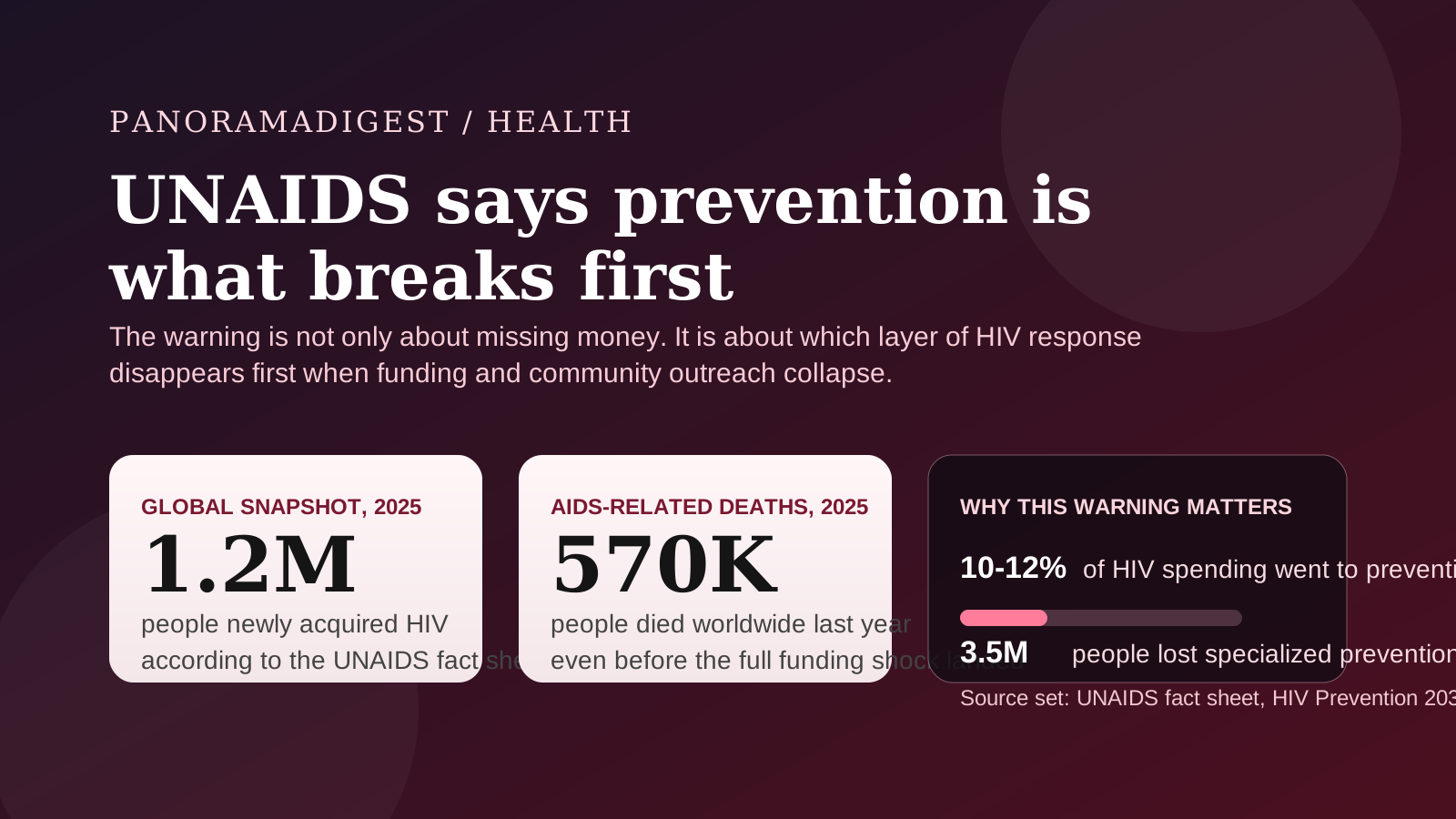
On Friday, June 12, 2026, the sharpest warning from UNAIDS was not that the global HIV response suddenly forgot how to save lives. It was that the first part of the system to hollow out under funding pressure is usually the least dramatic part: prevention. In the official UNAIDS update on the impact of U.S. funding cuts, the agency says the January foreign-assistance pause immediately disrupted HIV medicines and prevention services for millions of people. Its March 31, 2026 prevention report goes further: only 10% to 12% of total HIV spending in low- and middle-income countries was directed toward prevention in 2024, and as of May 2025 as many as 3.5 million people from key populations were no longer covered by specialized prevention programs previously funded through PEPFAR.
United Nations — HIV prevention: Dismantled and underfunded - Press conference | United Nations
The United Nations press conference adds the official institutional context behind UNAIDS' warning. If the player fails, use the direct YouTube link.
That is the kind of damage that rarely arrives with one headline-sized collapse. It arrives as fewer tests, quieter outreach, thinner condom and PrEP access, and longer gaps between a person's first risk and their first diagnosis. UNAIDS' own 2025 global fact sheet still shows a world that had been making progress: 1.2 million people newly acquired HIV in 2025, down sharply from earlier peaks, while 570,000 people died from AIDS-related illness. But the reason this warning matters now is that prevention is the part of the response that keeps those totals from climbing again. Once it frays, the public often notices only after the damage has moved downstream.
| Indicator | What the sources show | Why it matters now |
|---|---|---|
| Global new HIV acquisitions in 2025 | UNAIDS says 1.2 million people newly acquired HIV worldwide in 2025. | Progress is real, but it still leaves little margin for a prevention retreat. |
| AIDS-related deaths in 2025 | UNAIDS says 570,000 people died from AIDS-related illness last year. | The baseline burden was still high even before the latest funding shock spread through services. |
| Prevention's share of spending | The UNAIDS prevention report says only 10% to 12% of HIV spending in low- and middle-income countries went to prevention in 2024. | That means the part most likely to stop new transmission was already underfunded before cuts accelerated. |
| Coverage lost after U.S. funding cuts | UNAIDS says as many as 3.5 million people from key populations were no longer covered by specialized prevention programs by May 2025. | Coverage loss turns a budget event into a transmission event. |
Prevention is always the first thing that can be mistaken for optional
This is the structural weakness in nearly every public-health funding crisis. Treatment has visible patients, pharmacies and clinic queues. Prevention often has counselors, peer navigators, community organizations, outreach routes and medications used by people who are not sick yet. That makes it easier for governments and donors to protect the most visible lifesaving functions first while quietly letting the upstream layer erode.
Reputable coverage on June 12 made the same point from different angles. The Guardian's report on the new UNAIDS warning said HIV testing in one program fell by 22% year over year in a high-prevalence setting and described an overall aid decline of roughly 23%. AP's field reporting from Lesotho showed what that abstraction looks like on the ground: clinics shut down, workers were dismissed, and some patients started rationing medication or dropping out of care. Those are not separate stories. They are the same system viewed from headquarters and from the waiting room.
This is why the next setback could look slow before it looks catastrophic
Readers sometimes assume an HIV funding story is mainly a fight over budgets, foreign aid ideology or whether domestic governments should carry more of the burden. Those debates matter, but they can also distract from the operational question that determines what happens next: which services survive the transition intact. If treatment is bridged temporarily but testing, peer outreach and prevention services remain badly reduced, the system may preserve today's patients while quietly enlarging tomorrow's caseload.
That is also why the UNAIDS warning is more serious than a generic appeal for more money. The agency is describing a sequencing problem. Community-led programs are often the first entry point for people who mistrust formal systems, live far from clinics or face stigma tied to sexuality, sex work, migration or drug use. When those programs disappear, the people furthest from routine care do not simply wait politely for the next funding cycle. They become harder to reach, harder to test and more likely to show up later.
PanoramaDigest has already covered how trust problems can alter the practical meaning of a health policy, from ACOG's move to steady pregnancy-vaccine guidance to the way federal vaping decisions collide with family-level risk conversations. The HIV funding story is larger and harsher, but the pattern is similar. Once people stop trusting the route into prevention, the medical problem gets bigger than the budget line that caused it.
What to watch next
Three questions matter more than the next rhetorical round in Washington. First, whether six-month bridge arrangements and emergency workarounds actually restore community-level prevention capacity rather than only preserving the most visible treatment functions. Second, whether national governments replace lost outreach and prevention spending with domestic funds instead of shifting even more heavily toward crisis-only care. Third, whether the agencies issuing the warnings can still measure the damage cleanly enough to catch resurgence early.
There is still a reason not to flatten this into despair. The 2025 UNAIDS fact sheet shows the world is not starting from failure; it is starting from hard-won gains that remain salvageable. But that is exactly why this moment is dangerous. Systems closest to progress are often most vulnerable to thinking the scaffolding is no longer essential. HIV prevention is scaffolding. When it comes down, the building may keep standing for a while. Then the cracks start to show.
Watch the briefing: If the United Nations player below does not load, use the direct link at youtube.com/watch?v=oq_CPDqX7g8.
Read Next
Related Stories
FDA's Flavored-Vape Shift Changed the Parent Conversation, Not the Youth Risk
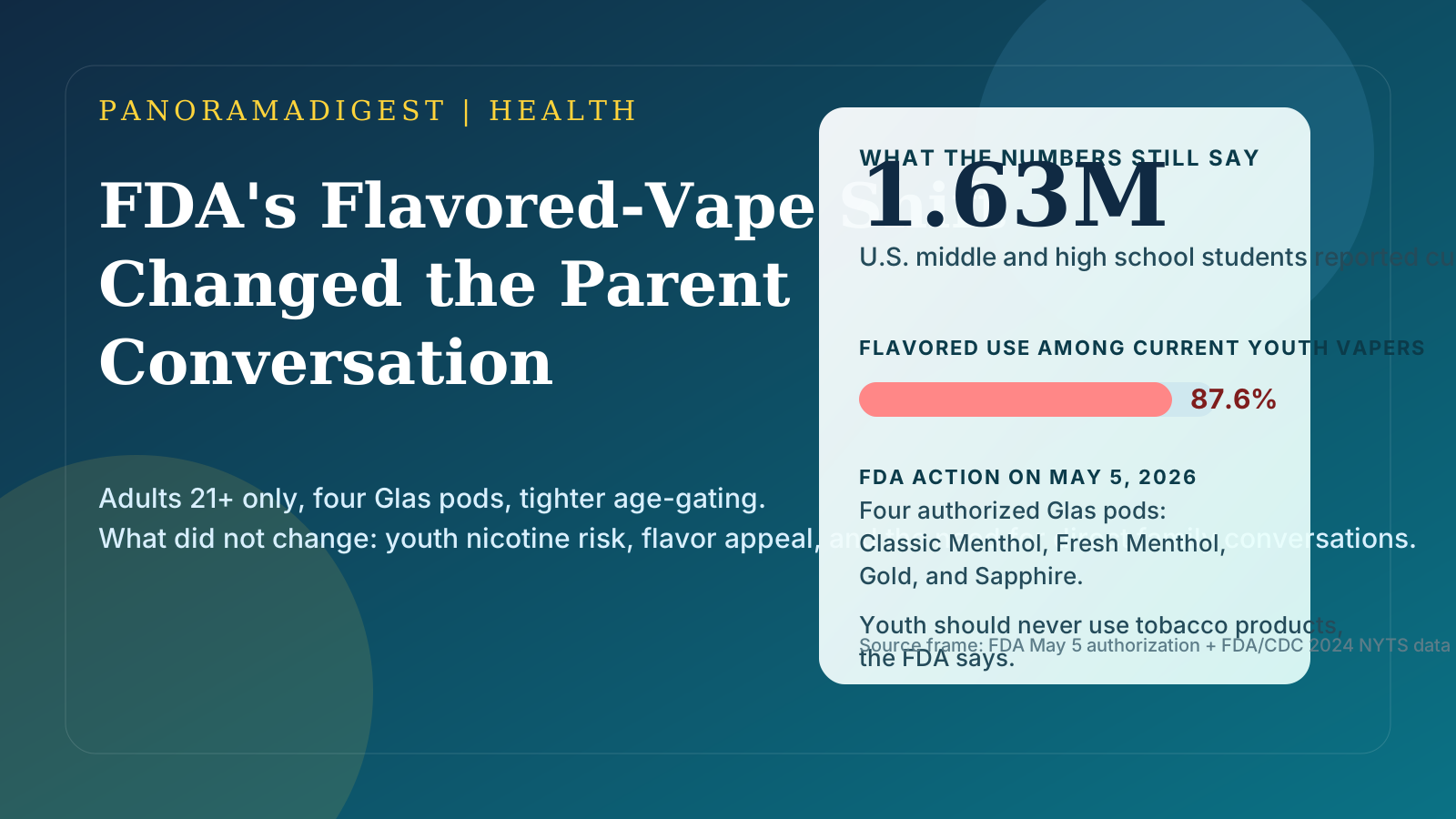
The FDA's adult-only authorization of four Glas vape pods did not erase the core family problem: youth vaping is down from its peak, but it remains common, overwhelmingly flavored and deeply tied to nicotine dependence. That is why the smarter response at home is a calm, specific conversation about nicotine, not a one-night panic speech.

ACOG’s New Pregnancy Vaccine Schedule Shows How Much Trust the Federal Signal Has Lost
The new ACOG maternal immunization schedule is not just another clinical chart. It is a public sign that obstetric care groups no longer trust federal vaccine messaging to stay clear enough for pregnant patients and their clinicians.

South Africa's Twice-Yearly HIV Shot Has a Delivery Problem, Not a Science Problem
Lenacapavir could reshape HIV prevention in South Africa, but the June rollout shows the hard part is access, staffing, funding, and trust.