Romania Shoots Down Drone After Airspace Incursion Near Buzau
Romania's Defence Ministry says an F-16 shot down a drone near Padina, Buzau, after radar tracked it from the Black Sea coast. The incident is the country's first reported aerial shootdown of an unauthorized drone during the Ukraine war.
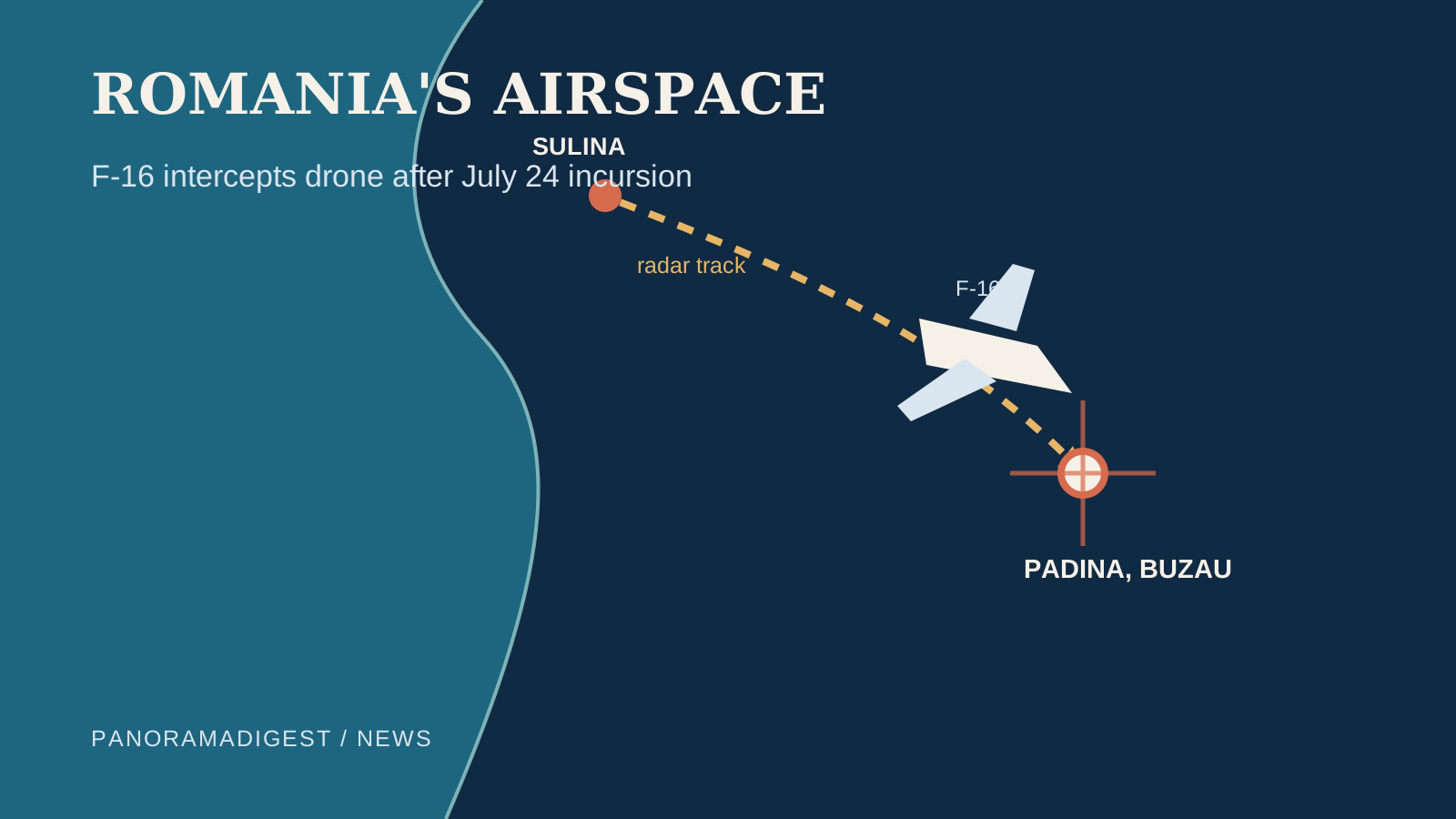
The short answer: Romania's Defence Ministry says a Romanian F-16 shot down a drone near Padina, in Buzau county, at 11:02 on July 24 after radar detected it entering national airspace near the Black Sea coast. Two Romanian F-16s and two Italian Eurofighter Typhoons were scrambled, and authorities issued RO-Alert warnings in Tulcea and Braila. The drone's origin and purpose remain under investigation.
Euronews — Romania says F-16 shot down drone over the country's airspace
Euronews video report on the July 24 Romanian airspace incident. The Defence Ministry remains the source for the official timeline and response details.
The incident matters because it moved Romania's repeated drone-incursion problem from tracking and warning to an aerial engagement over Romanian territory. It also shows why the location of the interception was decisive: the ministry and Reuters both report that the aircraft was brought down over an uninhabited area, limiting the risk to people on the ground.
What the official timeline says
| Time on July 24 | Event | Source-backed detail |
|---|---|---|
| 09:39 | Radar detection | MApN says the target was about 20 km east of Sulina and entered Romanian airspace on a Sulina-Braila-Fetesti-Buzau track. |
| 09:48 and 10:56 | Fighter scrambles | Two Italian Eurofighters and two Romanian F-16s took off for air-policing monitoring. |
| 11:02 | Engagement | A Romanian F-16 engaged and shot down the target near Padina, Buzau. |
The Romanian Ministry of National Defence statement says its National Military Command Centre notified emergency authorities and that RO-Alert messages were sent to Tulcea and Braila counties. That is a public-safety response as well as a military one: residents were warned while the air picture was being resolved.
What is confirmed, and what is not
Confirmed details include the radar track, the scramble, the location near Padina and the shootdown. Reuters reported that fragments fell on a wheat field and that no injuries or damage were reported. The Romanian Army chief told Reuters that pilots visually assessed the drone as resembling a Shahed-type aircraft, but he also said it was too early to draw conclusions. Romania has not publicly established the drone's origin or purpose in the official statement.
That distinction is important. A drone entering Romanian airspace during Russia's war against Ukraine creates an obvious security context, but context is not proof of who launched a particular aircraft. Until investigators identify the wreckage, the defensible description is an unauthorized drone incursion and shootdown, not a confirmed Russian attack on Romania.
Why the response is different from earlier incursions
Romania has reported repeated airspace alerts connected to attacks near Ukraine's Danube ports. In earlier cases, fighters monitored targets, emergency authorities issued warnings or debris fell after drones lost their course. This time, the target remained inside Romanian airspace long enough to be engaged over an uninhabited zone.
PanoramaDigest's earlier Ukraine drone-wave analysis examined the pressure that mass drone attacks place on air defence and response time. The new event adds a different question: how a NATO member decides when an incursion has crossed the threshold for a live engagement. The EU's Ukraine policy coverage provides broader context on the alliance's regional security environment, but it does not establish the cause of this incident.
What happens next
- Wreckage identification: Investigators will need to determine the aircraft type, origin and payload from the recovered remains.
- Rules and coordination: Romania and its allies will assess how the response worked across radar, national fighters, Italian aircraft and civilian alerting.
- Border defence: Repeated incursions increase pressure for affordable detection and interception systems rather than relying only on expensive fighter sorties.
- Public communication: Authorities must keep separating confirmed facts from early visual assessments and social-media speculation.
The immediate fact is narrow but consequential: an unmanned aircraft crossed into Romanian airspace, and a Romanian F-16 destroyed it over an uninhabited area. The larger policy test will be whether investigators can establish what happened and whether the response reduces risk for the next incursion without widening the conflict.
Related video
Sources
Read Next
Related Stories

Old Trails Fire Damage Estimate Reaches 640 Structures in Spokane
Spokane County's preliminary estimate says the Old Trails fire destroyed 640 structures, while evacuation zones remain active across northwest Spokane.

USCIS Can Now Refer Asylum Cases to Immigration Court Without an Interview
A DHS rule effective July 28 lets USCIS send some affirmative asylum applications directly to immigration court. Referral is not a denial, but the interview is no longer guaranteed.

Seattle Center Shooting Kills Three and Injures Four at Bite of Seattle Festival
Seattle police say a shooting at the Bite of Seattle festival killed three people and injured four others, including a 2-year-old boy. One suspect was arrested and police continued searching for another.